

VTOL UAV Simulator Manufacturer Guide for Choosing the Right Training Solution
2026-08-22
Choosing the right training solution for VTOL UAV operations isn't just a checkbox—it's the difference between confident pilots and costly mistakes. Yet with so many simulators on the market, most manufacturer guides read like recycled spec sheets, leaving you to guess which platform actually prepares your team for real-world missions. That's where SRIZFLY cuts through the noise. In this guide, we skip the fluff and focus on the practical factors that matter when selecting a VTOL UAV simulator: flight dynamics fidelity, hardware compatibility, scenario customization, and trainer support. Whether you're training for urban inspections, emergency response, or autonomous cargo routes, the right simulator isn't the one with the most features—it's the one that mirrors your operational reality. Here's how to find it.
Pinpoint the Mission Set Your Pilots Actually Fly
Before you invest in another hour of simulator time or a new airframe, take a hard look at the sorties your pilots are actually logging. A training syllabus that doesn't mirror real-world tasking breeds boredom in the cockpit and gaps in readiness. Map every maneuver, radio call, and emergency procedure to specific missions already in your flight schedule—the cross-country that needs a lost comms drill, the coastal patrol that demands low-altitude scanning, the night currency flight that can double as an unusual attitude recovery session. When the objective isn't just 'fly more' but 'fly what matters,' every engine start becomes a deliberate rehearsal for the next real call.
Too many squadrons fall into the trap of generic proficiency: endless touch-and-goes, the same airwork box, a canned instrument approach that never changes. That's not mission readiness—it's motion without direction. Instead, pull the last thirty days of flight data and mark the mission profiles that dominate. Are your pilots doing mostly ferry legs? Then focus on high-density altitude departures, fuel planning under time pressure, and system failures away from home base. Are they heavy on low-level reconnaissance? Build sorties around terrain masking, pop-up target acquisition, and no-notice divert decisions. The goal is to make the training invisible inside real tasking, so the line between a 'practice flight' and an operational sortie blurs until it disappears.
Finally, involve the pilots themselves. Ask each one to name the three missions they feel least prepared to fly tomorrow—then build the next two weeks of flying around those answers. You'll often uncover mismatches the syllabus never predicted: the new hire who has never done a true formation departure at night, the experienced captain who hasn't hand-flown an NDB approach in two years, the entire flight that freezes on a compound emergency during a single-engine go-around. By pinpointing the mission set your pilots actually fly—not the one the training manual assumes—you turn every hour of flight time into targeted preparation for the next real-world sortie. That's how you build a squadron that doesn't just meet minimums, but owns the missions it's assigned.
Demand a Simulator That Nails Hover-to-Forward-Flight Handling
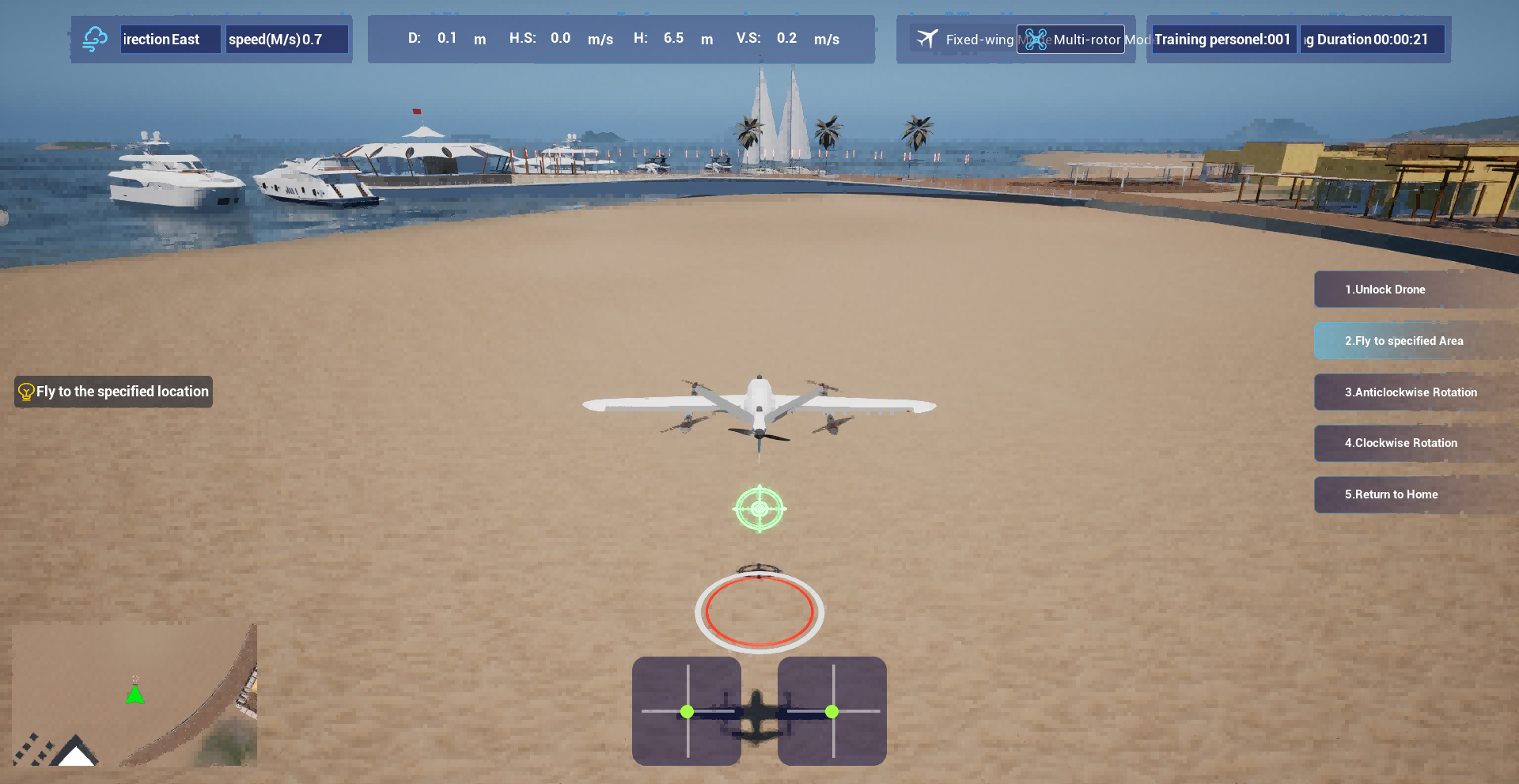
Most flight simulators handle steady hover and level cruise reasonably well, but the real test comes during the transition between the two. Abrupt pitch changes, sudden loss of translational lift, and a shifting trim point all happen in a matter of seconds, and a simulator that smooths over these details teaches you nothing useful. If the nose doesn't tuck on its own as you pass through effective translational lift, or the pedals don't need a slight adjustment to counter torque changes, you're not practicing the maneuver—you're just watching an animation.
A convincing hover-to-forward-flight model has to capture how rotor downwash evolves, how the tail rotor authority changes with airspeed, and how power required dips then climbs again. These aren't exotic edge cases; they're the exact moments where a real helicopter pilot earns their pay. When a simulator skips the slight left yaw that appears just before translational lift, or fails to reduce collective friction feel as airflow becomes more symmetric, the transition feels like a switch being flipped rather than a continuous aerodynamic process. That disconnect becomes dangerous muscle memory if you ever step into a real cockpit.
Before committing to any sim for helicopter training, ask for a demo of this specific phase. Fly from a stable three-foot hover, accelerate gradually to forty knots, and watch the virtual flight controls and instrument indications. The best packages will force you to actively manage every axis, and they'll punish sloppy technique with a mild roll or a sink that requires immediate correction. If the transition feels effortless or overly forgiving, keep looking—because in the real aircraft, that's precisely where the workload peaks and where a simulator's shortcuts become most obvious.
Inspect How Realistic the Weather and Sensor Feeds Really Are
Most dashboards present weather data as if it arrived from a clean, uninterrupted stream. In practice, sensor feeds are messy: a temperature probe might sit in direct sunlight, a wind gauge could have a sticky bearing, or a rain bucket might be clogged with leaves. Before trusting any of those numbers, it is worth checking how the data was collected and whether the displayed values match what you would expect from a handheld instrument at the same location. A quick walk outside with a basic thermometer or anemometer often reveals that the "live" feed is lagging, smoothed, or outright wrong.
The realism of a weather feed also depends on how frequently it updates and whether gaps are filled with synthetic values. Some services report every minute, while others average readings over ten or fifteen minutes, which can hide brief squalls or temperature spikes. Look for signs of interpolation: suspiciously flat curves during a storm, or sudden jumps when a sensor comes back online. If the feed claims to show rainfall intensity but the street outside is dry, that is a clue the radar or gauge calibration has drifted.
Sensor placement matters just as much as the hardware. A weather station mounted above an asphalt parking lot will read several degrees hotter than one in a grassy field, even though both feeds appear equally official. Cross-reference the reported conditions with nearby airports, personal weather stations, or even satellite imagery to see if the numbers make sense together. Realistic feeds are rarely perfect, but their errors should be explainable by the environment, not by fantasy.
Weigh Instructor Console Depth Over Flashy Graphics
When choosing a spin bike, it's easy to get distracted by a sleek touchscreen with colorful stats and leaderboard animations. But remember why you're really there: to follow the instructor's cues, hit your zones, and build consistent power. A console that buries resistance prompts or cadence targets beneath layers of eye candy can break your focus mid-interval. Prioritize a display that makes the instructor's voice, countdowns, and target metrics instantly readable at a glance—even when sweat drips in your eyes and your heart rate spikes.
Think about how you actually ride. During a hard climb, you're not admiring gradient graphics or scrolling through playlists—you're fighting for every pedal stroke. A deep console gives you direct control over resistance, quick access to preset workouts, and a clear numeric readout for RPM and watts. Flashy visuals might look great in a showroom, but after ten minutes of threshold work, you want buttons that respond without hunting and a screen that doesn't glare under gym lights. That functional depth keeps you locked into the workout instead of fiddling with settings.
Veteran riders often turn off the flash entirely—dimming backgrounds, hiding social feeds, and pulling up a minimal data grid. They do this because instructor guidance and real-time numbers matter far more than virtual scenery. Before you buy, test the bike under hard effort: can you adjust resistance by feel alone? Does the console stay readable when you're breathing hard? If the answer feels shallow despite beautiful graphics, you'll likely outgrow it within months. The best consoles quietly support your training; they don't compete for your attention.
Check Whether the Platform Grows From Solo Ops to Team Training
A platform that only works for a single operator often hits a wall the moment you try to bring in a second pair of hands. Watch how the tool handles shared calendars, role assignments, and conflict resolution when two or more people need to collaborate on the same task. If the interface forces you to duplicate work or manually sync notes between teammates, it wasn't built for growth.
Pay attention to the moment a solo practice turns into a small crew. Does the system let you set different permission levels without burying them in a settings maze? Can a new team member pick up where someone else left off without copying files or sending screenshots? These are the quiet friction points that separate a true team-ready tool from one that merely tolerates extra users.
Look beyond the marketing checklist for "multi-user support." Actually simulate a handoff: assign one person a client, then have a teammate take over mid-project. If the platform logs who did what, preserves context, and doesn't make you jump through hoops to reassign ownership, it's likely designed with team training in mind. Anything less means you'll outgrow it before the first onboarding session ends.
Require Open Scenario Building and After-Action Data Tools
Scenario building shouldn’t be locked inside proprietary systems or buried in someone’s inbox. When teams can openly construct, fork, and annotate exercises, they capture the assumptions behind every decision. Open tools make it possible to trace why a particular inject was added, who modified the timeline, and which variables were left untested. This transparency turns a static drill into a living artifact that can be challenged and improved by anyone with relevant field experience.
After-action reviews often fail because the data is scattered across spreadsheets, chat logs, and memory. Requiring open data formats means every observation, timestamp, and participant note can be cross-referenced without manual copy-paste. Teams can compare actual decisions against planned responses, spot recurring friction points, and run lightweight statistical checks on communication latency or resource allocation. The goal isn’t to generate a pretty report—it’s to make the raw material of failure and success easy to query and share.
The shift toward open scenario and after-action tools also changes who gets to participate. Frontline staff can submit anonymized incident fragments instead of waiting for a formal debrief. Trainers can remix existing scenarios for different regions or risk profiles without starting from zero. Over time, the organization builds a searchable memory of what worked, what didn’t, and under which conditions—rather than relying on a handful of experts to reconstruct events from memory.
FAQ
Real aerodynamic modeling is the biggest divider. A serious simulator calculates thrust vectoring, propwash over control surfaces, and the nonlinear transition between hover and wing-borne flight. Basic games interpolate between preset states, so the aircraft never feels like it's fighting you. Also look for hardware compatibility, latency figures, and the ability to log flight data for debriefing. If the vendor won't share their math model or validation process, treat that as a red flag.
It becomes essential as soon as you move past generic stick time. Operational crews need to rehearse specific routes, weather patterns, sensor payloads, and emergency procedures that match their real airspace. A simulator locked into a handful of canned missions will quickly lose value after initial familiarization. Ask the manufacturer whether non-programmers can build scenarios through a visual editor, and whether you can import terrain or obstacle data from your own surveys. The best tools let you drag in real wind data or vehicle failure triggers without writing code.
Not necessarily for everyone. Motion adds useful physical cues during the hover-to-cruise conversion, but poorly tuned motion can reinforce bad habits and induce simulator sickness. A high-quality visual system with wide field of view and low latency often matters more for learning control inputs. If budget allows, a motion seat with vibration and slight heave can improve immersion for experienced pilots. But never sacrifice software fidelity or instructor tools just to check a motion box.
Yes, but only if the underlying math treats the entire speed envelope continuously. Many simulators cheat by blending two separate aerodynamic datasets near transition speed, which produces an unrealistically smooth handover. The right solution models rotor wash, wing stall, and duct vectoring across all angles of attack in one unified simulation. Before buying, fly a slow deceleration from cruise to hover in the simulator - if you feel an abrupt switch or a dead zone around conversion speed, the physics model is likely patched together.
Hardware-in-the-loop lets you connect actual flight controllers, payloads, or even the full autopilot stack to the simulated aircraft. That matters when you need to validate software updates, tune gains, or train operators on the exact ground control station they will use in the field. It's not the same as a pure software simulator, since it exercises real electronics with simulated sensor inputs. Ask whether the simulator supports your specific flight controller and whether you can inject faults like GPS loss or motor failure at the electronic level.
The instructor station is where training actually happens, so judge it by how quickly you can change the scenario mid-flight. It should let you reposition the aircraft, alter weather, inject failures, and pause or replay segments without digging through menus. Good stations also record student control inputs, video, and aircraft state in a synchronized timeline for debriefing. If you need a vendor engineer to build each exercise, the station isn't doing its job. Look for an interface that a chief pilot can learn in a day and operate while watching the student, not the screen.
Expect at least one meaningful software update per year that adds features or improves the flight model based on real flight data. The manufacturer should also offer a clear path for bug reporting and quick patches for safety-critical issues. Avoid vendors that treat the simulator as a one-time sale with no published roadmap. Ask for references from other operators about how long it takes to get technical support, and whether the maker shares validation reports when they change the aerodynamics or sensor models.
Both have trade-offs. An aircraft OEM knows the exact flight envelope, control laws, and failure modes of their airframe, so the model is often more accurate out of the box. However, OEM simulators can be rigid, with limited support for third-party payloads or other aircraft types. Independent specialists usually offer more flexible scenario tools, cross-platform compatibility, and faster feature iteration, but you must verify their source data. If your fleet is mixed, a vendor-neutral simulator may save money long-term by training on multiple types in one platform.
Conclusion
When you sit down with a VTOL UAV simulator manufacturer, skip the brochure specs and anchor every question to the mission set your pilots actually fly. Maritime patrol, mountain logistics, urban inspection—each exposes different failure points during the hover-to-forward-flight transition, and a generic trainer will mask those quirks rather than amplify them. The right platform models that handoff with enough fidelity that a pilot can sense lift decay, control authority shift, and the slight wing-rock of a poorly timed conversion. Then pressure-test the environment engine. Realistic weather isn't just a rain overlay; it means crosswinds that push the aircraft off a landing pad, sensor feeds that degrade in haze or precipitation, and thermal wash that obscures a target exactly when a trainee needs to make a judgment call.
Instructor tools matter more than the render distance. Look for a console where an evaluator can inject a generator failure mid-flight, reposition the aircraft on a moving map, and replay a student's control inputs in under thirty seconds. Flashy graphics won't fix a shallow debrief. At the same time, verify that the software can grow from single-ship qualification to multi-vehicle team exercises with shared airspace, handoffs, and contested link conditions. Finally, insist on open scenario building and after-action data export. If you need a vendor engineer to script a new route or pull a performance metric, the simulator will eventually become a bottleneck in your training pipeline, not a force multiplier.
Contact Us
Contact Person: Niles Liu
Email: [email protected]
Tel/WhatsApp: 8619945009803
Website: https://srizfly.com/