

Top Carbonated Beverage Production Line Supplier for Efficient Beverage Manufacturing
2026-09-13
In the fast-moving beverage industry, every second of downtime or inconsistent carbonation quietly eats into margins and reputation. Yet many manufacturers still settle for production lines that struggle to keep pace with demand. That’s where choosing a top carbonated beverage production line supplier becomes a strategic decision, not just a purchase. INTOP Machinery has built its name on turning this challenge into a competitive advantage—delivering efficient, high-speed lines that keep bubbles flowing and profits growing. But what actually separates a truly efficient system from a mediocre one? Let’s take a closer look.
Carbonation Lines That Hold Their Fizz at 40,000 Cans an Hour
Achieving 40,000 cans per hour without losing carbonation isn't just a matter of running faster. These lines rely on isobaric filling heads that match tank pressure to the beverage's saturation point, so CO2 stays in solution instead of breaking out into foam. Temperature-controlled product tanks, often held just above freezing, reduce gas solubility shifts as cans rush beneath the filler valves.
At that pace, every second of dwell time matters. Snorkel or short-tube fillers purge air from the can with CO2 before the liquid enters, then finish with a quick, precise seaming operation that locks internal pressure. Real-time sensors check fill height and CO2 volumes per can, automatically rejecting any unit that falls outside tight spec, so the fizz that survives the line is the same fizz customers taste weeks later.
Filler and Seamer Timing Tuned for Mixed Container Runs
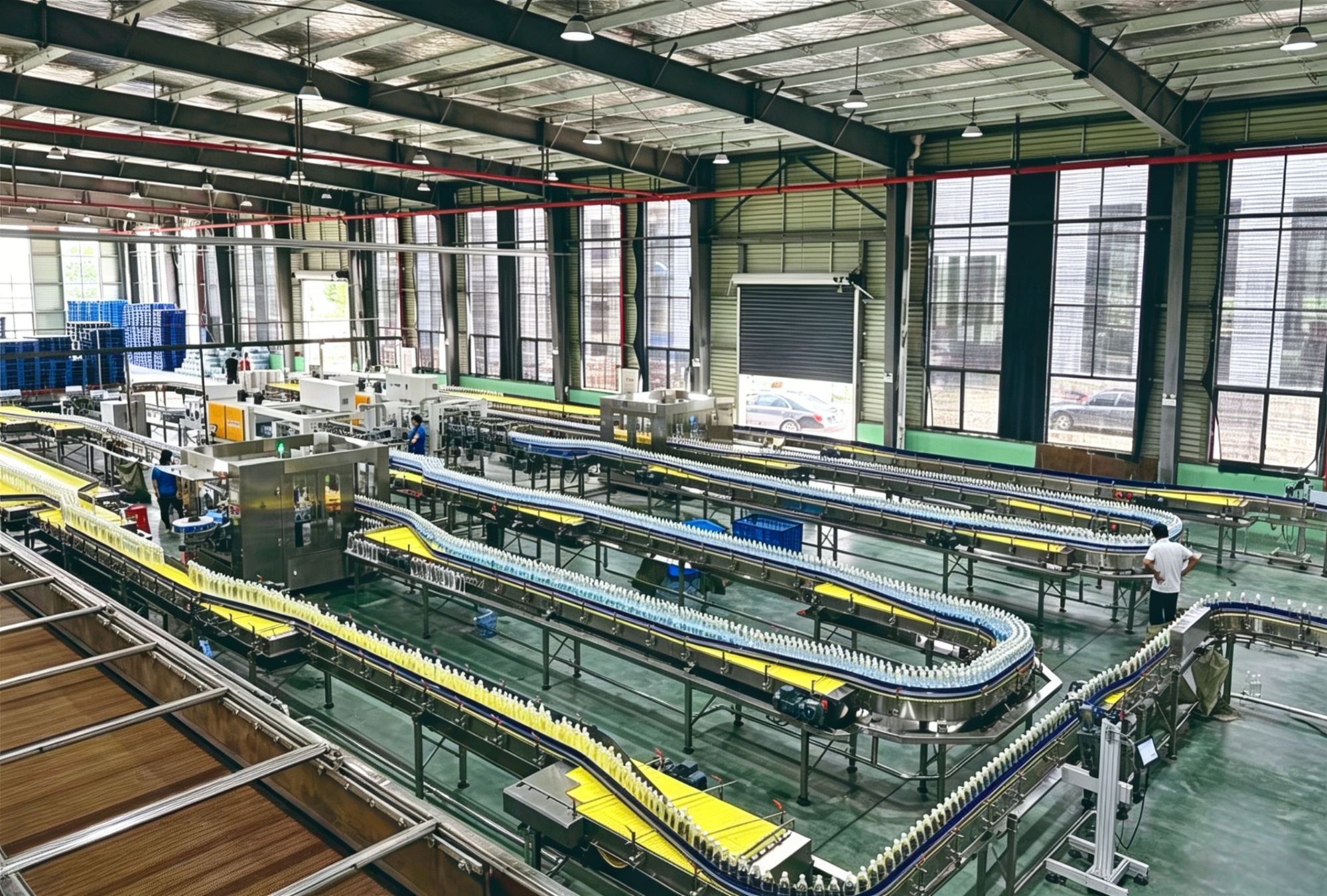
Switching between can sizes on the same line used to mean accepting a drop in throughput or a few dented lids while the equipment hunted for the right rhythm. We started by mapping the filler's discharge pulse against the seamer's chuck arrival at every index, then trimmed the lag so a 12-ounce slim and a 16-ounce standard can share the same base timing curve without manual resets.
The real change came from decoupling the fill-head lift cam from the seamer's feed scroll. Instead of one fixed dwell for all containers, the filler now reads container height from the upstream sensor and shifts the fill start point by 18 milliseconds for the taller cans. The seamer's first operation roll follows with a two-degree offset, which keeps the lid centered even when the incoming can is a few thousandths undersized.
Operators can load three or four SKUs into the schedule and the line adjusts timing on the fly during the gap between runs. That has cut changeover fiddling to about forty seconds per size change and reduced seam tightness variation enough that we rarely see a leaker on mixed pallets anymore.
Syrup Room Integration Without Extra Pumps and Headaches
Reworking a syrup room often drags in extra transfer pumps because the existing line pressure looks insufficient on paper. But if you look at the actual duty point of the main syrup pump, there is usually enough head left to push syrup through a short, well-sloped transfer line into the next buffer tank. The trick is to avoid sharp bends and to reuse the existing CIP return loop as a secondary path, so the syrup moves without adding another mechanical component.
Fewer pumps in the syrup room means fewer mechanical seals, fewer leak points, and a much shorter cleaning checklist. Operators can manage the flow with a simple modulating valve on the return leg, adjusting the backpressure to keep syrup moving slowly enough to avoid foaming but fast enough to prevent settling. This kind of integration also removes the need for extra level switches and interlock programming, because the same control signal that runs the main pump can trigger the valve position.
On recent retrofit jobs, the most reliable setup was to run a gravity-assisted line from the syrup dissolver outlet to the blend tank inlet, with a slight fall and a single air-release valve at the high point. The main process pump pulls a mild vacuum on that line during normal operation, so there is no need for a dedicated booster pump or a separate VFD. Commissioning is faster, there is less to calibrate, and the maintenance team only has to worry about the pumps that already existed in the plant.
Turnkey Layouts That Fit Existing Plants Instead of Fighting Them
Most layout proposals start with a blank slate, which is exactly why they fail inside a real plant. A turnkey approach that respects the concrete columns, existing mezzanines, and decades-old pipe racks will always outrun a theoretical redesign. Instead of forcing conveyors through walls or relocating a curing oven, the engineering team traces current material flow and then builds the new line around those fixed points.
That means drop sections, lift stations, and buffer zones are placed where the floor already allows them—not where a CAD rendering looks cleanest. By treating the plant as a set of constraints to work within rather than obstacles to remove, installation time shrinks and production keeps running during the switchover. Operators don't have to relearn the entire floor; they keep their familiar anchor points and just see new equipment slide into the gaps.
The result is a layout that feels inevitable, as if the new machinery had always been part of the building. This is the difference between a turnkey system that fights the existing footprint and one that uses it as the backbone.
Fast Flavor Changeovers Without Sacrificing Fill Accuracy
Switching from one flavor to another on a filling line used to mean accepting a tradeoff: either spend half a shift flushing lines and swapping parts, or risk off-spec product. The real bottleneck isn't the filler itself—it's the residue left in dead legs, gaskets, and valve bodies. If the rinse cycle gets shortened to save time, the first few bottles of the new flavor can pick up traces of the previous run, and then operators start chasing fill-level adjustments to compensate.
The better approach decouples changeover speed from calibration. Modular product-contact parts that drain on their own, combined with recipe-driven valve timing and in-line flow meters, let the line switch products without touching the fill heads. Instead of mechanical stops being tweaked by hand, the control system pulls up the stored fill profile and adjusts dwell times automatically. A short burst of purge air or a dedicated flush manifold clears the path while the metering chamber stays sealed, so the fill accuracy remains within the same tolerance band as a dedicated single-flavor run.
The practical result is that a mid-shift flavor swap no longer resets the process. Short-batch production becomes viable because the line doesn't need a lengthy warm-up or re-validation after each change. Operators can move from a citrus-flavored product to a dairy-based one in under fifteen minutes, with the same volumetric consistency as if the line had been running that flavor all day.
Where the Supplier's Engineers Know Your Line Better Than the Manual
A manual can tell you what a valve is rated for, but it cannot tell you that the third sensor from the left drifts by half a degree on humid mornings. The engineers who work with your line have already learned those quirks. They know which adjustments actually matter, which alarms tend to cry wolf, and where a small tweak saves hours of downtime. That kind of knowledge does not come from a spec sheet.
When something goes wrong, the first question is rarely what the book says. It is has this happened before, and what fixed it? A supplier with engineers on the floor keeps a running mental log of every line they support. They remember the time a tension roller was replaced with a slightly different durometer and the whole process shifted out of tolerance. Manuals do not record those stories.
So the real value is not just having an expert on call. It is having someone who can look at your line and see what the manual leaves out—the accumulated fixes, the odd wear patterns, the operator workarounds that became permanent. That is the difference between a supplier who ships parts and one who knows your process well enough to keep it moving.
FAQ
Beyond basic build quality, check whether they offer real-time carbonation monitoring and modular layouts that can adapt as your product range grows. A supplier with in-house engineering teams can also shorten commissioning and fine-tune filler valve behavior for different viscosities.
Look for lines with automatic recipe management, quick-release filling valves, and pre-programmed CIP sequences. These features let you switch between sparkling water, soft drinks, or energy drinks in under 30 minutes on many modern setups.
Precise carbonation relies on integrated flow meters, temperature-compensated saturation tanks, and back-pressure regulation. Without these, you get inconsistent fizz levels and higher oxygen pickup, which shortens shelf life.
Yes, many suppliers offer mixed-format platforms with exchangeable filling turrets and adjustable conveyor guides. This is useful for brands that want to test a new package type without buying a completely separate line.
Expect on-site training, remote diagnostics, and guaranteed spare parts availability for at least ten years. Some suppliers also include periodic efficiency audits to help you fine-tune energy and water usage over the line's lifetime.
Choose lines with closed-loop rinsing, variable-speed compressors, and heat recovery from pasteurization or bottle warmers. These can cut water usage by up to 30% and lower overall utility costs without sacrificing output.
A full turnkey scope covers syrup preparation, water treatment, carbonation, filling, capping, labeling, coding, and packaging. The best suppliers also handle factory layout planning and integration with your existing utilities.
Ask for detailed case studies with production data, not just client logos. A good partner will connect you with existing customers who run similar formats, so you can hear how the line performs after the first year.
Conclusion
Finding a carbonated beverage line that can sustain 40,000 cans an hour without losing carbonation is one thing; finding a supplier whose engineers actually understand the quirks of your existing plant is another. The best partners don't just sell machines—they time filler and seamer operations so mixed container runs don't turn into a cascade of crushed cans, and they integrate syrup rooms without forcing you to buy extra pumps or re-plumb half the building. Turnkey layouts should slide into your current footprint instead of demanding a costly rebuild, and flavor changeovers need to be quick enough to keep up with seasonal demand without sacrificing fill accuracy. All of that sounds good on paper, but the real difference is when the supplier's engineers know the line's behavior better than the manual does—adjusting timing, pressure, and flow before you even notice a drop in efficiency.
That level of familiarity doesn't come from a generic checklist. It comes from working with a supplier that has spent years fine-tuning carbonation lines for real production environments, not just showroom demos. Whether you're running standard cola or switching to a limited-edition citrus blend, the goal stays the same: keep the fizz consistent, the seams tight, and the syrup dosing accurate from the first can to the forty-thousandth. When the layout respects your existing space and the changeover doesn't require a team of specialists, you stop fighting the equipment and start actually producing. That's what efficient beverage manufacturing looks like—and it's why the right supplier matters more than the spec sheet.
Contact Us
Contact Person: Laura
Email: [email protected]
Tel/WhatsApp: +86 13957758832
Website: https://www.intopmachinery.com