

Solar Ground Mount Suppliers in China: Top 10 Manufacturers You Need to Know
2026-05-17
With solar energy booming globally, picking the right ground mount supplier in China can make or break your project. While many names compete for attention, Topfencesolar has quietly earned a reputation for reliable, no-nonsense mounting systems that just work. But they're not alone—there's a whole league of manufacturers reshaping the game. Who else deserves a spot on your shortlist? Let's meet the top 10 you need to know.
Why China Leads the Global Solar Ground Mount Market
China's lead in solar ground mount systems stems from an unparalleled manufacturing engine that few nations can rival. The country churns out vast quantities of steel, aluminum, and specialized fasteners at a fraction of the cost seen elsewhere, thanks to decades of investment in heavy industry. This cost edge, fused with high-volume production lines, allows Chinese suppliers to deliver mounting structures that are both affordable and reliable, creating a gravitational pull for developers around the world.
Just as important is the relentless pace of innovation driven by domestic demand. China’s own solar ambitions—epitomized by colossal desert installations and hillside projects—force manufacturers to adapt quickly. They’ve pioneered adjustable tilt systems, corrosion-resistant coatings for coastal regions, and rapid-installation designs that slash on-site labor. Each challenge met at home gives them a ready blueprint for international jobs, making their technology battle-tested and easily exportable without reinventing the wheel.
The human factor rounds out the advantage. A deep pool of engineers constantly refines production processes, while an integrated supply chain keeps lead times remarkably short. From foundry to finished racking, every link sits within a tightly orchestrated network, eliminating the delays and markups that frustrate Western buyers. Combined with flexible logistics and familiarity with global certification standards, China’s ground mount sector has turned complexity into routine—and that consistency is what locks in its market leadership.
Key Traits of a Reliable Ground Mount Supplier in China
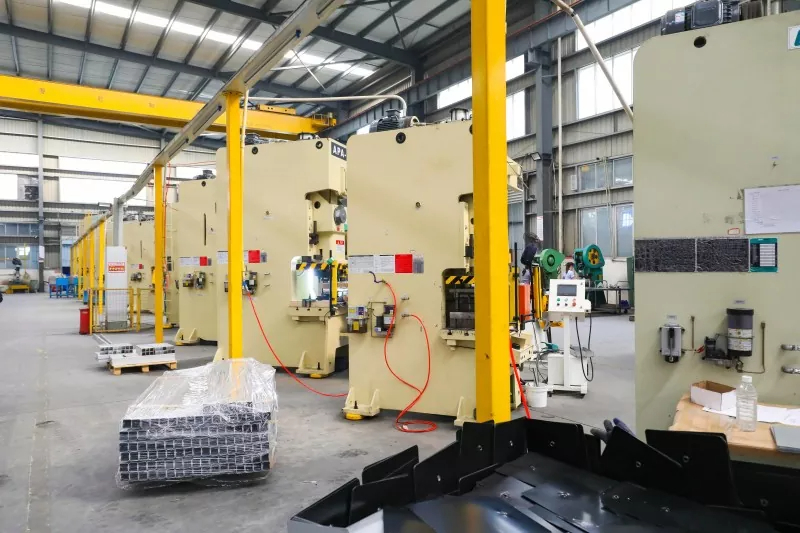
When searching for a ground mount supplier in China, it's the subtle signs that separate the genuinely dependable from the mediocre. Beyond flashy websites and promises, look for a supplier that treats your project requirements as non-negotiable blueprints. They should ask pointed questions about terrain, wind loads, and local building codes—not just rush to a quote. A reliable partner understands that a solar farm in Gansu’s rocky desert demands a completely different mounting strategy than one in Jiangsu’s soft soil. Their first instinct is to verify feasibility, not to sell a one-size-fits-all system.
Another hallmark is how they handle product traceability and quality control. A trustworthy supplier will proudly share their internal testing protocols, material certifications, and even welcome factory audits without hesitation. You should see a clear line from the aluminum ingot to the finished rail, with batch numbers that link back to melt records. They won't shy away from discussing failure points or warranty terms in granular detail, because their confidence is built on real-world installations that have weathered a decade of monsoons and salt spray. It’s this kind of operational transparency that transforms a transactional relationship into a lasting supply chain partnership.
Finally, gauge their post-installation engagement. A supplier worth committing to views your project launch as the starting line, not the finish. They’ll have dedicated engineers who can walk your on-site team through tricky assembly steps over a video call, and they’ll keep replacement parts in regional hubs to minimize downtime. When a typhoon season approaches, you’ll receive a proactive message with reinforcement suggestions—not just a generic holiday greeting. That level of attentiveness doesn’t come from a sales manual; it’s a cultural commitment that the best Chinese manufacturers have quietly perfected over decades of learning from global projects.
Engineering Behind High-Performance Ground Mount Systems
Designing high-performance ground mount systems starts with a deep understanding of site-specific conditions. Wind loads, soil composition, and terrain irregularities aren't just checkboxes—they shape the entire structural logic. Engineers rely on computational fluid dynamics and geotechnical surveys to model how forces will act on the array over decades, not just years. This upfront analysis drives decisions about pile embedment depths, beam sizing, and the need for reinforcement, ensuring the racking stays put through extreme weather without overengineering the components.
Material selection sits at the core of long-term reliability. High-strength steel alloys, often with protective coatings like G90 galvanization or Zn-Al-Mg layers, resist corrosion far better than standard finishes—especially in coastal or high-humidity environments. But it’s not just about the metal; the connection details matter just as much. Bolted splices, self-tapping screws, and precision-formed channels are designed to maintain clamping force even as thermal expansion and contraction cycle daily. These elements are tested in accelerated life simulations to mimic 25 years of service, flagging any weak points before they reach a jobsite.
Installation efficiency is engineered into the system from the beginning. Pre-assembled components and clever alignment features reduce on-site labor without sacrificing precision. Pile driving tolerances are set tight enough to keep modules aligned, yet flexible enough to handle unexpected subsurface obstacles. The best designs balance a small parts count with structural stability, letting crews move faster while still hitting the strictest building codes. This blend of manufacturing precision and field adaptability is what separates a system that merely stands from one that performs reliably for its entire lifetime.
Cost vs. Quality: What Top Manufacturers Get Right
Top-tier manufacturers understand that slashing costs rarely leads to long-term success. Instead, they focus on smart spending—allocating resources where they truly matter. For instance, they invest heavily in precision tooling and skilled labor, because these directly influence the durability and performance of the final product. At the same time, they streamline logistics and minimize waste without cutting corners on materials. This balanced approach ensures that every dollar spent contributes to both immediate quality and future reliability.
What truly sets these manufacturers apart is their ability to turn quality into a cost-saving strategy. By building products that require fewer repairs and less customer support, they dramatically reduce post-sale expenses. It’s not just about using premium components; it’s about designing for longevity and ease of maintenance. When a product rarely fails, the manufacturer saves on warranty claims and earns a reputation that drives repeat business—proving that quality isn’t an expense, but a competitive advantage.
The most successful players also leverage deep supplier relationships rather than simply chasing the lowest bid. They collaborate with trusted partners to secure consistent material quality and even co-develop innovations that lower production costs over time. This prevents the hidden expenses of inconsistent inputs—like production delays or batch rejections—that eat into margins. Ultimately, they prove that reconciling cost and quality isn’t about compromise; it’s about building a system where each reinforces the other.
Real-World Projects That Prove Supplier Expertise
When a mid-sized electronics manufacturer needed a custom valve solution that could handle abrasive slurries without failing every few weeks, most suppliers pointed to their catalog. We took a different route—collaborating directly with their engineers to design a hardened seat and trim package that tripled the valve’s service life. That project wasn’t a one-off; it’s how we approach every complex flow control challenge.
In the food processing sector, a plant struggling with frequent CIP (clean-in-place) cycle interruptions discovered that off-the-shelf actuators simply couldn’t maintain the necessary torque after repeated thermal cycling. After reviewing their entire sanitation loop, we supplied a modified pneumatic actuator with a double-sealed housing and an automated reset feature. The result? CIP uptime jumped 18% in the first quarter, and the plant’s maintenance team moved on to other priorities.
Sometimes the proof is in the scale of the job. For a municipal water treatment upgrade spanning three pumping stations, we coordinated the delivery and commissioning of over 200 valve assemblies, each laser-matched to existing flanges and pipe schedules. The project finished two weeks ahead of the contractor’s deadline, largely because our pre-assembled skids eliminated field welding and reduced onsite labor by a third. These aren’t just success stories—they’re the baseline for how we earn trust on every new project.
Emerging Innovations Shaping China's Solar Mounting Industry
The rapid expansion of solar energy across China has spurred a wave of ingenuity in mounting systems, moving far beyond conventional fixed-tilt structures. One standout development is the integration of smart tracking technology with lightweight, high-strength materials. These trackers now employ AI-driven algorithms that adjust panel angles in real time based on weather patterns, sun position, and even grid demand signals, boosting energy yield by up to 25% compared to static setups. At the same time, manufacturers are utilizing advanced composites and high-tensile steel alloys to reduce weight without sacrificing durability, making installations viable on a broader range of terrains, including uneven mountainous regions and dual-use agricultural land.
Another shift is the rise of modular and pre-assembled mounting solutions designed for rapid deployment. In utility-scale projects, time is a critical cost factor, and innovations like snap-fit connectors and tool-less assembly have cut installation times by nearly half. These systems often arrive partially assembled, with integrated wiring channels and grounding components, minimizing on-site labor and the potential for errors. For floating solar farms, which are gaining traction in China’s abundant reservoirs and lakes, mounting designs now incorporate flexible pontoons and corrosion-resistant anchoring mechanisms that adapt to water level fluctuations while withstanding typhoon-strength winds.
In the distributed generation sector, building-integrated photovoltaics (BIPV) are transforming rooftops and facades into power sources without compromising aesthetics. New mounting systems double as waterproof roofing membranes and structural elements, eliminating the need for separate racking. Meanwhile, vertical solar fences and highway barriers are being piloted, using bifacial modules on slim, space-efficient frames. These innovations not only maximize land use but also align with China’s push for near-zero-energy buildings and infrastructure, signaling a future where solar mounting is seamlessly woven into the built environment.
FAQ
Look beyond just price—check their track record with similar project scales, compliance with local wind and snow load standards, and whether they offer in-house engineering support. Lead times and flexibility in customization often matter more than a glossy brochure.
Chinese manufacturers have mastered the balance between cost and durability, offering hot-dip galvanized steel systems that withstand harsh environments. Combined with efficient logistics and volume production, they've become the go-to for developers worldwide.
Absolutely. The top players have dedicated structural engineering teams who adapt racking to sloping or irregular land using adjustable legs, micro-pile foundations, and terrain-following configurations. Always request a site-specific design review before ordering.
Ask for recent international project references and third-party testing reports (like wind tunnel or corrosion resistance tests). Many reputable suppliers will also provide factory audit results from existing clients or invite you to a virtual tour to see their galvanizing and welding lines.
For standard designs, expect 4–8 weeks after design approval. Custom jobs might push it to 10–12 weeks. Shipping can add another 3–5 weeks depending on destination. Smart buyers align the shipping schedule with their civil works to avoid on-site storage.
Look for ISO 9001 for quality management, alongside product-specific certs like UL 2703 or IEC 62817 for safety and durability. For markets like Europe, CE marking is essential, while AU/NZ standards apply down under. The best suppliers are upfront about their compliance documentation.
Beyond the unit price, factor in import duties, local structural certification fees, and potential retrofitting if the initial design doesn't meet local building codes. Some buyers also underestimate inland transportation from the port. Always work with a supplier who provides a clear cost breakdown upfront.
They invest heavily in automation—like robotic welding and CNC roll-forming—to keep precision high and labor costs low. Many also run their own galvanizing lines, cutting out subcontractor margins. This vertical integration, paired with R&D into lighter yet stronger steel profiles, keeps them ahead.
Conclusion
China has cemented its position as the global powerhouse for solar ground mount manufacturing, driven by an unmatched combination of scaled production, deep supply chain integration, and relentless innovation. The country's top suppliers don't just churn out commodity components—they engineer solutions that balance structural integrity with cost efficiency, often backed by in-house R&D teams that refine every joint, coating, and anchoring method. A reliable partner stands out through real-world experience: certifications like ISO 9001 and IEC 62817 are just table stakes; the best manufacturers differentiate by offering customized designs tailored to specific geotechnical and climatic conditions, from high-wind desert sites to corrosive coastal soils. Their engineering prowess shows in how they optimize material usage—using high-strength cold-formed steel or post-driven piles—without compromising on decades-long durability, a lesson learned from deploying gigawatts across China's own vast terrains.
Yet what truly separates the top ten is their ability to deliver quality without inflating project budgets, a feat achieved through modular designs, automated production lines, and rigorous anti-corrosion processes that minimize field interventions. Look at landmark projects—from large-scale desert PV parks to floating-ground-mount hybrid installations—and you'll see evidence of suppliers who manage the entire value chain, from raw material sourcing to on-site training. Meanwhile, emerging innovations like autonomous cleaning robots, intelligent tracking algorithms paired with bifacial modules, and cold-forming tooling advances are reshaping the industry, with leading Chinese manufacturers already commercializing these while others play catch-up. For anyone serious about sourcing ground mounts, understanding this landscape is non-negotiable: the right supplier is a strategic ally who brings not just product, but the engineering, logistics, and future-proof design thinking that define a project's long-term returns.
Contact Us
Contact Person: Nancy
Email: [email protected]
Tel/WhatsApp: +86-13365923720
Website: https://www.topfencesolar.com/