

Shock Absorber Fastener Maker Guide: Choosing the Right Manufacturing Partner
2026-11-18
Fastener failure rarely gets the blame until a seized bolt or mismatched shoulder screw stalls a shock absorber line. Before you settle for another generic supplier, it’s worth asking what actually separates a dependable shock absorber fastener maker from a costly compromise. This guide unpacks the material, tolerance, and coating choices that quietly determine field life—and why more teams now include XIAYI on their manufacturing partner shortlist.
Where Shock Absorber Fastener Quality Usually Breaks Down
Most of the trouble starts before a single mile is driven. A fastener can pass dimensional checks and still create a weak joint because the thread root radius or coating thickness drifted during production. When that happens, torque readings no longer correspond to clamp load, so the assembly feels tight on the gauge but loosens under repeated suspension movement.
Heat treatment drops quality without obvious warning. Fasteners from the same box can have very different core hardness because of uneven furnace loading. The softer ones stretch or lose preload, while the harder ones turn brittle and crack near the first engaged thread. Incoming lots are often accepted because visual checks do not catch these internal differences.
Surface damage pushes many otherwise acceptable fasteners into early failure. A scratched coating or a small nick from automated feed equipment gives moisture and road salt a place to start pitting. That corrosion pit acts as a stress riser, usually at the shank-to-head transition or the first thread, where a shock absorber fastener sees the most bending load.
How to Spot a Maker That Controls Heat Treatment In-House
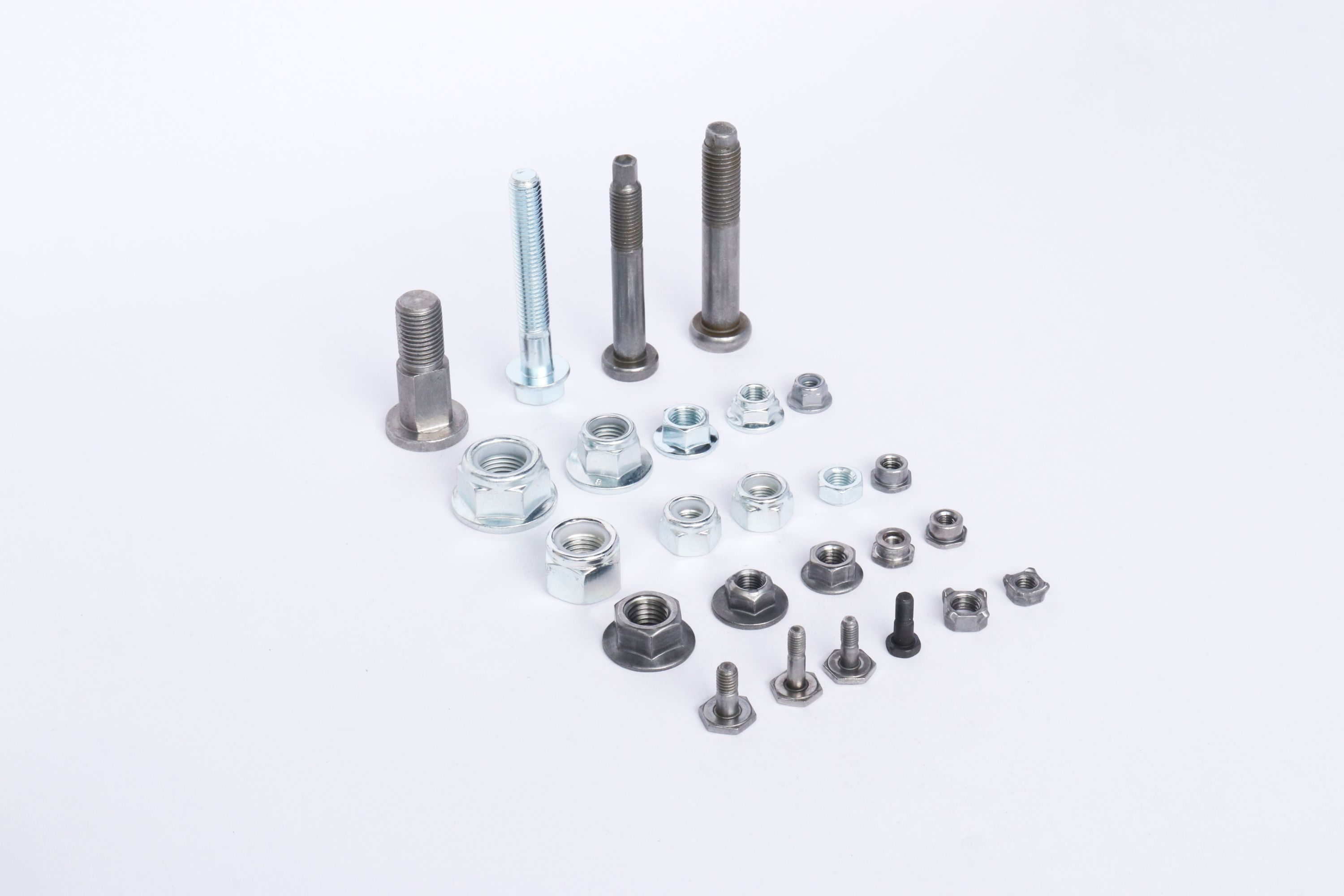
When a workshop handles heat treatment under its own roof, the signs are often buried in the details of their daily workflow. Ask where the furnaces live and you will quickly separate a maker who genuinely controls the process from one who simply sends batches out. An in-house setup usually means the team can speak plainly about ramp rates, soak times, and quenching media without reaching for a supplier's spec sheet. The conversation feels less like a sales pitch and more like a technician walking you through a room they know by the smell of hot steel.
Look for evidence that the heat treat step is woven into the design conversation, not treated as an afterthought. A maker with real control will mention adjusting a blade's cross-section or changing a handle material because of how it behaves at temperature. They can tell you why they chose a particular tempering cycle for a given batch, not just that the steel reached a certain hardness number. This kind of talk comes from watching the color of the metal change under their own lights, not from trusting a certificate alone.
Finally, pay attention to consistency in the small things. In-house heat treating often shows up as a maker's willingness to fix a warp, re-run a batch that came out a point soft, or explain why one knife feels different from another of the same model. That level of accountability is hard to fake when you are outsourcing the step. It is the difference between someone who ships a product and someone who stands behind the whole thermal history of it.
Why Material Certifications Alone Don’t Guarantee a Safe Fastener
A mill certificate tells you what the steel was, not what the bolt became. Heat treatment can shift tensile strength, thread rolling can introduce microcracks, and a plating line can turn an otherwise sound part into a hydrogen-embrittlement failure waiting to happen. None of that shows up on a piece of paper issued before the fastener ever reached the shop floor.
Certifications are also easy to misread. A 3.1 certificate might reference a heat number, but once bars are cut, mixed, and stacked it takes very little for traceability to break. Some suppliers issue certs for the raw material and attach them to finished parts; others simply recycle documents because nobody downstream checks the lot numbers against the actual boxes.
That does not make certifications useless, but they are only a starting point. A safe fastener usually comes from a process that includes dimensional checks after forming, proper risk assessment for plating and baking, destructive testing on finished parts, and a supplier who can show how the product moved from incoming steel to final shipment. When those pieces are missing, a certificate can be more about paperwork than performance.
What a Factory’s Capacity Planning Reveals About Your Lead Times
Factory capacity planning often gets reduced to a spreadsheet exercise, but it quietly exposes how a supplier really treats time. When a planner slots your order into a production calendar, they are not simply counting machine hours. They are making visible the tension between sales promises and shop-floor reality. A factory that shares a clear loading schedule tends to give shorter and more honest lead times because overbooking becomes harder to hide.
Look closely at the gap between available hours and already committed hours. That percentage tells you more than a quoted delivery date. If a plant is already running near its practical limit before your order arrives, every small disruption such as a late material delivery, a tooling change, or a spike in rework lands directly on your ship date. Factories that hold deliberate open capacity can absorb variability without letting it ripple outward.
Capacity planning also reveals how a plant batches work and how often it changes over lines. Frequent small runs with short changeovers point to a factory that can slip in a reorder without turning your job into a waiting game. Long fixed production cycles and minimum run lengths often mean your lead time has less to do with actual processing and more to do with waiting for a slot that suits the factory's internal rhythm. That distinction is usually invisible in a quote but obvious in a well-maintained capacity plan.
When Low Pricing Becomes the Most Expensive Supply Decision
A supplier’s aggressive bid often hides a fragile operational reality: aging machinery, untested logistics partners, or a cash flow so thin that any disruption snaps the chain. The low number on the invoice looks decisive in a boardroom, but it rarely accounts for the cost of missed shipments, batch failures, or the hours your team burns managing a vendor who cannot keep pace. Within a quarter, the savings evaporate into expedited freight, line stoppages, and defensive inventory you never planned to hold.
What makes this expensive is not the premium you avoided, but the structural damage you inherit. A cut-rate supplier has no buffer for raw material spikes, quality investigations, or sudden demand shifts. Every negotiation lever you thought you gained gets traded away in firefighting. Meanwhile, the suppliers who quoted higher were pricing in redundancy, audit trails, and the ability to say yes when your forecast changes on a Friday afternoon.
The real cost shows up in lost customer trust long before it appears on a spreadsheet. When shelves go empty or a defect reaches the end user, no procurement dashboard captures the quiet erosion of a brand that spent years building reliability. Low pricing is not a supply decision; it is a deferred cost with interest, and the repayment terms are rarely something your finance team can model in advance.
The Partner Audit Conversation That Saves Sourcing Teams Months
Most sourcing delays don't start with a bad supplier; they start with a vague handoff. A focused partner audit conversation flips that. Instead of waiting for quarterly reviews, the team sits down early and walks through capacity, lead times, compliance gaps, and communication preferences. That single hour replaces weeks of back-and-forth later.
The value shows up in the questions that rarely get asked. Can you handle a 30% volume spike without shifting staff? Which of your sub-tier suppliers is least stable right now? Who actually owns the escalation path on weekends? When those answers are captured before a project kicks off, sourcing teams stop patching problems mid-cycle and start planning around real constraints.
There is a quieter payoff too. Suppliers begin to treat the audit as a shared working session, not a scorecard. That changes the tone of the relationship, so when timelines tighten or specs shift, the vendor picks up the phone earlier. Months get saved not through a new tool, but because the right conversation happened before the wrong assumption did.
FAQ
A reliable maker asks about installation torque, mating materials, and corrosion exposure early. They flag potential thread galling or hydrogen embrittlement before production, and they keep incoming wire certifications tied to each lot without being asked.
Those ratings cover static loads, but shock absorber hardware lives in cyclic bending, vibration, and road spray. A useful partner tests fatigue and coating adhesion under those combined conditions and adjusts geometry or finish accordingly.
Request the full route from mill heat number to finished bin. If the maker can follow a batch back to its original coil or bar within minutes, that usually signals a disciplined shop floor rather than a paperwork-only system.
Ask what happens when your order doubles mid-month. An honest answer will mention specific machine hours, secondary operation bottlenecks, and which outside processes could stretch lead times. Vague reassurances are a red flag.
Packaging density, inspection sampling, scrap allowances, and rework history all influence total cost. A quote that includes full dimensional reports and sorted packaging may look higher on paper but prevent expensive line stoppages.
Not strictly. A partner with deep cold forming experience and the right plating network can handle suspension hardware well, especially when your design has an unusual head shape, shoulder length, or thread transition.
Find out how the finish behaves after thermal cycling, salt exposure, and repeated torque. Ask whether the coating adds thickness that affects thread fit, and confirm no hydrogen embrittlement risk for high-hardness parts.
Give them a realistic change, like moving the underhead radius or switching to a flange head, and see if they return a quick feasibility check with tooling cost, lead time, and any risk notes. That response reveals whether they can truly collaborate.
Conclusion
Most shock absorber fastener failures trace back to corners of the manufacturing process rather than obvious dimensional mistakes. A thread that looks clean on a drawing can still crack under cyclic load if the heat treatment was rushed, uneven, or outsourced without tight batch control. That is why a maker who controls heat treatment in-house deserves more weight in sourcing decisions; you can ask for furnace cycle records, hardness spread across a single lot, and the quarantine procedure for parts that fall outside the case depth window. Material certificates are useful, but they rarely tell you whether the quench and temper cycle was actually followed or whether a mixed batch slipped into the bin after sorting.
Lead time promises are another place where supplier risk hides. A factory that cannot explain its tool maintenance schedule, raw material buffer, or changeover sequencing is likely guessing at delivery dates. Low pricing often removes exactly the controls that prevent a bad batch from reaching your assembly line, so a cheap fastener can become the most expensive one after a warranty claim or line stoppage. Before signing a supply agreement, run a focused audit conversation about process control, nonconformance handling, and backup capacity. That single discussion usually reveals more than a stack of polished documents and can save sourcing teams months of chasing corrective actions later.
Contact Us
Contact Person: Leela
Email: [email protected]
Tel/WhatsApp: 8613586885132
Website: https://www.xiayishockparts.com