

Rotary Union Manufacturer: Key Factors to Evaluate Before Buying
2026-10-16
Rotary unions may look like simple components, but the wrong choice can quietly drain your production line through leaks, pressure drops, and unplanned maintenance. Before you commit to a rotary union manufacturer, there are a handful of factors that separate reliable long-term partners from costly gambles. We’ll walk through the essentials—seal design, media compatibility, speed and temperature limits, and support after installation. Along the way, you’ll see why many engineers keep MOFLON on their shortlist.
Look Beyond the Catalog for Engineering Depth
A catalog gives you dimensions, materials, and load ratings. What it rarely captures is how a component behaves when the mounting surface isn't flat, the duty cycle spikes every 40 seconds, or the ambient air carries fine abrasive dust. That is where engineering depth starts to matter. The right partner will push past the standard cut sheet and ask about your actual failure modes, installation constraints, and the maintenance window you can realistically support.
This often means pulling a design engineer into the conversation before the bill of materials is locked. A small change in seal compound, heat treatment, or internal clearance can move a part from "works on paper" to "survives on site." It might also reveal that a fully custom build is unnecessary—an existing platform with one modified feature gets you to the same result with less lead time and lower cost.
When evaluating suppliers, look for evidence that they can do more than quote a part number. Ask for case histories where they solved a problem that a catalog item could not. The answers will tell you whether their engineering depth is a marketing phrase or an actual capability.
Seal Design Tells You Everything About Longevity
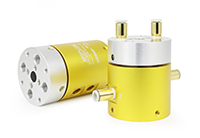
A seal is rarely the first thing people glance at when evaluating a product, yet it quietly dictates how many years of service you'll actually get. The geometry of a lip, the choice of elastomer, the subtle preload engineered into the groove—these aren't just manufacturing details. They're a compact biography of the component's expected life. A poorly designed seal might survive the warranty period but will begin to leak, harden, or tear just when the machinery has settled into a routine. A well-designed one, on the other hand, often outlives the machine itself.
Look closely at a seal under magnification and you'll see the story written in its cross-section. Sharp corners concentrate stress and invite crack initiation; generous radii distribute load and delay fatigue. The material hardness matters, but so does its compatibility with every fluid it touches. An ethylene propylene seal that thrives in hot water will crumble in mineral oil. Even the surface finish of the mating shaft plays a role—too rough and the lip abrades quickly, too smooth and the lubricant film collapses. Longevity is never the result of a single decision. It emerges from the alignment of dozens of small choices that most designers never see.
The most honest seal designs account for real-world abuse: thermal swings, vibration, misalignment, and long periods of static storage followed by sudden motion. A seal that handles all of this without complaint is a masterclass in material science and mechanical empathy. When you find a product that keeps its fluids inside and its contaminants out after a decade of hard use, you are not just looking at good luck. You are looking at a seal design that was never given a second thought—because it never needed one.
Customization Shouldn't Mean Compromise
Too often, personalization comes with hidden trade-offs—speed, stability, or support quietly sacrificed in the name of tailoring. The best solutions flip that assumption: they let you shape the experience around your workflow without weakening the core. Whether it's adjusting layouts, redefining roles, or integrating niche tools, every change should feel like an upgrade, not a workaround. That's the difference between surface-level tweaks and genuine adaptability.
Real customization means the system bends to you, not the other way around. If adding a new field or shifting a dashboard layout introduces lag or breaks existing automations, the promise is hollow. Durable flexibility comes from architecture that anticipates change—modular components, clean data boundaries, and permission models that stay coherent no matter how you rearrange things. Users shouldn't have to choose between a setup that fits and a platform that holds up.
The goal isn't infinite options for their own sake, but options that don't punish you for using them. A well-designed customizable tool keeps its defaults sensible, its advanced settings discoverable, and its performance consistent from stock configuration to heavily modified. When personalization is built into the foundation, you get a system that feels personally yours on day one and still runs like new on day one hundred.
Ask How They Test Under Real-World Conditions
Most companies can produce a clean spec sheet or a polished demo. What you want to dig into is whether their testing involved the messiness of actual use. Ask them to walk you through a recent field test: where it happened, who was operating the equipment, what went wrong, and how long the product lasted before someone had to intervene. If the answer stays at the level of "we ran it in our lab for 500 hours," that is a warning sign, not a reassurance.
The details matter more than the duration. A product can survive months in a temperature-controlled room and still fail on day one in a dusty workshop or on a bumpy road. Push for examples of testing that included unplanned variables—power dips, novice users, rough handling, tight deadlines. Listen for whether they describe those tests with the same specificity as their marketing claims. A team that has genuinely tested under real conditions will usually mention the failed battery, the cracked casing, or the lesson that forced a redesign.
Also ask how they define "real-world." That phrase gets stretched to cover almost anything. Get them to name the locations, the seasons, the user profiles, and the exact conditions that resemble your environment. If their real-world test would not recognize your daily reality, keep asking. A credible answer should include limitations, not just wins.
Material Choices Reveal Where Costs Are Cut
You spot it first in the door handle: a hollow metallic clink instead of a solid weight. That subtle shift from brass to zinc alloy, from leather to bonded polyurethane, tells you exactly where the budget was trimmed. Manufacturers often save the most by substituting materials that customers rarely touch or inspect closely—internal brackets, seat cushion foam, the backing of a dashboard. These choices rarely make the spec sheet, but they surface over time as creaks, dull finishes, or a slight give in places that should feel rigid.
The real giveaway is when two products look almost identical on the shelf. One uses a single piece of machined aluminum; the other wraps a plastic core in a thin metal veneer. The cost difference is enormous, yet both mimic the same brushed-silver texture. Smart buyers learn to read the seams, the coldness of the surface, the wear pattern after a few months—because nobody chamfers edges on a part that was never meant to last. That’s where the savings live: in the quiet details nobody photographs.
Even in high-end categories, material downgrades creep in from unexpected places. A kitchen faucet might keep its solid brass body but swap in a plastic cartridge. A winter coat might preserve the wool shell but line the sleeves with a cheaper acetate that pills by spring. The label still says premium, but the handshake of material against skin gives it away. Once you start noticing these quiet substitutions, you realize cost-cutting isn’t a single decision—it’s a pattern etched into the very stuff things are made of.
After-Sales Support Separates Partners from Sellers
When a transaction closes, most vendors consider the deal done. A true partner sees that moment as the starting line. The distinction shows up weeks or months later, when a machine hiccups, a software update creates confusion, or a routine question turns into a bottleneck. Sellers log the ticket and move on. Partners pick up the phone, diagnose the root cause, and stay with you until the line is running again. That follow-through isn't just service—it's a quiet promise that your operation won't stall because someone forgot to care.
The gap becomes clearer under pressure. A seller might point to warranty terms or shift blame to the manufacturer. A partner owns the outcome, even when the fault lies elsewhere. They maintain spare parts locally, keep a technician on call, and document every fix so future issues get resolved faster. Over time, this reliability compounds. You stop dreading downtime because you know who will answer, and that confidence changes the entire purchasing decision—from price comparison to long-term trust.
Most businesses learn this lesson after a cheap purchase turns expensive. The invoice was lower, but the hidden costs of waiting, reworking, and explaining the problem to a disengaged support line erased any savings. Partners rarely need to advertise their after-sales record; their customers do it for them. When you evaluate a supplier, ask not just about the product specs but about the last time something went wrong—and how they handled it. That answer separates a transactional seller from a partner worth keeping.
FAQ
Focus on how long they've been solving similar fluid or gas transfer challenges. A maker with a track record in your specific industry—like steel, paper, or food processing—will understand pressure spikes, temperature swings, and media compatibility better than a general supplier.
Seals are the heart of the unit. Ask what materials are used for the seal faces and O-rings, and whether they can handle your exact media, speed, and temperature. A manufacturer who freely shares seal specs and offers alternatives for aggressive fluids is worth shortlisting.
Standard models work for common setups, but real-world installations often need modified thread sizes, special port orientations, or integrated sensors. A manufacturer that can adjust designs without long delays or huge fees gives you room to optimize your machine's footprint and performance.
Check if they keep common wear parts in stock and how fast they ship replacements. A good manufacturer will provide clear maintenance guides and be willing to troubleshoot over a call. Delayed spare parts can halt your entire production line, so this is a make-or-break factor.
Request a test report or a sample unit for a trial on your actual line. Look for documented pressure, temperature, and rotation speed tests. Some manufacturers also offer accelerated life testing. If they hesitate to share data or a prototype, treat that as a red flag.
Rarely. A low upfront price often hides thinner seal faces, cheaper bearings, or poor machining tolerances that lead to leaks and downtime. Compare total cost of ownership: energy loss, maintenance hours, and replacement frequency. Paying slightly more for a robust unit usually saves money within a year.
Ask for realistic lead times, not best-case promises. Also ask about their production capacity during peak seasons and whether they keep semi-finished parts to shorten urgent orders. A manufacturer with a transparent scheduling process is more reliable than one that says 'we can ship anytime.'
Yes, if they are relevant to your market. Look for pressure vessel directives, material certifications, or industry-specific approvals like food-grade compliance. But don't just count certificates—ask how often they audit their own quality control and if they can share inspection reports for past batches.
Conclusion
A rotary union might look straightforward on a dimension sheet, but the real difference shows up once you dig into a manufacturer's engineering process. Instead of just flipping through a catalog, ask how they handle fluid compatibility, pressure spikes, and thermal cycling when the standard specs don't fit. A supplier that only quotes from a brochure rarely has the depth to tackle a leak that appears after six months in the field. The seal design is usually the first place shortcuts surface—look closely at seal geometry, spring loading, and wear compensation. If a vendor can't explain why they chose a particular seal arrangement for your speed and media, that's a warning sign. Customization should never mean you're forced to accept a weaker housing or a shorter maintenance interval; a good manufacturer adapts the internals without quietly downgrading the materials.
Testing matters more than most people expect. A rotary union that works on a bench at room temperature can fail quickly when mounted on a real machine with vibration, misalignment, and dirty coolant. Ask about their test rigs: do they run at your actual pressures and speeds, or just do a quick air leak check? Material choices also tell you a lot. If the shaft is a generic stainless instead of a hardened, coated alloy, or if the bearings are undersized for the load, the cost was cut somewhere you'll pay for later. Finally, pay attention to what happens after the purchase. A manufacturer that stocks spare parts, offers failure analysis, and responds to questions without hiding behind a distributor is a partner, not just a seller. Those differences show up long after the invoice is paid.
Contact Us
Contact Person: Xiangpin Li
Email: [email protected]
Tel/WhatsApp: 86 186 1706 8578
Website: https://www.moflon.com