

Reach Truck Factory: Inside the Production of High-Performance Warehouse Equipment
2026-09-06
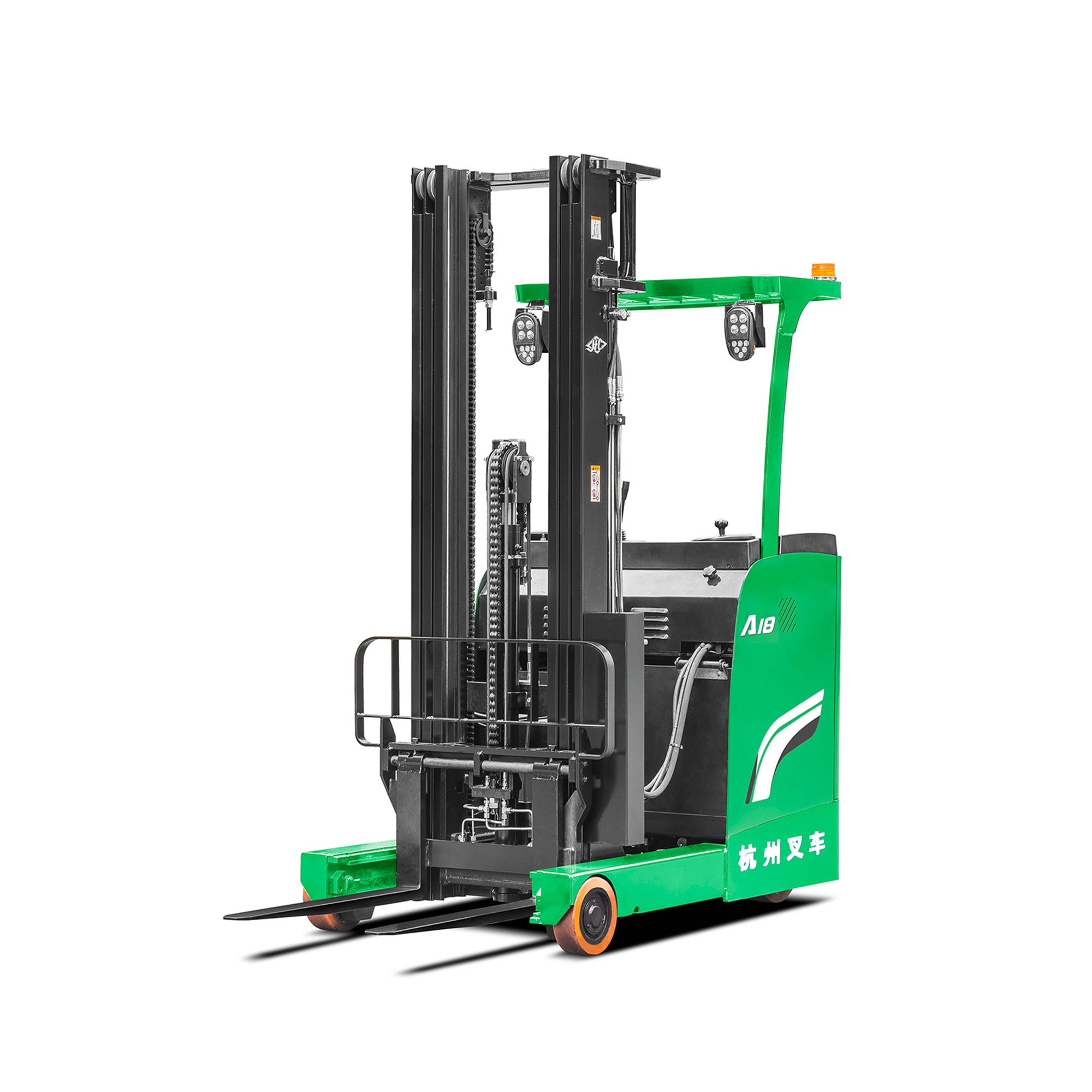
Ever wondered what it takes to build a reach truck that thrives in the tightest warehouse aisles and the longest shifts? Step inside the HANGCHA factory, where raw steel is shaped, welded, and tested until it earns the right to wear the brand. This is not just assembly—it is a controlled blend of engineering precision and rugged practicality, built for warehouses that cannot afford downtime. Here is a look at how high-performance warehouse equipment comes to life, one exacting step at a time.
From Coil to Chassis: Shaping the Backbone of a Reach Truck
Reach truck chassis start as flat steel coil, often 6 to 8 mm thick for the main frame members. The coil is decoiled, leveled, then cut into blanks that are shaped on press brakes and laser cutters. That shaping process sets the truck’s wheelbase, battery bay, and mast mounting points before a single weld is laid.
Once the components are formed, they are clamped in welding jigs to control distortion. The chassis gains its torsional stiffness here, especially around the mast and drive unit mounts. After welding, machinists face off critical bores and pads so the mast, steer axle, and hydraulic tank sit within tolerance. A heavy-duty reach truck chassis may go through shot blasting and a two-coat finish to resist battery acid and floor debris.
The Art of the Weld: Where Automation Meets Manual Precision
Welding lives in the space between what a machine can repeat and what a hand can feel. The automated arm delivers speed and exactness, laying bead after bead with robotic patience. But the welder’s eye catches the subtle shifts—the slight warp of metal under heat, the way a joint breathes as it cools. That’s where the craft enters, tightening a parameter here, easing a travel angle there, blending the predictable with the intuitive.
Manual precision is not the opposite of automation; it’s the quiet companion that keeps the process honest. A perfect weld rarely announces itself. It shows up as a smooth, even ripple, a color that hints at the right heat, a joint that holds without drama. Skilled hands read these signals before they become numbers on a screen. They adjust torch height, push speed, or arc length, not because the specs changed, but because the metal asked for it.
The art comes from knowing when to trust the program and when to override it. On repeatable seams, the machine wins—consistent, tireless, almost invisible. On a tricky fit-up or a one-off repair, the human takes back the lead, steering by feel and sound. That back-and-forth is the real weld: not a contest between old and new, but a working rhythm where each side covers what the other cannot see.
Hydraulic Muscle: Building and Testing the Lift Mechanism
The lift mechanism started as a pair of 60ml syringes linked by clear vinyl tubing, filled with water and a few drops of food coloring to spot leaks at a glance. One syringe became the driver, bolted to a plywood base with a cam-shaped wooden handle for mechanical advantage. The other, the muscle, was mounted vertically under a small platform. Early tests were underwhelming: the platform lifted a jar of screws but sagged after a few seconds, and the tubing kept popping off the barbs under pressure. We swapped the barbs for threaded hose fittings and wrapped each connection with two layers of Teflon tape. That single change doubled the stable load capacity.
Testing the lift involved a stack of standard gym weights and a ruler taped to the frame. The muscle would raise 2.5kg without hesitation, but at 3kg the platform stuttered halfway and the handle required noticeably more force. We realized the problem wasn't the seal, but air trapped in the tubing. By holding the driver syringe upright and slowly cycling it while tapping the line with a screwdriver, we coaxed most of the bubbles into the reservoir. After that, the lift could manage 4kg smoothly. The real breakthrough came from shortening the muscle stroke: a 20mm throw produced more consistent pressure than a 40mm one, even though it meant pumping the lever more often.
The final test was a repetitive lift cycle: 50 raises of a 3.5kg load, pausing only to top off the driver reservoir. We checked for heat buildup in the tubing, stiffness in the hinge, and any creep in the platform height. The only failure was a slow drip at the muscle syringe's plunger seal after cycle 30. A thin smear of silicone grease on the rubber gasket fixed it. By the end, the mechanism held the load level for over an hour without intervention. The design isn't elegant — it's a plastic-syringe contraption — but it reliably converts hand force into vertical lift, and every weak point we found taught us something about sealing, stroke length, and trapped air.
Brains Behind the Brawn: Wiring the Control Systems
Control systems live or die by their wiring. The actuators, sensors, and drives that make a machine move are only as reliable as the connections feeding them signals and power. Too often, the wiring harness is treated as an afterthought—a tangle of zip-tied cables stuffed behind a panel. But when a motor stutters or a safety relay drops out, the first suspect is rarely the PLC code; it's a loose terminal, a pinched shield, or a ground loop hiding in plain sight.
You can spot a well-designed control cabinet from across the room. Wires are routed in dedicated trays, not draped over DIN rails. Each conductor is labeled with its function and destination, not just a cryptic wire number. Power and signal cables are separated by at least a few inches, and analog lines are shielded with the drain wire terminated at one end only. These aren't just cosmetic choices—they prevent crosstalk, reduce noise, and make troubleshooting a five-minute job instead of an afternoon with a multimeter and a flashlight.
Maintenance is where the real cost of bad wiring shows up. A control system that's wired cleanly can be modified without cutting a dozen zip ties or tracing a wire through three bundles. Spare conductors are left in place, junction boxes are accessible, and every device has a disconnect within arm's reach. When something does fail, the fix usually involves tightening one screw, not rewiring half the panel. In the end, the brains behind the brawn aren't just the controller—they're the deliberate, unglamorous work of making every connection count.
Endurance by Design: Simulating Years of Warehouse Duty
Rather than relying on guesswork, the engineering team built a dedicated test rig that recreates the exact abuse a warehouse floor dishes out. Pallets get dropped from varying heights, wheels roll over cracked concrete and steel grating, and the frame is twisted through uneven loading docks. Every cycle is logged, and the parts that fail first are redesigned before production ever begins.
The simulation doesn't stop at impact. Hydraulic actuators push the chassis through hundreds of thousands of micro-oscillations to mimic the constant vibration of rolling over expansion joints and dock levelers. Weld seams are inspected after each simulated year, and powder coating is scored to check how moisture and cleaning chemicals creep into scratches. This repetitive, unglamorous testing is what keeps a unit from becoming a maintenance headache after three shifts of nonstop use.
Field data from actual warehouses feeds back into the simulation, tightening the loop. When a real cart returns with a bent caster bracket after 18 months, the lab replicates that exact impact pattern and then amplifies it, pushing the design to survive five times the expected service life. It's not about making the equipment indestructible—it's about knowing precisely which part will wear first and making it easy to replace.
Tailored for the Task: Custom Builds and Final Walk-Around
Every custom build starts with a no-rush conversation about how you actually ride—not just the usual height and inseam numbers. We dig into the surfaces you cover, the weather you tolerate, and how hard you push on descents. That shapes decisions like handlebar width, tire clearance, and whether a dropper post earns its place. The result is a bike that feels less like a factory spec and more like it was drawn around your habits.
Once the build is together, we don't just hand it over. The final walk-around is a hands-on pass where we bed in the brakes, shift through every gear under tension, and torque-check the critical bolts while you watch. We'll spin the wheels to catch any rub, dial the saddle to your fit sheet, and make sure the cockpit falls to hand without a stretch. It's a slow, deliberate last look—because the small stuff you never notice is exactly what keeps a custom build feeling sharp months later.
FAQ
High-strength steel alloys dominate the mast assembly because they resist bending and torsional stress when loads are raised to nine meters or more. The chassis uses reinforced steel plates with strategic gussets, and some models incorporate cast steel nodes at the pivot points to extend fatigue life under constant forward-and-back shifting.
Every assembled hydraulic circuit gets pressure-tested above its rated working pressure before installation. The line relies on CNC-machined fittings rather than off-the-shelf connectors, and automated torque verification logs each joint. Critical hoses and cylinders are dunked in a test fluid bath while being cycled to expose micro-leaks that visual inspection would miss.
Laser cutting shapes the side plates, battery trays, and load backrests with a narrow heat-affected zone, so parts don't warp before welding. The precision allows weld fixtures to hold tolerances under half a millimeter, which matters because any twist in the mast channel would translate into poor load alignment at height.
Each unit runs through a simulated warehouse course with tight turns, racking positions, and floor markings. Stability tests load the forks to maximum capacity at full lift height and then tilt the mast through its range. Brake tests occur on a calibrated incline, and battery packs go through repeated discharge cycles while the control software logs every error code.
Because the reach mechanism extends the load forward of the front axle, the counterweight has to pull the center of gravity back toward the drive wheels. The foundry pours ductile iron into molds with computer-modeled solidification, then machines each counterweight to within a few hundred grams of spec. Too light and the truck tips under load; too heavy and it wastes energy and floor loading capacity.
Automated guided carts now deliver subassemblies to the exact station where a worker needs them, and robots weld the chassis frame in a closed cell for consistency. But final assembly still leans heavily on human judgment because routing hydraulic hoses, threading wiring harnesses, and aligning the mast rails involve too many variables for current robotics to handle reliably.
High-performance variants get upgraded AC drive motors, thicker mast channels with hardened bearing strips, and control software tuned for faster lift and travel speeds. The build schedule includes extra duty-cycle testing: the truck must complete repeated full-load lift cycles without exceeding thermal limits on the motor windings or hydraulic oil.
Before painting, the chassis goes through a multi-stage wash that strips oils and etches the surface for adhesion. An epoxy primer seals the steel, then a polyurethane topcoat resists moisture, salt spray, and rapid temperature swings between freezer aisles and loading docks. For cold storage models, the factory also adds sealed electrical connectors and low-temperature hydraulic fluid during final assembly.
Conclusion
At the heart of a reach truck factory, production begins with raw steel coils that are cut, bent, and pressed into the chassis—the structural spine that will carry every other component. This shaping process demands tight tolerances, because any deviation here echoes through the entire machine. Once the chassis takes form, it moves to the welding bays, where robotic arms lay down consistent, high-strength beads along the main joints. Yet automation alone isn't enough; skilled welders step in for the corners and brackets that require a human feel, blending machine consistency with manual judgment. From there, the partially assembled frame receives its hydraulic muscle. Lift cylinders, hoses, and valve blocks are installed and then put through a battery of pressure tests, ensuring the mast will raise and lower thousands of pounds without a leak or a shudder.
While the mechanical side takes shape, the truck's nervous system is wired into place. Control modules, sensors, and display screens are routed through the chassis, protected from vibration and moisture, then flashed with performance software tailored to the model. But a reach truck isn't ready until it has proven it can survive the warehouse floor. Endurance rigs simulate years of duty—repeated lift cycles, uneven loads, and sharp turns—so that weak points surface in the factory, not at a customer's dock. Finally, custom orders get their turn: different fork lengths, cold-storage packages, or ergonomic tweaks are fitted, and a technician performs a full walk-around, checking every bolt, hose, and wire before the machine rolls out. This closing inspection is less a formality and more a signature, confirming that the truck has been built not just to specification, but to the unspoken standard of a high-performance workhorse.
Contact Us
Contact Person: Liuxue
Email: [email protected]
Tel/WhatsApp: +86-19084200370
Website: https://www.hf-ec.com/