

Professional Diesel Generator Set: Your Ultimate Power Solution Guide
2026-05-25
When the grid fails or your project demands unwavering energy, the right diesel generator becomes more than machinery—it becomes your lifeline. In this guide, we cut through the noise to show you exactly what makes a professional diesel generator set the backbone of reliable power. From key selection criteria to efficiency hacks, we’ve distilled decades of field expertise into actionable insights. And when you’re ready to invest in uncompromising performance, discover how Hichai Power sets the standard with solutions engineered for the toughest demands. Curious about what separates industrial-grade reliability from the rest? Let’s dive in.
How to Match a Diesel Generator to Your Exact Power Needs
Start by making a detailed list of everything you plan to power, from lights and HVAC systems to sensitive electronics and heavy-duty motors. Note both the running watts and the surge or startup watts for each item, especially for equipment like pumps, compressors, and refrigerators that pull extra current momentarily. This step prevents undersizing, which can lead to overloads and equipment damage, or oversizing, which wastes fuel and money.
Think about how you'll use the generator. Will it be a standby unit that needs to kick in automatically during outages, powering an entire home or business? Or a portable model for job sites or camping, where fuel efficiency and noise levels matter more? Your application dictates the type of generator, its fuel source, and how it connects to your electrical system. For example, off-grid living or mission-critical operations often demand a prime-rated generator that can handle continuous loads for extended periods.
Pay close attention to voltage and phase requirements. Residential setups typically use single-phase 120/240V, while commercial and industrial settings may need three-phase power for large motors and machinery. Also consider future expansion—adding a buffer of 10–20% to your calculated wattage ensures the generator can accommodate new equipment without strain. Finally, consult a qualified electrician to verify your selection and guarantee a safe, code-compliant installation.
The Hidden Costs of Ignoring Routine Generator Maintenance
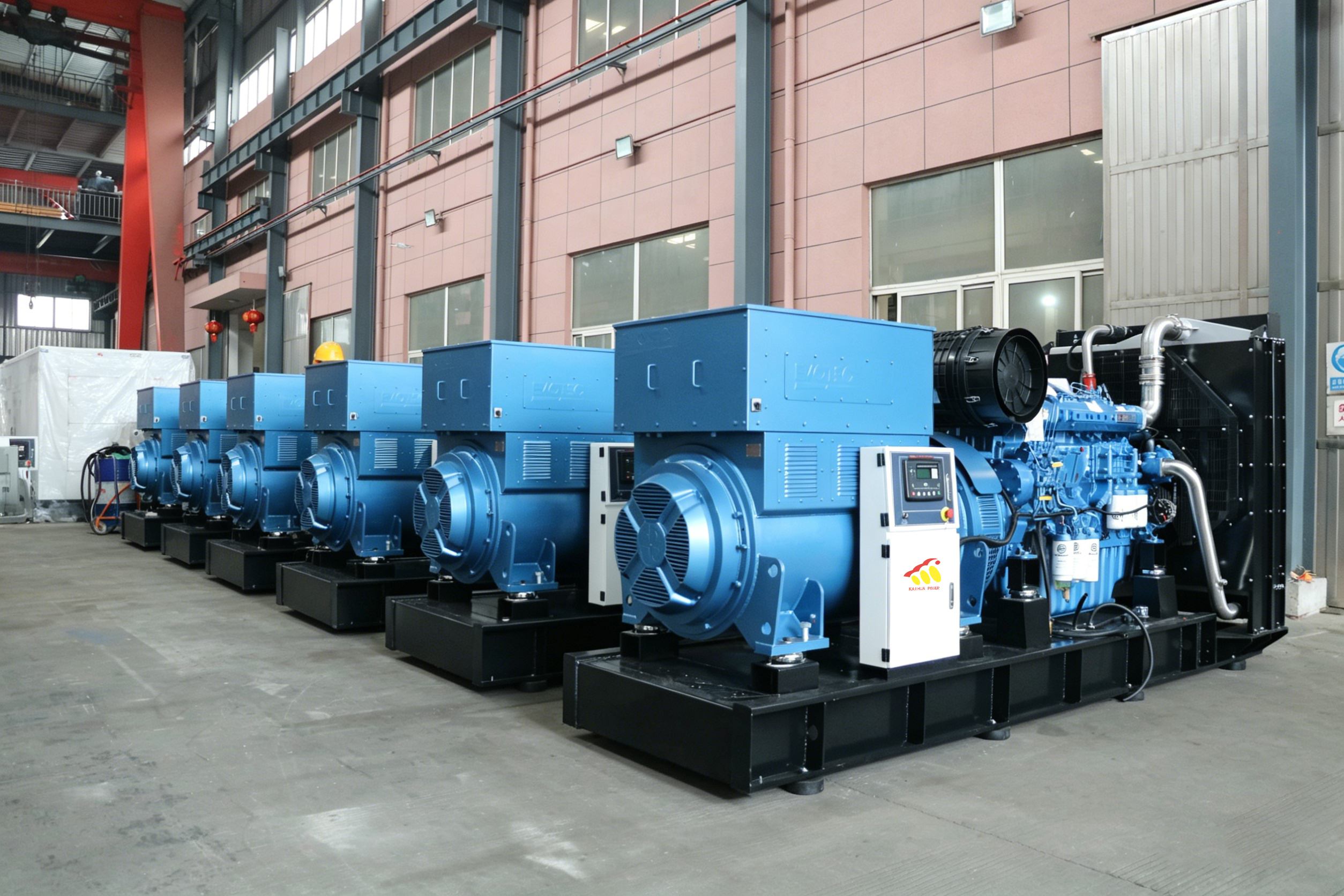
When a generator sits idle without regular checks, the bill you don’t see can be far larger than the one for a simple service call. Moisture creeps into fuel lines, gaskets dry out, and batteries lose charge—problems that quietly compound until the moment you need backup power most. That emergency breakdown rarely happens at a convenient time, often forcing you into panic buying, paying premium rates for after-hours repairs, or even scrambling for temporary rental units. These unplanned outlays easily dwarf the predictable cost of a maintenance plan.
Beyond the immediate repair bill, neglected maintenance can silently drain operational budgets. A poorly tuned engine guzzles more fuel, while erratic voltage output stresses sensitive electronics, leading to premature failure of downstream equipment. Downtime during core business hours doesn’t just halt work; it can spoil inventory, delay deliverables, and erode client trust—intangibles that never show up on a work order but cut deeply into long-term revenue. Insurance claims tied to preventable mechanical failures also risk higher premiums or outright denial of coverage.
There’s also a compliance iceberg lurking beneath the surface. Facilities in regulated industries face fines and legal exposure when backup power fails mandatory testing or logs are incomplete. Environmental penalties can kick in if a poorly maintained unit leaks fuel or exceeds emission thresholds. These aren’t theoretical risks—inspectors do show up, and retrospective fixes are always more expensive than proving readiness through consistent upkeep. The true cost of skipping routine care isn’t a line item; it’s a cascade of financial, operational, and reputational damage that could have been avoided.
Beyond Backup: Innovative Uses for Diesel Generators in Remote Locations
Diesel generators are often pigeonholed as mere emergency backups, but their true potential unfurls in the wild. Picture a mobile research station deep in the Arctic, where a generator isn’t just a safety net—it’s the heartbeat, powering delicate instruments that measure ice core samples at -40°F. Or consider a film crew capturing a documentary in the Sahara; their diesel unit runs cameras, charges drones, and keeps the editing suite alive under the scorching sun. It’s not about waiting for the grid to fail—it’s about creating a grid where none exists.
The versatility extends beyond basic power. In remote agricultural outposts, diesel generators drive water pumps for irrigation, turning arid acres into fertile fields. At a temporary mining camp, they enable high-intensity lighting and ventilation systems, turning a rocky outcrop into a productive extractive site. Even off-grid medical clinics in rugged terrain rely on them to preserve vaccines and run diagnostic equipment, bridging the gap between isolation and modern healthcare. Each scenario reveals a generator’s adaptability: it’s a silent partner in human ingenuity, reshaping inhospitable places into livable, workable spaces.
Innovation doesn’t stop at standard usage. Think of a remote eco-lodge that pairs a diesel generator with solar panels, using it only when the sun hides—smartly balancing sustainability and reliability. Or a disaster relief team that deploys generators not just for power, but to run communication hubs, connecting fractured communities. In these roles, the diesel generator evolves from a boxy machine into a lifeline, a tool of opportunity that thrives where certainty is scarce.
Decoding Fuel Efficiency: What Most Buyers Overlook
When scanning window stickers for miles per gallon figures, it's easy to fixate on the bold highway number. But that figure is often a fantasy unless you spend your life on empty interstates with the cruise control set to a steady 55. Real-world driving is a messy blend of stoplights, short trips, and idling in school pickup lines—scenarios where the city rating, or even worse, your own heavy right foot, dictates the true cost at the pump. The official estimates are generated in a lab, not on your commute, and they rarely account for how a turbocharged engine gulps fuel the moment you ask for a burst of acceleration.
Another overlooked factor is how options and trim levels silently chip away at efficiency. That panoramic sunroof adds weight up high, raising the center of gravity and forcing the engine to work slightly harder. Roof rails, even when empty, disrupt airflow enough to knock a few tenths off your average. All-wheel drive, larger alloy wheels with stickier, wider tires, and even a premium sound system’s amplifier all demand energy. These features accumulate into a tangible penalty that no EPA sticker can capture, because the test vehicle is rarely configured with the full catalog of add-ons.
Maintenance habits and tire choices form the quiet background of true fuel economy. Underinflated tires aren’t just a safety risk—their increased rolling resistance can bleed away 3 to 5 percent of every gallon. Skipping oil changes or ignoring a clogged air filter gradually suffocates the engine’s breathing, while worn spark plugs make each combustion event less efficient. Even the type of engine oil, if it’s thicker than the manufacturer’s recommendation, creates parasitic drag. These details aren’t glamorous, but they often explain why two identical cars can deliver wildly different mpg in the same neighborhood.
Noise Reduction Strategies That Actually Work
The hum of a refrigerator, the distant drone of traffic, the ping of notifications—modern life is a symphony of distractions that can wear down even the most focused minds. But the most effective noise reduction strategies aren't about expensive gear or complex rituals; they start with understanding the difference between sounds you can control and those you can't. By simply identifying the dominant sources of unwanted noise in your environment, you can make targeted changes that dramatically sharpen your mental clarity without chasing perfection.
One often-overlooked trick is to introduce masking sounds that are pleasant and consistent, like a steady rain track or a white noise machine set to a soft brown noise. Rather than trying to eliminate every decibel, you create a stable acoustic backdrop that smooths out jarring interruptions. Pair this with a habit of batching notifications on your devices—checking messages only at set intervals—and you'll cut the cognitive load of constant pings more than you'd imagine. Physical barriers work, too: something as simple as a thick curtain over a window or a bookshelf placed against a thin wall can absorb surprising amounts of sound.
Ultimately, the strategies that stick are the ones that respect your personal rhythm. If you find deep work flows best in the morning, protect that block by communicating your availability to others and front-loading any unavoidable noisy tasks elsewhere. Experiment with earplugs marketed for concerts rather than sleep—they often reduce volume without muffling clarity—and notice how your body responds to a quiet space. True noise reduction is less about silence and more about creating a listening environment where your own thoughts can be heard clearly.
Why Modern Diesel Gensets Are Cleaner and Smarter Than You Think
Gone are the days when diesel generators meant belching black smoke and deafening noise. Modern diesel gensets have undergone a quiet revolution, adopting advanced emission control technologies like diesel particulate filters (DPF) and selective catalytic reduction (SCR) systems. These innovations slash particulate matter and nitrogen oxide emissions by over 90%, meeting stringent Tier 4 and Euro Stage V standards. The fuel itself has evolved too, with ultra-low sulfur diesel dramatically cutting harmful pollutants. As a result, today's units run so cleanly that they're often permitted in urban areas where older models would never be allowed.
Beyond cleanliness, intelligence is now baked into every component. Onboard microprocessors continuously monitor engine performance, load demand, and environmental conditions, making real-time adjustments to optimize fuel burn and minimize waste. Many gensets feature telematics that let you check status, schedule maintenance, or even start and stop the unit from a smartphone app. They can integrate seamlessly with solar arrays and battery storage, automatically kicking in only when needed and shutting off once the grid or renewables take over. This smart orchestration not only reduces runtime but also slashes fuel consumption by up to 40% compared to conventional models.
What truly sets modern diesel gensets apart is their ability to learn and adapt. Advanced algorithms predict maintenance needs before a breakdown occurs, while dynamic load sharing between multiple units ensures no single generator is overworked. Some even use artificial intelligence to forecast power requirements based on historical data and weather patterns, preheating the block or priming the fuel system so they start instantly with zero delay. It's this blend of environmental responsibility and digital savvy that's making diesel a surprisingly future-proof choice for backup and prime power applications.
FAQ
It's a complete power generation system built around a diesel engine and an alternator, designed for reliability and continuous operation under demanding conditions. Unlike standard portable generators, professional sets feature heavy-duty components, advanced control systems, and robust enclosures suited for industrial, commercial, or critical backup use. They often include features like automatic transfer switches, remote monitoring, and soundproofing that you won't find in consumer-grade models.
Start with your power requirements – calculate both running and starting loads to avoid undersizing. Next, consider the generator's duty cycle: is it for standby or prime power? Look at fuel consumption at different load levels, because a unit that's efficient at 75% load might be wasteful if you'll only use it at 30%. Don't overlook physical footprint, noise regulations, and local emission standards. Also think about serviceability: how easy is it to get parts and find qualified technicians in your area.
Diesel generators excel in harsh conditions due to the inherent durability of compression ignition engines. They handle temperature extremes better than gas turbines or fuel cells, and moist or dusty air doesn't degrade performance as quickly. With a sealed fuel system, diesel is less prone to moisture contamination than gasoline. However, at extreme altitudes, naturally aspirated diesels lose power; you may need a turbocharged model. Cold-start capability is also a consideration – block heaters and battery warmers become critical below freezing.
Regular fluid and filter changes are non-negotiable – oil, fuel, air, and coolant. But real longevity comes from consistency: weekly visual inspections for leaks, belt wear, and corrosion; monthly load testing to prevent wet stacking; and annual coolant sampling to check for internal erosion. Don't let fuel sit for months without stabilizers or rotation. Keep the area around the generator clean and rodent-free. And most importantly, maintain a log book to track trends – changes in oil consumption or starting behavior often signal issues before a failure occurs.
Yes, many remote homes and communities rely on diesel generators as their main power source. The main limitation is fuel logistics: you need a reliable supply chain and storage that's secure and treated against algae growth. Noise and vibration can be a nuisance in a quiet residential setting, so budget for a well-designed enclosure and mounting. Modern inverter-based battery systems are cheaper to run daily, so many off-grid setups now use a diesel generator only as backup for cloudy periods, reducing wear and fuel costs. Pure diesel-only off-grid power can be costly unless you have access to low-cost fuel or minimal energy needs.
First, carbon monoxide poisoning: never run it indoors or even in a partially enclosed space like a garage with the door open. Exhaust must vent freely away from windows, doors, and air intakes. Electrical hazards are next – proper grounding, weatherproof connections, and using transfer switches to prevent backfeeding the grid are essential. Fuel safety: store diesel in approved containers away from heat sources, and let the engine cool before refueling. Fire safety: keep a dry chemical fire extinguisher nearby and maintain clearance from combustibles. Finally, hearing protection – long exposure to generator noise can damage hearing, even from a distance.
Conclusion
Choosing a diesel generator isn't just about picking a model off the shelf—it demands a clear-eyed assessment of your actual load requirements. Oversizing wastes fuel and money, while undersizing leads to breakdowns. Once installed, many owners overlook the creeping expenses tied to skipped maintenance: clogged filters, worn injectors, and coolant neglect silently erode performance and can lead to catastrophic failure when you need power most. This is where a grasp of fuel consumption curves pays off. Not all units burn fuel equally across their operating range; understanding this can cut long-term costs significantly. Modern sets also integrate digital controls and emission-reducing tech, making them far cleaner-burning than their predecessors.
But the role of a diesel genset extends far beyond emergency backup. In off-grid mining camps, telecom towers, or agricultural operations, they serve as primary power, often paired with renewable sources for round-the-clock reliability. Concerned about noise? Acoustic enclosures and strategic placement aren't just add-ons—they're necessities for compliance and neighbor relations. Advances in engine design and exhaust after-treatment have transformed these machines into quieter, more efficient workhorses that meet strict environmental standards. When selected and maintained carefully, a professional diesel generator set becomes a tailored power asset, not just a loud box in the corner.
Contact Us
Contact Person: Ms. Lu
Email: [email protected]
Tel/WhatsApp: 8618917899306
Website: https://www.hichaipower.com