

Pallet Jack Recommendations: Top Picks for Smooth Warehouse Operations
2026-08-09
When it comes to streamlining warehouse operations, the right pallet jack can make all the difference. From navigating tight aisles to handling heavy loads with ease, these workhorses are the backbone of efficient logistics. But with so many options on the market, choosing the best one for your needs can be a daunting task. In this guide, we’ll cut through the noise and share top recommendations that prioritize reliability, durability, and ergonomics. Industry leaders like HANGCHA have consistently delivered innovative solutions, and we’ll highlight what makes their designs stand out in demanding environments. Whether you’re upgrading your fleet or buying your first unit, our picks are designed to keep your operations running smoothly day in and day out.
Electric Riders That Cut Down Operator Strain
Long shifts on your feet can turn a productive day into an endurance test, but the right electric rider quietly changes that equation. These machines are designed to let you sit or stand comfortably while gliding through tasks, with intuitive controls that respond to subtle movements rather than draining your focus. The real magic lies in how they absorb the jarring vibrations and repetitive motions that normally accumulate into end-of-day soreness, leaving you with enough energy to still enjoy your evening.
What sets the best models apart is their ability to adapt to the operator rather than the other way around. Adjustable platforms, cushioned surfaces, and smart speed modulation mean you’re no longer fighting the machine’s rhythm. Instead of tensing up to compensate for jerky starts or awkward steering, you settle into a natural flow that feels more like an extension of your own stride. That smoothness isn’t just about comfort—it directly cuts the mental fatigue that comes from constantly micro-adjusting your balance and grip.
Facilities that have made the switch often notice the change in their teams long before they see the efficiency gains. When operators aren’t bracing themselves against hard stops or wrestling with heavy steering, they stay sharper and more engaged. It’s the kind of practical innovation that pays out in reduced turnover and fewer strain-related complaints, proving that sometimes the smartest upgrade isn’t flashy—it’s the one that quietly removes the heavy lifting from everyday work.
Manual Pallet Jacks Built for Daily Durability
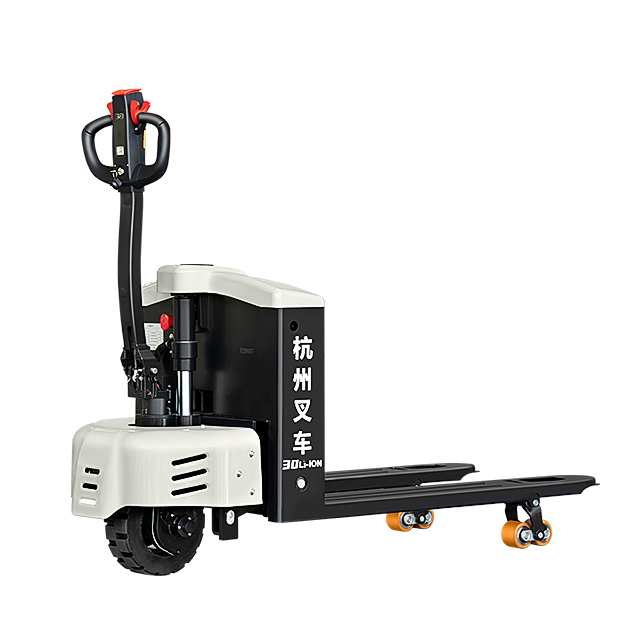
No warehouse floor stays perfectly smooth forever—cracks, debris, and spilled fluids are just part of the job. That’s why our manual pallet jacks are assembled with reinforced steel frames and oversize load rollers that shrug off rough surfaces. Instead of rattling apart after a few thousand cycles, they keep tracking straight and lifting smoothly, even when the aisle looks more like a construction zone than a distribution center.
The difference shows up in the details most people overlook. We use sealed bearings at every pivot point to keep out grit and moisture, so the handle linkage doesn’t develop that sloppy, loose feeling over time. The pump’s internal seals are rated for continuous use in both cold storage and ambient environments, maintaining consistent lift without the fade you’d expect from cheaper units. It’s the kind of quiet reliability that lets operators focus on their work instead of wrestling with equipment.
Honest durability also means the jack is easy to maintain when it finally needs attention. Grease fittings are placed within reach without removing panels, and the hydraulic reservoir can be topped off through a threaded fill port rather than a flimsy rubber plug. Every component, from the handle’s return spring to the axle’s hardened bushings, is designed to be replaced with common tools. That way, a jack that’s been through ten years of daily abuse can still perform like one that’s fresh off the line.
Narrow Aisle Solutions That Maximize Every Foot
When warehouse square footage is fixed but inventory keeps growing, the only way to go is up and in. Narrow aisle configurations reclaim floor space by shrinking operating aisles to as little as 5 to 6 feet, often doubling pallet positions compared to conventional layouts. The trick isn't just taller racking—it's a full rethink of how equipment and racking interact. By trading wide, lazy turns for tight, calculated maneuvers, you unlock storage density that feels almost contradictory to the building's footprint.
The backbone of these setups is purpose-built machinery. Articulated forklifts, for instance, pivot their masts without the entire truck swinging wide, letting operators slide into bays with inches to spare. Turret trucks go a step further, rotating the load 180 degrees while the chassis stays static. Some facilities pair these with wire or rail guidance that keeps the truck perfectly centered, removing the human guesswork from millimeter-level positioning. It's a choreography of sensors, hydraulics, and driver skill that turns a cramped lane into a smooth, productive corridor.
What often surprises teams new to very narrow aisle (VNA) systems is the ripple effect on throughput. Fewer steps between picks, less horizontal travel, and integrated height-adjustable cabs can shave seconds off every cycle. Those seconds compound into hours across a shift. Meanwhile, the reduced floor space lowers lighting, heating, and cooling loads, shrinking overhead in ways that a rent-per-square-foot calculation misses. The real gain isn't just capacity—it's a workflow that molds itself to the space, not the other way around.
Heavy-Duty Load Movers That Won’t Quit
When you’re moving massive, awkward loads day in and day out, the last thing you need is equipment that gives up halfway through the job. The machines we’re talking about are built with reinforced frames, industrial-grade motors, and drivetrains that laugh at the word “overload.” They don’t just meet spec sheets—they outlast them, often running double shifts without a hiccup. From foundries to shipyards, these movers earn their keep by simply refusing to break down, no matter how punishing the environment gets.
What really sets them apart is how they handle the unexpected. A sudden shift in weight, an uneven surface, or a tight corner that would leave lesser machines smoking—these movers adjust on the fly. Advanced traction control, self-leveling suspensions, and intelligent weight distribution systems work together to keep things stable and moving. Operators don’t need to baby them; they can focus on the task instead of worrying about whether the equipment can take it.
Maintenance is where the “won’t quit” philosophy really shines. Sealed bearings, automatic lubrication points, and diagnostic systems that predict wear before it becomes a problem mean these movers spend more time working and less time in the shop. When they do need attention, modular components make repairs quick—no need to tear down half the machine for a simple fix. It’s this blend of brute strength and thoughtful engineering that keeps them running long after others have been retired.
Weighing Scales Integrated Right Into the Forks
Precision weighing no longer requires a separate step in the workflow. By embedding load cells directly into the fork structure, these scales capture weight data the moment a load is lifted. The integration eliminates the need for floor scales or additional handling, so you can confirm incoming shipments, check outgoing orders, or verify pallet weights right from the forklift seat. It’s a straightforward evolution that saves minutes on every move and reduces the risk of errors caused by double-handling.
The electronics are sealed inside the fork body, protected from shock, moisture, and the daily grit of warehouse life. Calibration stays locked in, even after thousands of cycles, and the display unit—often mounted in the cab—gives immediate, clear readings without interrupting the operator’s line of sight. Some systems even feed data straight into your inventory management software, creating an automatic record of every lifted weight. This kind of passive data collection turns routine lifts into a source of real-time stock insights.
Operators appreciate how little the scales change their routine. There are no dangling cables or fragile attachments to worry about, just a pair of forks that happen to weigh as they lift. The system works with standard pallet types and doesn’t reduce the truck’s capacity in any meaningful way. In high-volume environments—cold storage, distribution hubs, manufacturing lines—this quiet capability helps catch discrepancies before they become downstream problems, keeping invoices accurate and loads compliant without adding a single extra motion to the task.
All-Terrain Models for Unforgiving Floors
Floors that punish ordinary wheels demand a breed of mobility built to absorb shock, grip loose silt, and pivot around obstacles without hesitation. Our all-terrain models swap fragile casters for oversized, deep-tread wheels that glide over cracked concrete, gravel paths, and damp grass with equal ease. The suspension geometry isn't just tacked on—it's tuned to keep the chassis level even when one wheel drops into a pothole, so your load stays stable and you stay in control.
What makes these machines truly stand out is the marriage of lightweight frame rigidity and adaptive traction. Instead of relying on brute weight to dig in, the drivetrain reads micro-slippage and redirects torque to the wheel with grip, all in milliseconds. Waterproof sealing on every joint and bearing means you can power through puddles without worrying about corrosion, while the bump-absorbing tires shrug off thorns, glass shards, and sharp rock edges that would leave lesser wheels shredded. They don't just survive unforgiving floors—they barely notice them.
We've tested these on polished warehouse epoxy that sends standard carts sliding, on loose loam after a downpour, and on sun-baked clay riddled with fissures. The result is a platform that feels just as planted crossing a muddy worksite as it does rolling over a showroom threshold. With quick-swap wheel options and a self-cleaning tread pattern, it adapts to whatever you throw at it, no mods needed.
FAQ
A pallet jack is a basic material handling tool designed to lift and move palletized loads over short distances on a warehouse floor. It's manually or electrically operated and rides on small wheels, slipping under pallets to raise them just enough for transport. Unlike a forklift, which can stack loads high and handle heavier weights, a pallet jack is compact, more affordable, and ideal for ground-level moving of standard pallets. You’d reach for a pallet jack when you need quick, frequent relocations without the complexity of a full forklift.
There are three common types: manual, electric walkie, and rider pallet jacks. Manual ones rely on human effort to pump the handle and push or pull the load, great for lighter tasks. Electric walkie models use a battery-powered motor to lift and move, reducing operator fatigue—perfect for medium-duty runs. Rider pallet jacks let the operator stand on a platform while driving, covering larger distances efficiently. Some warehouses also use specialty jacks like scissor lifts or rough-terrain units for niche needs.
Start by assessing your typical load weight, the distances you travel, and floor conditions. For occasional, light loads and tight budgets, a manual jack works fine. If you’re moving pallets all day long, an electric option pays off in reduced strain and higher throughput. Consider the environment—narrow aisles might need a jack with great maneuverability, while uneven floors call for durable, larger wheels. Also, think about your pallet sizes and whether you need features like a scale or corrosion resistance for cold storage.
Look for ergonomic controls and a comfortable handle that minimizes hand fatigue, especially with repetitive use. Smooth-rolling wheels with good-quality bearings make a big difference in push effort and noise. Polyurethane wheels are often a sweet spot between durability and floor protection. For electric models, note the battery runtime and ease of charging. An adjustable lowering speed and a responsive lift mechanism can also prevent jerky movements. It’s worth checking the turning radius and overall build sturdiness—you want a jack that feels stable and nimble.
Several brands have built a solid reputation. Toyota and Crown are known for reliable electric and manual options suited for high-throughput settings. Global Industrial offers dependable budget-friendly jacks without many frills. Big Joe and Jungheinrich provide innovative designs with a focus on operator comfort and energy efficiency. For specialty or heavy-duty jacks, Vestil and Bishamon have strong offerings. It’s smart to check recent user reviews and service availability in your area, since even the best brand may vary by model.
Regular maintenance extends its life and prevents downtime. Daily checks: inspect wheels for debris, test the lift and lower functions, and look for hydraulic fluid leaks. Keep the load wheels and steering wheels clean and lubricated according to the manual—avoid over-greasing. For manual jacks, the handle pivot points and pump piston need periodic attention. Electric models require battery care, such as proper watering for lead-acid batteries or simply full charging cycles for lithium. Tighten any loose bolts monthly, and never skip scheduled professional servicing if the jack sees heavy use. A little routine care avoids costly breakdowns.
Conclusion
Getting the right pallet jack can completely change how your warehouse runs day to day. It's not just about moving loads from point A to point B—it's about reducing operator fatigue, squeezing more usable space out of your floor plan, and keeping things moving without constant equipment breakdowns. Electric riders are a standout if you're trying to cut down on the physical toll that comes with long shifts, letting one person handle multiple heavy loads without wearing themselves out. At the same time, a well-built manual jack still has its place for operations that need simple, no-fuss reliability and can take a beating shift after shift without demanding much maintenance.
But not every warehouse is a smooth concrete floor and wide aisles. If your setup is tight, the right narrow-aisle model can help you store more in less space without sacrificing access speed. For facilities moving extra-heavy or awkward loads, heavy-duty movers with reinforced frames and oversized wheels are what keep things from grinding to a halt. There are even jacks with built-in scales so you can weigh pallets on the fly, saving trips to a floor scale and cutting out guesswork in shipping or inventory. And when your floors are cracked, uneven, or exposed to the elements, all-terrain designs keep loads stable and operators safe instead of fighting the equipment. A pallet jack that actually matches your operation's specific challenges makes the whole workflow feel easier, faster, and a lot less chaotic.
Contact Us
Contact Person: Liuxue
Email: [email protected]
Tel/WhatsApp: +86-19084200370
Website: https://www.hf-ec.com/