

OEM Waste Tire Recycling Line: How It Transforms Scrap Tires into Valuable Resources
2026-09-12
Every year, millions of worn-out tires end up in landfills or illegal dumps, creating environmental and fire hazards. But what if those same scrap tires could become a steady supply of valuable raw materials? That's exactly what an OEM waste tire recycling line from SFC makes possible. By transforming discarded rubber into reusable crumbs, powder, and steel, it turns a costly waste problem into a profitable resource stream. In this post, we'll walk through the process step by step—and show why SFC's engineering approach is changing how the industry thinks about end-of-life tires.
Scrap Tires Are a Goldmine If You Have the Right Processing Line
Most people see a mountain of discarded tires and think landfill. But with the right shredding and grinding sequence, those same tires turn into clean rubber crumb, high-tensile steel wire, and reusable textile fiber—each with a steady buyer. The trick isn't the material; it's the line layout. A poorly configured system chokes on bead wire, overheats the granulator, and produces mixed-size crumb that nobody wants.
A profitable setup usually pairs a primary shredder with a secondary granulator and then a series of magnetic and air classifiers. The steel is pulled out early and sold to scrap yards; the fiber is separated before final milling to keep the rubber clean. If you skip the fiber removal step, you end up with a fluffy, contaminated powder that fails ASTM specs. That's where many small operators lose money—not on the input cost, but on inconsistent output quality.
The margin story is compelling. Clean 10-20 mesh rubber crumb can fetch several hundred dollars per ton, and tire-derived fuel still moves in bulk to cement kilns. But the real payoff comes when you add a cryogenic or ambient fine-grinding stage to get 80 mesh or finer. Then you're selling into molded rubber products, playground surfaces, and asphalt modifiers. None of this works without a line that handles the tire's three materials simultaneously instead of fighting them one by one.
How Your Tire Pile Can Start Paying for Itself
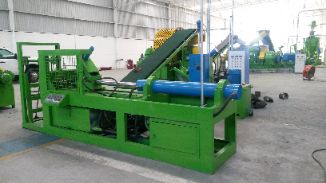
That stack of worn-out tires behind the shop doesn't have to be a liability. With scrap tire processors paying per ton for clean, separated rubber, a steady pile can turn into a small but reliable revenue stream. Some retreaders also buy casings that still have usable sidewalls, especially for commercial truck tires. The trick is sorting as you go: keep steel-belted radials separate from bias-ply, and pull out any tires with sidewall damage before they contaminate the batch.
Beyond direct sales, you can grind or shred the rubber into landscaping mulch, playground surfacing, or athletic track material if you have access to a portable grinder or a local processor who shares revenue. Even the steel bead wire has scrap value once the rubber is stripped. A monthly pickup schedule keeps storage costs down and frees up yard space, so the pile stops being dead inventory and starts covering part of its own handling expense.
Shredding Is Just the Warm-Up. What Happens Next Matters More
Shredding feels like the end of the line—watch the blades chew through sensitive documents, hear the satisfying crunch, and you're done. But that's exactly where the real risk begins. Most people never stop to ask what happens to those confetti-like fragments once the bin is full. Shredded paper doesn't just vanish; it lingers in bags, bins, and dumpsters, often intact enough to be reassembled by anyone with patience and a scanner.
The aftermath matters because shredded material is still information waiting to be exploited. Think about it: a cross-cut shredder produces pieces roughly the size of a fingernail, yet modern software can stitch them back together in hours if the pile is undisturbed. Even worse, many shredding services simply toss the remains into open recycling bins behind the building, where a curious dumpster diver can grab a handful without raising suspicion. The real work starts after the motor stops—verifying the shred size, locking the waste stream, and ensuring the fragments never sit in one place long enough to become a puzzle.
Skip the next step and you've only created a false sense of security. A company that shreds but leaves bags unsealed overnight is no better off than one that throws whole documents in the trash. The difference between a breach and a routine cleanup often comes down to those quiet minutes after the last page feeds through: who handles the bin, where it goes, and how quickly it's rendered unreadable beyond recovery. That's the part nobody prints on the shredder box—but it's the part that actually determines whether your data stays dead.
The Pyrolysis Sweet Spot Depends on Temperature, Time, and Tire Type
Finding the ideal pyrolysis conditions for scrap tires rarely boils down to a single magic number. The temperature window that works best for one batch may fall flat for another because the feedstock itself shifts. Most operators settle somewhere between 400°C and 600°C, but within that range the balance between oil, char, and gas can swing dramatically. Too low, and the rubber never fully decomposes, leaving sticky, half-cracked residue. Too high, and you push the reaction toward lighter gases and a heavier aromatic oil fraction that is harder to refine. Residence time plays an equally stubborn role: short dwell times leave unconverted polymer chains, while overly long exposure invites secondary cracking that eats into liquid yield.
Tire type injects another layer of variability that generic pyrolysis guides often ignore. Passenger car tires, with their higher synthetic rubber content and finer steel belts, tend to respond well to moderate temperatures and shorter retention. Truck and bus tires usually contain more natural rubber and thicker steel cords, which changes heat transfer and often demands a slightly longer soak or a lower ramp rate to avoid charring the surface before the core degrades. Off-the-road tires are a different beast altogether; their massive sidewalls and heavy bead wire make uniform heating nearly impossible without aggressive pre-shredding, and even then operators frequently see uneven oil quality unless they dial back the temperature and extend the run time.
There is no shortcut to finding that sweet spot for a given tire stream. The most reliable approach is to run small-scale tests, watch the condenser output, and sample the char for ash and fixed carbon. If the oil comes out too viscous, the temperature is probably too low or the residence time too short. If the gas flare burns with a sooty, unstable flame, you might be overcracking. Mixing tire types without adjusting the recipe is a common mistake, but once you map the behavior of your main feedstock, the right combination of temperature, time, and pretreatment becomes repeatable and surprisingly forgiving.
Clean Steel and Carbon Black Are the Profitable Leftovers Nobody Talks About
Steel mills have long treated the dust and sludge captured from furnaces as a costly disposal problem, but a handful of operators have figured out how to turn those fines back into clean steel. By briquetting the iron-rich leftovers and feeding them into electric arc furnaces, they recover metal that would otherwise be landfilled. The economics are quietly compelling: the recovered material often contains 60-70% iron, and with scrap prices swinging, this internal source acts as a buffer against market volatility.
Carbon black tells a similar story on the rubber and petrochemical side. Pyrolysis of end-of-life tires yields an oil fraction, gas, and a solid char that can be milled and pelletized into recovered carbon black. While it does not always match virgin grades in every performance test, it finds steady demand in hoses, mats, belts, and non-tire automotive parts. The margins improve further when pyrolysis operators sell the steel wire and oil as co-products, making the whole process less dependent on any single output.
What makes these leftovers interesting is not just the revenue but the resilience they add. Facilities that recover clean steel and carbon black convert waste streams into inventory they control. They avoid disposal fees, reduce emissions relative to virgin production, and create a negotiating lever with suppliers of primary raw materials. It is a quiet form of vertical integration that does not require buying a mine or a refinery.
Why OEM Tire Recycling Lines Are Built Different (and Why That Saves You Money)
The first big difference shows up in how the machinery is matched. Instead of pairing a high-torque shredder from one supplier with a granulator from another, an OEM line is spec'd so the output size from one stage is exactly what the next stage expects. That sounds obvious, but mixed lines often run with either a pile-up at the granulator or a shredder that's loafing along, both of which burn extra power and wear parts unevenly.
That integration also changes the economics. When the stages are balanced, you're not paying for a motor that only runs at 60% capacity while another one overheats. Blade gaps, screen sizes, and conveyor speeds get set once instead of being re-tuned for months. The result is lower energy per ton of rubber processed and fewer replacement parts ordered each quarter.
Then there's the repair and support side. With a non-OEM setup, you often deal with several vendors pointing at each other while the line sits idle. An OEM line usually means one engineering team has the full drawings and test data, so a problem gets traced to a specific component faster. That kind of quick turnaround cuts the hidden cost of lost production hours, which can easily outstrip the price difference on the initial invoice.
FAQ
It typically bundles shredding, granulating, steel and fiber separation, and sometimes pyrolysis or devulcanization modules into one coordinated system. The OEM designs every stage to work with the next, so you get consistent output sizes and fewer bottlenecks compared to piecing together separate machines.
Most systems use a combination of magnetic separators for steel wire and air classifiers or vibrating screens for fiber fluff. The order matters: tires are first shredded to loosen the components, then steel is pulled out magnetically, and finally fiber is blown or sifted away from the rubber granules.
The main outputs are clean rubber granules or powder, recovered steel wire, and textile fiber. Depending on the line configuration, you can also get tire-derived fuel, carbon black, or pyrolysis oil if thermal conversion is included downstream.
It prevents toxic leachate and open-air smoke by keeping tires out of landfills and uncontrolled fires. The closed-loop process also cuts carbon emissions by replacing virgin rubber and steel with recycled material, and it uses less energy than producing new raw materials from scratch.
That depends on your feedstock volume and local tire collection rates. A line processing 1 to 3 tons per hour is often a practical starting point for regional operators, while larger plants may need 5 tons or more per hour to justify the investment.
They can often be sold as-is for playground surfaces, rubber mats, or sports tracks if the size and purity meet buyer specs. For higher-value uses like rubberized asphalt or molded products, you may need additional grinding to produce finer powder and remove residual fiber.
Blades and screens wear quickly because tires are abrasive and contain steel. You'll need a regular sharpening and replacement schedule, plus daily checks on bearings and conveyors. Many OEMs offer wear-part kits and remote diagnostics to minimize downtime.
Conclusion
A mountain of scrap tires is rarely seen as an asset, but with the right OEM processing line, it becomes a goldmine waiting to be tapped. The moment your tire pile starts moving through the system, it begins paying for itself. Shredding is just the warm-up; the real value emerges in the downstream stages. Pyrolysis, for instance, isn’t a one-size-fits-all process. Its sweet spot hinges on a precise balance of temperature, residence time, and the specific rubber compound of the tires you feed in. Get that balance right, and you unlock far more than just fuel.
What many operators overlook are the clean steel wire and carbon black left after pyrolysis. These "leftovers" are actually profitable commodities in their own right, often worth more than the oil fraction. This is where OEM tire recycling lines prove their worth. They’re built differently—with tighter integration, better heat control, and longer-lasting components—so the whole process runs smoother and costs less over time. Instead of treating scrap tires as waste, an OEM line turns them into a steady stream of valuable resources, transforming a disposal headache into a reliable revenue source.
Contact Us
Contact Person: Chen Zhengwei
Email: [email protected]
Tel/WhatsApp: +86-13963975727
Website: https://www.sfcrubbermachine.com