

OEM Vulcanizing Press Solutions for Precision Rubber Molding and Curing
2026-08-31
What if your vulcanizing press was actually designed around your part, not the other way around? For precision rubber molding and curing, generic machines often force compromises in tooling, cycle time, and consistency. SFC takes a different route with OEM vulcanizing press solutions built to exact specifications. Read on to see how tailored engineering can close the gap between your current process and true repeatability.
Platen Parallelism Held to 0.005 mm at Full Tonnage
Achieving consistent part quality starts with how evenly force is distributed across the mold face. Our press platens are machined and verified to maintain parallelism within 0.005 mm even when the machine is operating at full tonnage. That tolerance is not measured in an idle state—every platen is checked under load to ensure that deflection from clamping pressure does not push the surface out of spec.
This level of control matters most when you are running multi-cavity tools or thin-wall components. A few microns of angular drift can cause flash on one side and short shots on the other, leading to rejected parts and unnecessary downtime. By holding platen parallelism to half a hundredth of a millimeter at maximum force, we eliminate that variable from the process, so mold protection and part consistency become predictable rather than something you chase shift to shift.
The same standard applies across the entire tonnage range—not just at the top end. Every machine is tested with a calibrated straightedge and feeler gauges while the clamping unit is under full hydraulic pressure, and the results are recorded for each serial number. If a platen ever falls outside the 0.005 mm window after years of service, it can be re-ground and re-verified using the same fixture, extending the usable life of the press without sacrificing molding accuracy.
Multi-Zone Heating That Eliminates Cold Spots in Deep Molds
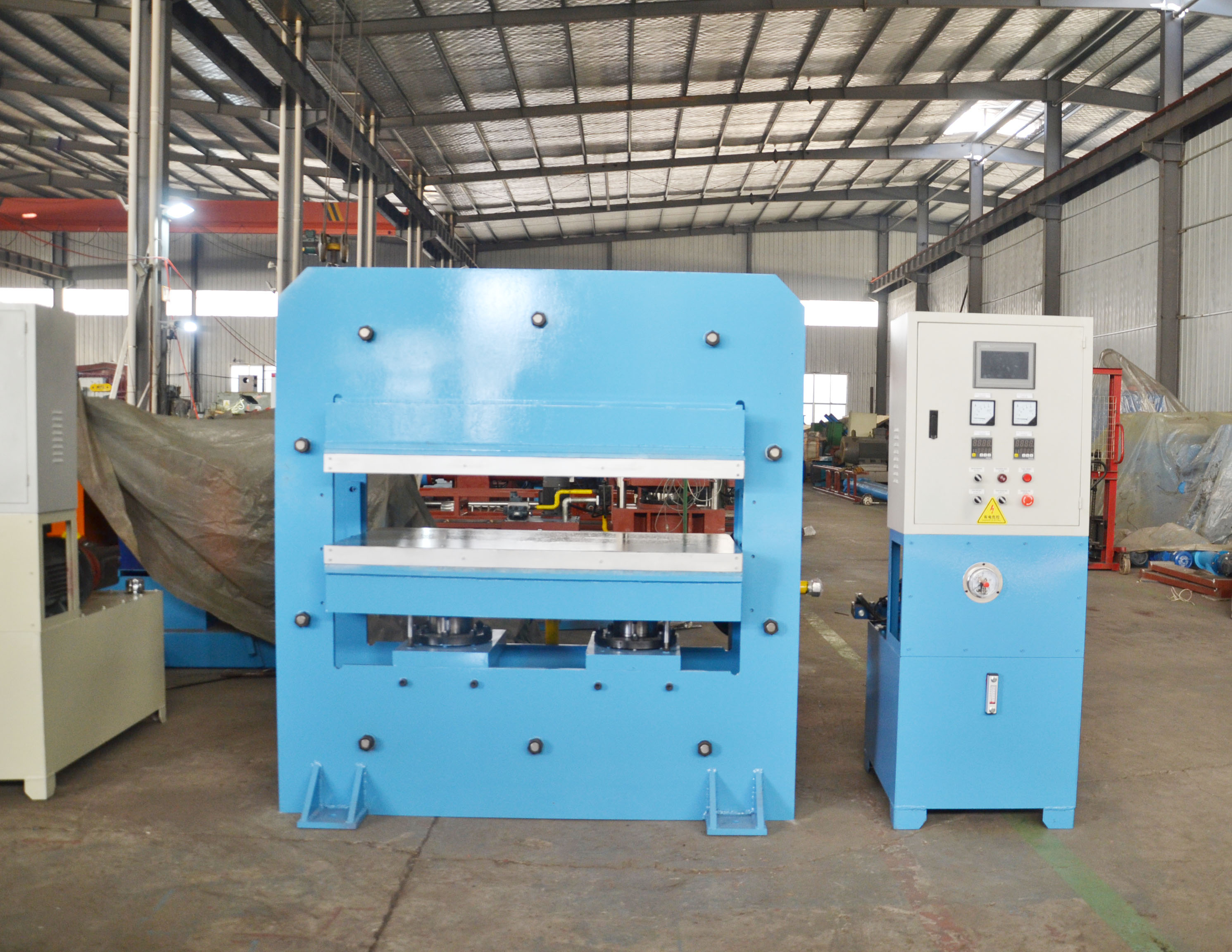
Uneven heat distribution in deep molds is a persistent headache for manufacturers—cold zones near the base can slow curing, create internal stress, and even cause part failure. By dividing the heating circuit into independently controlled zones, each area of the mold reaches its target temperature without relying on a single, overworked element. This approach means the bottom of a deep cavity gets just as much focused energy as the top, so wall thickness stays consistent and cycle times drop noticeably.
The key to eliminating cold spots lies in careful zone mapping and real-time sensor feedback. Rather than treating the entire mold as one thermal mass, engineers analyze heat loss patterns along the depth profile. Thin-film or cartridge heaters are then positioned at different heights, with each zone adjusting its output based on data from embedded thermocouples. This closed-loop control not only prevents under-heated regions but also avoids overheating thinner sections, which used to be a common trade-off in deep mold designs.
In practice, multi-zone heating transforms deep molds from a reliability risk into a production asset. Instead of accepting longer cycles or frequent scrap due to warpage and incomplete fills, operators can fine-tune each depth segment for the specific resin or metal being processed. The result is a smoother thermal profile across the entire cavity depth, fewer rejected parts, and the freedom to run more aggressive cycle times without sacrificing dimensional accuracy.
Closed-Loop Pressure Profiling for Complex Mold Geometries
Mold filling rarely follows a single pressure curve when the part has abrupt thickness changes, deep ribs, or multiple gates. Closed-loop pressure profiling adjusts the injection pressure at each screw position based on real-time cavity pressure readings, so the melt front doesn't stall in thin sections or surge through thick bosses. This is especially useful for parts with living hinges next to rigid frames, where a fixed pressure setting either flashes the hinge area or leaves sink marks near the frame.
Instead of relying on pre-set velocity-to-pressure switchover points, the controller ramps pressure up or down to hold a target pressure gradient across the cavity. If a pressure sensor near a narrow rib detects a drop below the set band, the system increases holding pressure only for that segment of the fill, then backs off before the melt reaches the end of fill. This prevents overpacking at the gate while still forcing material into hard-to-fill corners. Complex geometries often benefit from segment-specific pressure ceilings that account for local flow resistance, rather than one average profile for the entire mold.
Fast Tooling Changeovers Without Recalibrating the Press
Swapping tooling on a press usually eats up hours because every new die or mold demands a fresh calibration cycle. But that’s not a fixed rule. By relying on standardized mounting plates, keyed locators, and pre-set shut heights, shops can pull one tool and drop in the next without touching the press’s baseline settings. The trick is designing tooling that registers against the same physical reference points every time.
Quick-change hydraulic clamps and magnetic clamping systems eliminate the need to re-torque bolts or re-square the tool. Since the clamping force and position stay uniform, the press doesn’t “see” a different setup. A well-designed tooling cart with pre-staged, pre-measured dies further reduces fiddle time. Operators simply roll the next tool into place, engage the locators, and clamp—no dial indicators or shim stacks required.
The payoff shows up in shorter downtime and more consistent part quality. When tooling repeats within a few thousandths of an inch, the press can run the first part as if it were the hundredth. That means fewer adjustments mid-run and less scrap from setup drift. In high-mix production, this approach turns changeovers from a bottleneck into a non-event.
Hydraulic Circuits Engineered for Low Heat and Long Oil Life
Heat in a hydraulic system rarely comes from one glaring flaw. It accumulates at every sharp bend, undersized valve, and throttled flow path. By keeping oil velocity within a narrow band and selecting components with pressure drops that don't stack up, the circuit avoids the usual hot spots that cook fluid and harden seals.
The return side gets the same attention as the pressure side. Instead of dumping high-velocity oil straight back into the tank, the layout uses diffusers and generous return-line sizing to slow the fluid before it settles. A thermostatically controlled offline cooling loop only runs when needed, so the oil doesn't get over-chilled during cold starts or short cycles. That balance slows oxidation and keeps varnish from forming on spools.
Sensors at the pump outlet, return manifold, and tank monitor temperature and pressure without adding flow restrictions. The data feeds a controller that trims fan speed and case drain flow, keeping the oil in a narrow thermal window shift after shift. Maintenance crews can sample the fluid on a schedule based on actual operating hours rather than guesswork, stretching drain intervals without risking component life.
Material-Specific Cure Recipes for Silicone, FKM, and HNBR
Silicone compounds rarely follow a single cure path. Addition-cure systems built around vinyl-functional polymers and platinum catalysts are common for medical and food-contact parts because they leave minimal extractables, but they demand rigorous mixing discipline—any trace of sulfur or amine can poison the catalyst. Peroxide-cured silicones, by contrast, tolerate a wider range of fillers and are often chosen for industrial gaskets and insulation where hot-air post-curing drives off acidic byproducts.
FKM recipes depend heavily on the monomer ratio and the required chemical resistance. Bisphenol-cured dipolymers and terpolymers offer a good balance of compression set and processability, while peroxide-cured FKMs with higher fluorine content handle aggressive solvents and steam better. A typical bisphenol recipe might include 2–3 phr of curative plus a quaternary phosphonium accelerator and 6 phr of magnesium oxide or calcium hydroxide as acid acceptor; mixing order matters because the metal oxides can scavenge the accelerator if not dispersed properly.
HNBR cure chemistry splits between sulfur and peroxide, and that choice changes low-temperature flexibility, heat aging, and dynamic performance. Sulfur-donor systems (often 0.5–1.5 phr of sulfur plus thiuram or dithiocarbamate accelerators) give improved tear strength and fatigue life but sacrifice some upper-temperature stability. Peroxide-cured HNBR, using 5–8 phr of a 40% DCP or similar peroxide with a coagent like TMPT or triallyl isocyanurate, delivers lower compression set and better hot-oil resistance, making it the default for automotive seals and oilfield packers.
FAQ
We tailor presses across a range of configurations—four-post, C-frame, and column-style designs—with adjustable platen sizes, tonnage capacities, and heating systems. Whether you need a compact unit for small gaskets or a multi-opening press for high-volume production, the layout and controls are built around your specific mold dimensions and cycle time requirements.
Temperature uniformity across the platen surface is held within ±1°C using multi-zone PID-controlled heating elements. Thermocouples embedded at multiple points feed real-time data back to the PLC, which automatically compensates for thermal drift. This level of control prevents under-curing or scorching in precision rubber parts like diaphragms and seals.
Our presses are used in automotive manufacturing for engine mounts and hoses, in medical device production for silicone components, and in aerospace for custom grommets and vibration isolators. We also support electrical insulation and consumer goods manufacturers who need consistent molding of rubber overmolds and grips.
Hydraulic pressure is regulated with proportional valves and a closed-loop feedback system, allowing us to hold pressure within ±0.5% of the setpoint. This matters when molding thin-walled or complex parts where even small pressure fluctuations can lead to flash or incomplete cavity filling.
Yes, we provide process development assistance in our own lab. You can send us your uncured rubber samples and mold drawings, and we’ll run trials on a test press to fine-tune parameters like preheat time, venting cycles, and cure temperature before the equipment is finalized. This reduces risk when moving to full production.
Beyond installation and commissioning, we offer remote diagnostics, scheduled maintenance kits, and on-site training for your operators. Spare parts for critical components like seals, heating elements, and hydraulic pumps are available from regional stock, typically shipped within 48 hours.
Absolutely. The press can be configured with interchangeable tooling and adjustable stroke limits to accommodate compression molding for bulk rubber and transfer molding for high-precision preforms. The PLC programs store separate recipes for each method, so switching between them takes minutes rather than hours.
The frame is stress-relieved after welding and machined on CNC equipment to maintain parallelism within 0.05 mm per meter. Finite element analysis is performed during design to eliminate deflection hotspots, which is critical for maintaining consistent pressure distribution across large platens.
Conclusion
Achieving consistent part quality in precision rubber molding starts with how the press manages parallelism, heat, and pressure simultaneously. Our OEM vulcanizing presses maintain platen flatness to within 0.005 mm even under full tonnage, so flash variation and uneven flow disappear regardless of tool size. Multi-zone heating maps each section of the platen independently, eliminating the cold spots that typically plague deep cavity molds and thin cross-sections. Closed-loop pressure profiling then adjusts force in real time based on cavity geometry, which is essential for complex seals, gaskets, and overmolded inserts where a single preset pressure would otherwise leave voids or overpack edges.
Day-to-day operation benefits just as much from the engineering behind the hydraulics and tooling interface. Fast changeovers let operators swap molds without recalibrating the press, because the control system stores and restores each tool’s specific setup automatically. The hydraulic circuit is designed to run cooler, which extends oil life and reduces thermal drift during long production runs. For materials that cure very differently—silicone, FKM, HNBR—the press stores material-specific cure recipes that adjust ramp rates, dwell times, and venting sequences instead of forcing a generic cycle. That combination of mechanical accuracy, thermal control, and intelligent recipe management keeps scrap low and cycle times predictable across a wide mix of rubber compounds.
Contact Us
Contact Person: Chen Zhengwei
Email: [email protected]
Tel/WhatsApp: +86-13963975727
Website: https://www.sfcrubbermachine.com