
OEM Aluminum Parts: Precision Solutions for Custom Manufacturing Needs
2026-07-13
At DDR, we believe that OEM aluminum parts should never be a compromise between speed and precision. Our custom manufacturing solutions are engineered to deliver both, ensuring your projects move from blueprint to reality without missing a beat. Ready to break free from ordinary fabrication? Let's explore what makes our approach different.
Crafting Complexity: How Custom Aluminum Parts Push Design Boundaries
Achieving truly unique product silhouettes often means abandoning off-the-shelf components. Custom aluminum fabrication steps in where standard catalogs fall short, letting engineers weave intricate internal channels, organic surface contours, and lightweight lattices directly into a single part. Processes like multi-axis CNC machining, precision extrusion, and investment casting transform raw billets into geometries that would be impossible to assemble from multiple pieces. The result is a kind of material alchemy: a solid form that feels almost weightless yet bears loads with confidence, its every curve shaped by intent rather than limitation.
But the real design leap comes from collapsing assemblies into monolithic structures. A custom aluminum housing might integrate cooling fins, mounting bosses, and wire-routing paths without a single screw or weld, slashing part count and assembly time while boosting reliability. Designers are free to play with negative space and complex draft angles, pulling inspiration from skeletal structures in nature or fluid dynamic simulations. When paired with advanced surface treatments—hard anodizing, chem-film coating, or custom powder finishes—the final piece doesn’t just perform; it becomes an honest expression of the manufacturing process itself, blurring the line between industrial part and engineered art.
From Concept to Reality: The OEM Journey in Aluminum Manufacturing
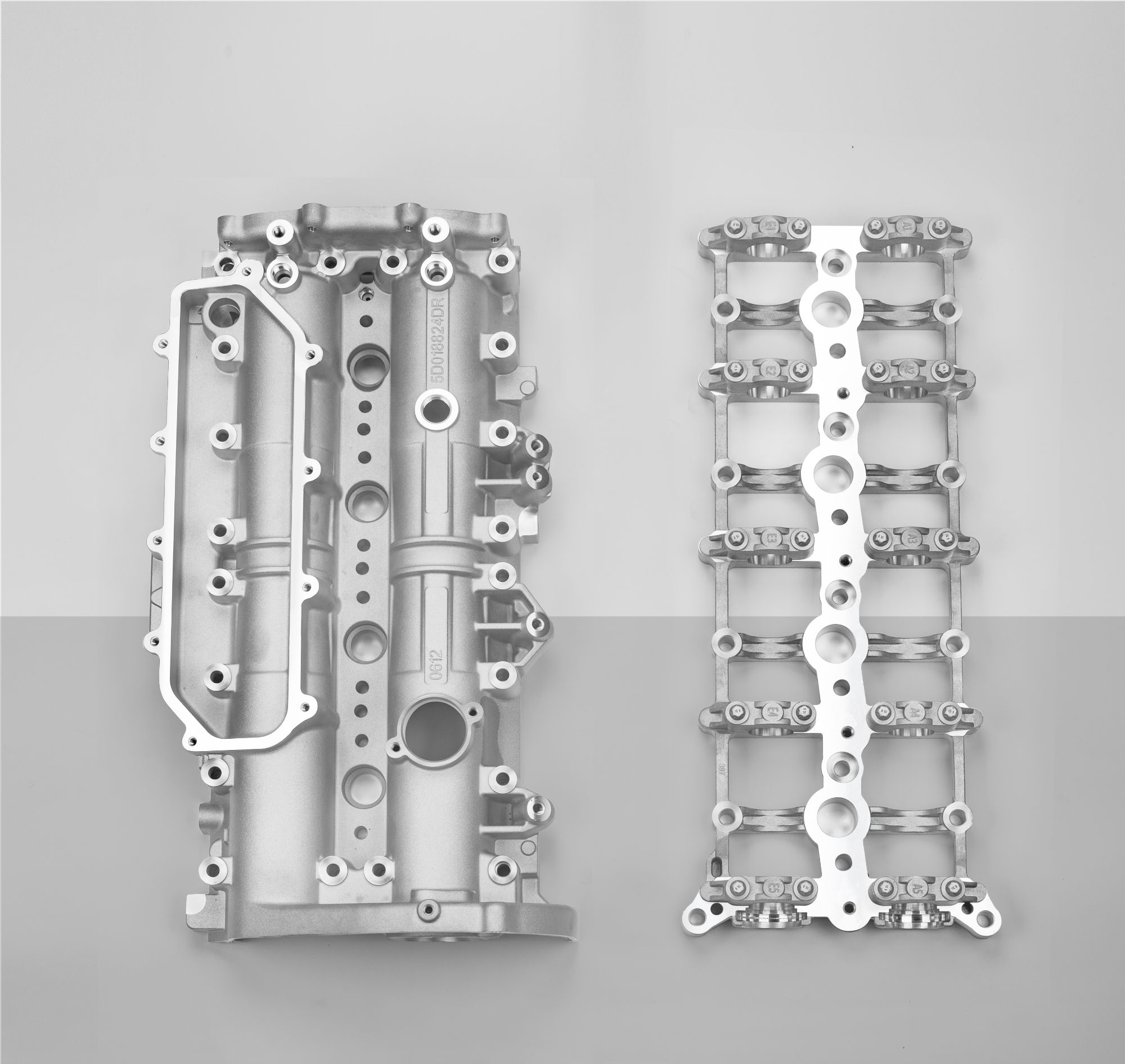
Every aluminum component starts as a spark of imagination—a sketch on a napkin, a 3D model glowing on a screen, or a problem in search of a metallic solution. In OEM partnerships, this concept phase is where collaboration truly begins. Engineers and designers sit across the table from manufacturing experts, trading ideas about alloy selections, stress points, and geometric possibilities. It’s a dance between creativity and practicality, where the wildest designs get tempered by the realities of extrusion, casting, or CNC machining. The goal isn’t just to make a part; it’s to refine a vision into something that can be born from molten metal and precision tooling.
Then comes the gritty, beautiful process of prototyping. This is where aluminum proves its worth—lightweight yet tough, malleable but durable. Rapid prototypes, often machined from solid billets or cast in low-volume molds, reveal the first tangible echoes of the original concept. Surfaces are touched, fits are tested, and flaws are exposed under harsh factory lighting. Iteration becomes the rhythm: tweak the design, adjust the tooling, pour the metal, measure the results. A slight change in wall thickness can mean the difference between a flawless component and one that cracks under pressure. Throughout this, OEM manufacturers act as both critics and craftsmen, pushing back when needed to ensure the final product doesn’t just match the drawing—it outperforms expectations.
Full-scale production is where the journey culminates, but it’s never a simple flip of a switch. Tooling is fine-tuned, quality control systems are calibrated, and supply chains harmonize to deliver raw aluminum ingots just in time for the furnaces. The first production run feels like an orchestra tuning up—each machine humming, operators moving with practiced efficiency, and quality engineers inspecting samples for grain structure or dimensional accuracy. Even after launch, the OEM relationship evolves: smart manufacturers gather data from every batch, spotting trends that might lead to improvements in later versions. The final aluminum part, now silently doing its job in a car engine or a medical device, carries within it the quiet history of a collaboration that turned a mere concept into dependable reality.
Why Aluminum? Unpacking the Material Advantages for Precision Work
Aluminum has earned its reputation as a go-to metal for precision machining, and it’s not just because it’s easy to cut. Its natural properties strike a rare balance between strength, lightness, and workability that few other materials can match. When you’re chasing tight tolerances, the material’s predictable behavior under cutting forces becomes a real asset—less chatter, less deflection, and a forgiving nature that reduces the risk of costly mistakes during high-speed operations.
Beyond machinability, aluminum brings thermal stability and corrosion resistance into the mix without the need for heavy protective coatings. This matters when precision components must hold their shape and finish over time, especially in environments where temperature swings or moisture are constant challenges. The metal’s ability to dissipate heat quickly also helps during machining, keeping tools cooler and extending their life, which in turn supports consistent output on long production runs.
Then there’s the versatility of aluminum alloys—each tailored for specific demands, from complex aerospace parts to intricate electronic housings. Whether you need extra strength, better surface finishes, or improved weldability, there’s likely an alloy that fits. This adaptability, paired with aluminum’s recyclability, makes it not just a practical choice but a forward-thinking one, aligning precision work with sustainability without sacrificing performance.
Behind the Scenes: Advanced Techniques for Flawless Aluminum Components
Achieving a perfect finish on aluminum starts long before the part ever touches a polishing wheel. The process begins with exhaustive surface preparation: multi-stage chemical cleaning strips away oxides, oils, and microscopic contaminants that would otherwise sabotage the final appearance. Skilled technicians then assess each component under controlled lighting to identify pores, burrs, or parting lines that need meticulous hand filing. This blending step isn’t just cosmetic—it ensures that subsequent mechanical polishing can proceed without amplifying hidden defects.
Precision casting and forging techniques form the backbone of complex aluminum components. By using high-integrity die casting methods with vacuum assistance, foundries minimize internal porosity and create a denser grain structure. For structural parts, isothermal forging—where both the die and the billet are heated to the same temperature—allows the metal to flow more uniformly into intricate shapes, virtually eliminating the need for secondary machining. These controlled processes yield parts that already exhibit superior surface quality and dimensional stability before any finishing begins.
The final secret lies in the subtle art of surface conditioning. Electrochemical buffing removes a microscopically thin layer to expose a brilliantly reflective yet non-directional finish, while shot peening imparts compressive stresses that dramatically enhance fatigue resistance. Color matching is another area where true expertise shines: anodizing tanks are fine-tuned to specific voltage ramps and electrolyte temperatures, producing consistent shades across entire production runs. Every step, from the initial alloy selection to the last inspection under calibrated lighting, reflects a depth of knowledge that turns raw metal into flawless, enduring components.
Tailored to Perfection: Meeting Unique Industry Demands with OEM Aluminum
Every production floor tells a different story. In one corner, lightweight frames for next‑gen drones glide off the line, their profiles engineered to defy drag while withstanding brutal vibration. In another, medical device enclosures emerge with tolerances so tight they feel more like instrument‑grade artistry than stamped metal. These aren’t off‑the‑shelf solutions—they’re the fingerprints of OEM aluminum, shaped by real conversations about load paths, thermal cycles, corrosion exposure, and the thousand little compromises that kill a generic part.
That level of precision doesn’t start with a catalog. It starts with a metallurgist sitting down with your engineering team, mapping out not just the alloy chemistry but the entire life of the component—from deep‑draw forming to anodizing color that won’t fade under subtropical sun. Maybe it’s a 7xxx series formulation tweaked for hard‑to‑reach chassis pockets, or a custom extrusion die that collapses three assembly steps into one. The result isn’t a part number; it’s a process that belongs to you, shedding weight, assembly time, and supply‑chain friction along the way.
What surprises most newcomers isn’t the technical capability—it’s the sheer range. OEM aluminum pivots from fluid‑handling manifolds in chemical plants to sleek architectural cladding that tricks the eye into seeing a floating facade. The common thread? An obsessive refusal to say “good enough.” Instead of adapting your design to standard stock, the material adapts to your constraints: tighter bend radii, thinner walls without buckling, or threaded inserts cast directly into the melt. When your industry writes the spec, perfection stops being a target and becomes the baseline.
Quality Without Compromise: The Pillars of Reliable Aluminum Fabrication
True reliability in aluminum fabrication isn’t about a single checkpoint—it’s a culture woven into every stage. It starts long before metal meets blade, with raw material selection that refuses to settle for borderline tolerances. Alloy chemistry is verified against stringent internal standards, not just minimum industry specs. Grain structure, temper consistency, and surface integrity are scrutinized because any shortcut here will echo through every downstream process. This upfront rigor means we never pass a problem to the next step; we simply don’t allow subpar material through the door.
On the shop floor, precision isn’t just a machine setting—it’s an understanding of how aluminum behaves under real conditions. We account for thermal expansion during machining, spring-back in forming, and residual stress relief after welding. Fixturing is custom-designed to eliminate vibration, and toolpaths are optimized for chip evacuation to avoid re-cutting, which can smear grain boundaries and weaken the part. Operators are empowered to pause production and flag anomalies that automated checks might miss. This human-machine partnership keeps variability in check without slowing momentum.
Verification, for us, goes beyond the CMM report. We use in-process probing combined with structured light scanning to map critical geometries while the part is still in the workholding—catching deviations before they become embedded in downstream assemblies. Destructive testing on sacrificial samples from each lot validates weld fusion zones and heat-affected areas, not just surface cosmetics. By the time a part reaches final assembly, its integrity story is fully documented, traceable, and above all, proven. That’s what we mean by pillars: not formalities, but non-negotiable habits that deliver repeatable excellence without compromise.
FAQ
We commonly work with 6061, 7075, 5052, and 2024 alloys, each bringing specific strengths—whether you need corrosion resistance, machinability, or high strength-to-weight ratios. The choice depends on the part’s end use, such as aerospace brackets or automotive housings.
Our process relies on CNC machining centers with advanced calibration, along with in-process probing and real-time feedback. We combine tight process control with thorough first-article inspections to keep every dimension within spec, even on complex geometries.
Absolutely. We run multi-axis CNC lathes with live tooling that can mill, drill, and turn in a single setup. This not only saves time but also improves accuracy by reducing part handling between machines.
We offer anodizing (both clear and colored), powder coating, chemical film, bead blasting, and polishing. The finish is matched to functional needs like wear resistance or aesthetic requirements, and we can advise on the best option for your application.
It really varies by complexity and quantity, but for moderate runs, you can expect 3 to 5 weeks once the design is locked. We also offer expedited options if you’re in a pinch, and we’ll always give you a clear timeline upfront.
Yes, we’re happy to review your CAD models and suggest tweaks that lower costs or improve part quality without altering function. We can also produce one-off prototypes so you can test form and fit before committing to a full production run.
We follow documented inspection plans using CMMs, thread gauges, and surface profilometers. Material certifications, in-process checks, and final inspection reports are standard—and we can tailor QC documentation to your specific requirements.
Conclusion
OEM aluminum parts have become the backbone of modern custom manufacturing, enabling engineers to transcend traditional design constraints. The remarkable formability of aluminum, combined with advanced CNC machining and extrusion processes, allows for the creation of intricate geometries that were once deemed impractical. This material’s high strength-to-weight ratio, corrosion resistance, and excellent thermal conductivity make it indispensable for aerospace, automotive, and medical device applications where precision is non-negotiable. The journey from an initial sketch to a finished component involves close collaboration between client and fabricator, ensuring that every curve, tolerance, and surface finish aligns with the end-use demands. Such collaboration not only accelerates prototyping but also mitigates costly design revisions down the line.
Behind every flawless aluminum component lies a suite of sophisticated production techniques, including multi-axis milling, wire EDM, and anodizing, all executed under rigorous quality-assurance protocols. Reputable OEM partners invest in in-house metrology and process validation to guarantee batch-to-batch consistency, critical for industries where failure is not an option. Custom solutions extend beyond mere dimensions; they encompass material grade selection, secondary operations like heat treating, and even supply chain integration to meet just-in-time delivery targets. By tailoring each aspect to the unique challenges of a given industry, these components empower innovation, reduce assembly complexity, and ultimately deliver a competitive edge—all without compromising on reliability or performance.
Contact Us
Contact Person: Shelly
Email: [email protected]
Tel/WhatsApp: 8613967667688
Website: https://www.yongyu.com/