

Levelling Agent within the Industry: The Key to Flawless Finishes and Consistent Quality
2026-11-16
Ever wonder why some coated surfaces look mirror-smooth while others show roller marks or orange peel? The difference often comes down to a single additive: the levelling agent. In industries ranging from industrial coatings to architectural paints, achieving flawless finishes and consistent quality isn’t just about the resin or pigment—it’s about how well the formulation flows and levels. That’s where HAISEN steps in. With a focus on advanced levelling technology, HAISEN helps manufacturers eliminate surface defects, reduce rework, and deliver results that meet today’s toughest specifications. In this post, we’ll explore why levelling agents matter, what to look for, and how HAISEN’s solutions are changing the game.
The Hidden Chemistry Behind a Mirror-Smooth Surface
Achieving a mirror-smooth finish is rarely just a matter of fine sanding or buffing. At the molecular level, the surface becomes an intricate field where oxidation, adsorption, and polymer reflow quietly do the heavy lifting. Tiny irregularities that scatter light are filled or leveled not by force alone, but by carefully chosen chemical reactions that favor flatness over friction. The result is a boundary layer so uniform that visible wavelengths bounce back in near-perfect phase.
One of the less obvious players is the thin film of treatment agents that remains after polishing. These compounds often contain long-chain molecules that align themselves parallel to the surface, creating a self-assembled monolayer. This layer doesn't just fill microscopic valleys; it also alters surface energy so that dust, moisture, and even air pockets find it harder to disrupt the smoothness. In many high-gloss coatings, cross-linking reactions between resin and hardener continue for days after application, slowly tightening the network until the outermost molecules lock into a glass-like plane.
What looks like a simple reflective finish is therefore a living chemical system that never quite stops moving. Residual solvents migrate, unreacted monomers slowly connect, and ambient humidity triggers subtle hydrolysis at the very top. These quiet transformations actually refine the surface over time, making a freshly polished mirror look even smoother weeks later than it did on day one. The hidden chemistry isn't just the reason for the shine—it's the reason the shine endures.
Why Your Coating’s Flow Behavior Decides the Final Look
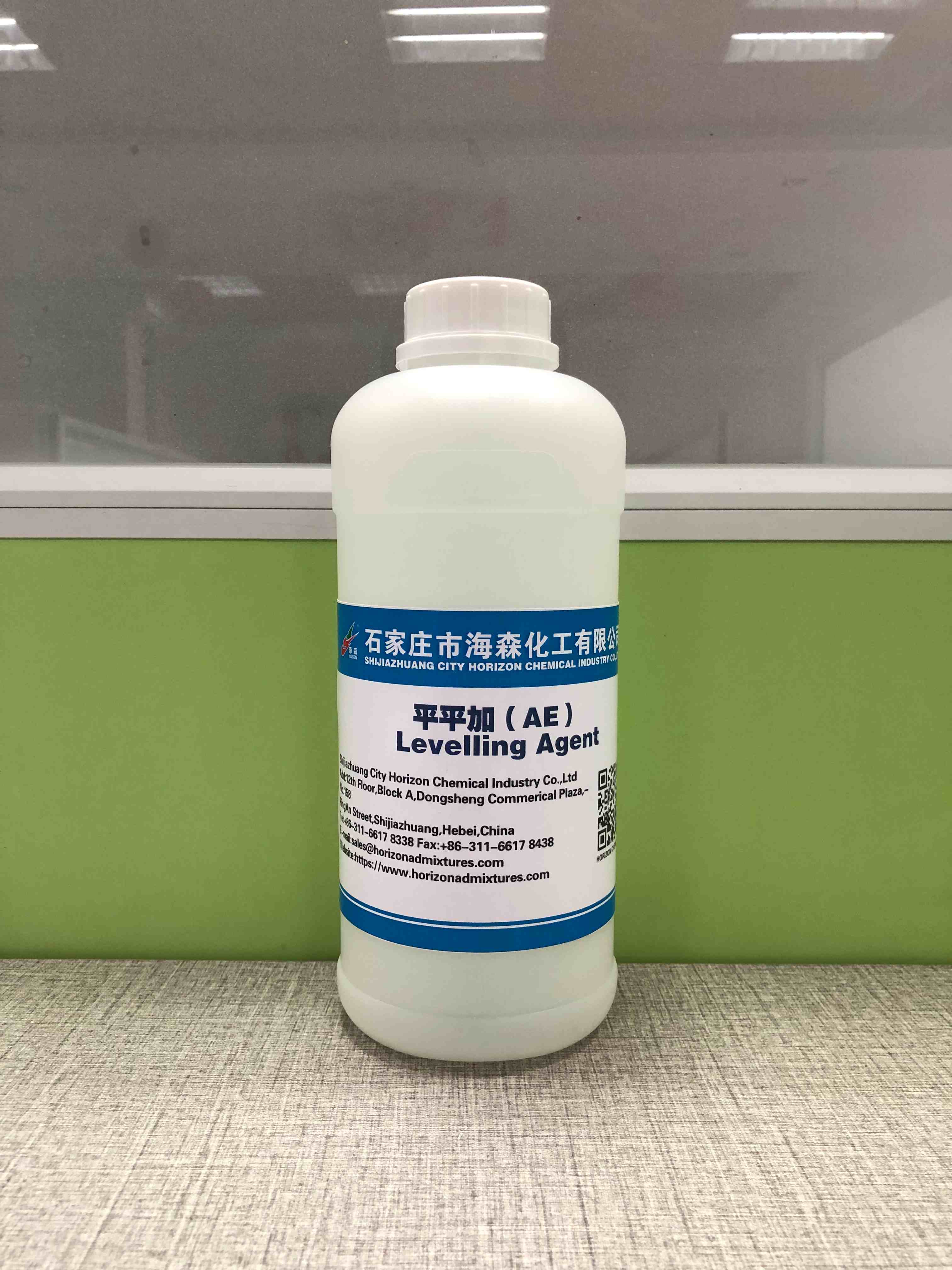
A coating that flows too eagerly will sag on vertical surfaces, while one that barely moves leaves brush strokes and roller stipple frozen in place. The finish you see is just a record of how the liquid behaved between application and cure.
Shear thinning matters more than most formulators admit. Under a brush or spray tip, the coating needs to drop viscosity fast enough to spread thin. The moment that stress disappears, it should recover enough structure to stay put. If the recovery is slow, edges pull back and craters form. If it's too fast, air bubbles get trapped and leveling stops before the film has a chance to smooth out.
Temperature and humidity shift this balance daily, so a paint that looks flawless in the lab can mottle on a job site. Watching flow behavior in real conditions, not just on a rheometer, is what separates a predictable finish from a constant round of callbacks.
Breaking Down Surface Tension Without Breaking the Bank
Surface tension gets a lot of credit for bugs walking on ponds, but you don't need a microscope or a lab budget to see it in action. Next time you're at the kitchen sink, fill a bowl with cold water and let it settle. Sprinkle a thin layer of ground black pepper across the surface. The flakes will spread out and stay afloat, held up by the water's elastic-like skin. This isn't a trick; it's the cohesive pull between water molecules at the surface doing the heavy lifting.
For the second half of the demo, dip a toothpick into dish soap and touch it to the center of the peppered water. Almost instantly, the pepper shoots toward the edges of the bowl. Soap molecules wedge themselves between water molecules and weaken that surface tension. The surrounding water still has stronger pull, so the pepper gets yanked outward. Total cost? A few cents' worth of pepper and one drop of dishwashing liquid.
If you want to push the idea further without buying anything new, try floating a clean, dry paper clip on the water's surface. It takes a steady hand, but once it sits, you can add a single drop of soap and watch it sink. Another zero-cost option is to see how many drops of water you can pile onto a coin before the dome breaks, then repeat with soapy water. The difference in drop count is a direct, tangible measure of how much surface tension you've stripped away.
From Brush Marks to Glass-Like Sheets: The Transformative Effect
Few finishes rival the quiet luxury of a surface that reflects light like still water. What begins as evidence of the hand—subtle ridges, faint drag lines from the brush—can be coaxed into a flawless, mirror-smooth expanse. The shift is not merely visual; it alters the way a room breathes, turning ordinary millwork or cabinetry into a piece that seems to hold depth beyond its physical edge.
Achieving that glass-like effect demands more than patience. It asks for a deliberate sequence: building thin, even layers, letting each cure fully, then sanding with grits so fine they feel like paper against the fingertips. With every pass, the surface becomes less a coating and more a lens. The trick lies in knowing when to stop—overworking can haze the very clarity you seek. Experienced finishers often say the material tells you when it’s ready; you just need to listen.
For those willing to refine their technique, the reward is transformative. A door that once looked painted now appears lacquered in glass. A tabletop gains a liquid stillness that invites touch. This is not about hiding the maker’s hand, but elevating it—until the only trace left is the impossible smoothness beneath your palm.
Selecting a Levelling Agent That Matches Your Resin System
The fastest way to end up with cratering or haze is to pick a levelling agent from a supplier's general-purpose list instead of thinking about the resin system in front of you. Acrylic, alkyd, epoxy, polyester and polyurethane dispersions each carry their own polarity signature, and a silicone that levels beautifully in one can sit like an oil droplet in another. Start by checking whether your binder is solventborne, waterborne, high-solids or UV-curable, then match the additive's anchor group and molecular weight to that environment.
In bake systems, volatile linear siloxanes can leave the film during cure and condense elsewhere in the oven, so reactive or high-molecular-weight grades often make more sense. A hydroxyl-functional modified silicone may lock into a 2K polyurethane network, while a non-reactive polyether siloxane might only offer a temporary effect. For epoxies and unsaturated polyesters, test compatibility early because the wrong organo-modified siloxane can separate during induction time or after catalyzation.
Beyond chemistry, check how the additive shifts surface tension across your expected defect window. Run a small ladder on the actual substrate and then evaluate recoatability after the recommended flash-off. Some low-surface-tension levellers create a closed, hydrophobic surface that rejects the next layer; others leave enough polar groups behind for intercoat adhesion. The goal is not maximum flow but a controlled reduction in surface tension that matches the coating's application method and film build.
Troubleshooting Common Defects Before They Reach the Customer
Most defects that slip through aren’t mysterious failures—they’re the result of small drift that nobody caught in time. A single out-of-spec batch rarely starts that way. It begins with a slightly worn nozzle, a cooling time trimmed by two seconds, or a new supplier whose material behaves just differently enough. Catching these issues early means watching trends on the line, not just reading final inspection reports. Operators who know what a normal process sounds and feels like will notice a subtle change long before a gauge does.
When a defect does appear, resist the urge to simply sort and rework. Walk backward from the rejected part to the exact step where the flaw could have been introduced. Was the mold temperature stable? Did the material sit too long before processing? Was there a handoff between shifts where settings got nudged? Often the real fix is boring: recalibrate a sensor, replace a filter, or clarify a work instruction. Document the borderline cases too—parts that almost failed are usually the best early warning system you have.
FAQ
It reduces surface tension gradients across the wet film, allowing the liquid to flow and even out before curing. This helps eliminate brush marks, orange peel, and roller stipple, giving the dried surface a smooth, uniform appearance.
That usually happens when the additive is incompatible with the resin system or over-dosed. Selecting a product with matching polarity and running a solubility check before full batch production prevents most of those issues. Starting at the lower end of the recommended dosage range also helps.
Acrylic types are often preferred for clarity and recoatability, but safest depends on the formulation. In high-gloss clears, a low-molecular-weight acrylic can improve flow without hurting gloss, while silicone-modified types may give better slip but risk intercoat adhesion if not carefully chosen.
A levelling agent promotes even flow and surface wetting, while a defoamer collapses air bubbles that form during mixing or application. They serve opposite purposes, and using the wrong balance can lead to either foam entrapment or poor levelling. They are usually added at separate stages to avoid competition at the interface.
Drawdowns on contrast charts or steel panels under controlled humidity reveal brush marks and orange peel quickly. Measuring DOI distinctness of image and wave-scan values gives quantitative data. A simple visual comparison after forced drying at different film thicknesses can catch flow problems early.
Some levelling agents with controlled surface tension can reduce Bénard cell formation by preventing local differences in solvent evaporation and pigment concentration. However, they are not a replacement for a proper wetting and dispersing agent. The best results come from using both in a coordinated way.
These systems have less solvent to assist flow and often develop higher viscosity shortly after application. Levelling agents designed with lower surface tension and longer open time compensate for that, allowing the film to level before crosslinking locks in defects. Standard solventborne additives may fail because they rely on solvent evaporation to migrate.
If you see slight orange peel or brush marks at the recommended dose, a small increase often solves it. But if increasing the dose brings gloss reduction, craters, or foam stability, that suggests the additive itself is wrong for the system. Tracking the response curve with ladder studies prevents over-adjustment.
Conclusion
A flawless coating rarely comes down to resin alone. The levelling agent quietly manages surface tension gradients, allowing the wet film to relax into a uniform thickness before crosslinking locks everything in place. This hidden chemistry determines whether brush strokes and roller stipple disappear or remain frozen in the cured surface. Flow behavior matters more than many formulators expect: if the coating is too viscous too soon, it never gets the chance to level; if it stays mobile too long, sagging takes over. The right additive shifts that balance without forcing a reformulation of the whole system. It controls surface tension at the air-liquid interface, encouraging the film to spread evenly across substrates and around contaminants. The visual difference is significant—what starts as an ordinary painted surface can end up as a glass-like sheet. That transformation isn't cosmetic alone; it also guards against premature failure by reducing stress concentrators like craters, orange peel, and brush marks.
But not every levelling agent works in every resin. Compatibility dictates whether the additive migrates to the surface as intended or stays trapped in the bulk, creating haze or intercoat adhesion problems. A polyester system may respond well to a polyacrylate-based leveller, while an epoxy might demand a silicone or fluorinated option to overcome stubborn surface tension differences. Selection isn't just about chemistry; it's also about cost and processing. Formulators need to weigh additive dosage against performance because overloading can lead to foam stabilization or recoatability issues. When defects do appear—fisheyes, crawling, ribbing—the first step is usually to map them back to surface tension imbalance or poor wetting rather than blindly increasing the dosage. Troubleshooting before the product reaches the customer means testing under realistic application conditions: different temperatures, humidity levels, and film builds reveal whether the levelling package holds up. The goal is consistent quality from batch to batch, not just a perfect lab drawdown. That consistency is what sets reliable industrial coatings apart.
Contact Us
Contact Person: Sam Lee
Email: [email protected]
Tel/WhatsApp: 86-311-6617 8338
Website: https://www.horizonadmixtures.com/