

Leading High Temperature Magnet Supplier for Demanding Applications
2026-08-02
When temperatures climb into the hundreds of degrees, standard magnets simply give up—demagnetizing, cracking, or failing when you need them most. Yet in aerospace, energy, and advanced manufacturing, failure isn’t an option. That’s where DAWA steps in, redefining what’s possible with high-temperature magnetic solutions. For decades, engineers have wrestled with the same trade-off: sacrifice magnetic performance for thermal stability, or vice versa. DAWA shattered that compromise, delivering magnets that thrive in brutal conditions without missing a beat. In this post, we’ll peel back the curtain on the materials, engineering secrets, and real-world applications that make DAWA the go-to partner for projects where heat is the enemy and precision is non-negotiable. If you’ve ever wondered how magnets survive inside jet engines or next to molten metal, you’re about to find out.
What It Takes for Magnets to Perform in Intense Heat
Magnets that hold their strength in scorching environments aren't just an afterthought—they're engineered from the ground up to resist demagnetization. The key lies in selecting materials with high coercivity, a measure of how stubbornly a magnet clings to its magnetic orientation despite external forces. Samarium-cobalt alloys, for instance, can shrug off temperatures exceeding 300°C while retaining useful flux, making them the go-to for jet engines and deep-well drilling sensors. Even neodymium magnets can be fortified through careful doping with heavy rare earths like dysprosium, though this comes at a trade-off in raw power and cost.
Thermal stability isn't just about the material—microstructure plays a stealth role. Manufacturers can refine grain boundaries to prevent magnetic domains from flipping when agitated by heat. This is often achieved through precision annealing, which relaxes internal stresses that would otherwise accelerate thermal aging. In some cases, magnets are given a sacrificial coating that oxidizes slowly, sparing the core from irreversible loss. The art is in balancing this intricate network of factors without making the final product brittle or unwieldy.
Real-world performance also hinges on geometry and cooling. A magnet isn't an isolated block; its shape influences how heat dissipates and how flux paths shift at elevated temperatures. Designers may segment large magnets or integrate them with heat sinks to keep critical regions below the Curie point. Even then, a magnet's response isn't linear—above a certain threshold, its strength can plummet unless protected by a feedback system. Ultimately, it's this fusion of chemistry, physics, and clever engineering that separates a throwaway fridge magnet from the ones venturing into the belly of a turbine.
The Material Science That Prevents Demagnetization
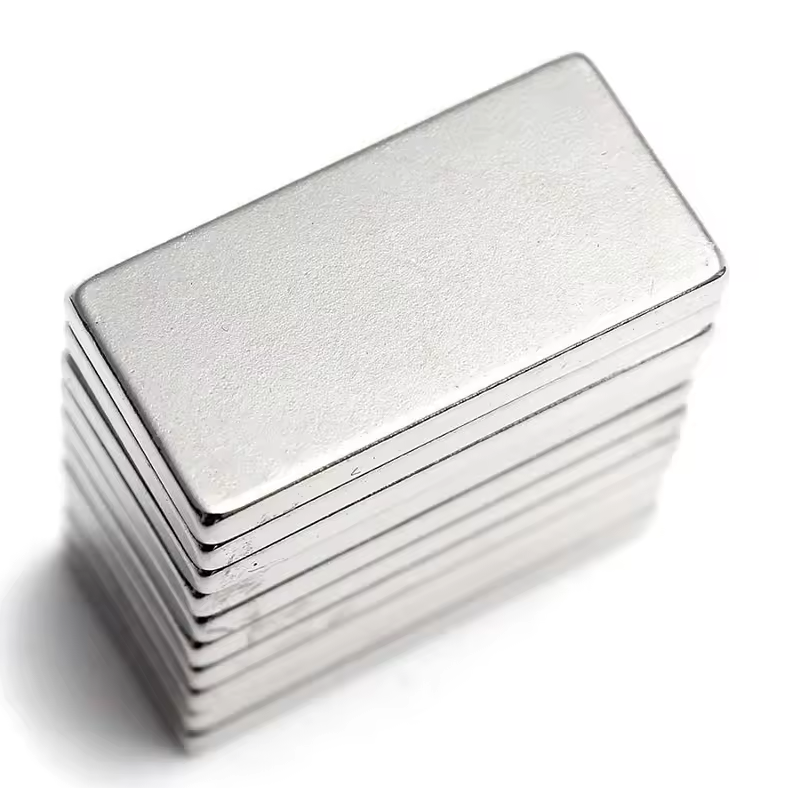
Permanent magnets lose their magnetism primarily through thermal agitation, external fields, or structural changes, but material science has developed sophisticated methods to resist these effects. The key lies in creating a high coercivity—the resistance to demagnetization—by engineering the microstructure. In alloys like neodymium-iron-boron (NdFeB), rapid cooling yields nano-sized grains that pin magnetic domains, requiring an immense reverse field to flip them. This grain refinement, combined with a textured crystalline alignment during sintering, locks the magnetic moments into a stable configuration. Additives such as dysprosium can further enhance coercivity by raising the anisotropy field, though researchers now reduce reliance on heavy rare earths through grain boundary diffusion techniques, achieving similar protection with less material.
Beyond permanent magnets, soft magnetic materials face a different challenge: they must avoid retaining magnetism after an applied field is removed. Here, the strategy inverts—materials like electrical steel or amorphous metals are engineered with ultralow coercivity through extreme purity and a lack of lattice defects. Even minute impurities can act as pinning sites, so vacuum-melting or rapid solidification processes quench the atomic structure into a nearly defect-free state, allowing domain walls to move freely. In recording media, where programmed demagnetization is essential, the science pivots toward controlled thermal stability; grains are isolated magnetically and sized just above the superparamagnetic limit, so they hold data reliably yet can be overwritten on demand. This delicate balance between permanence and volatility is the quiet triumph of demagnetization prevention—a field where atoms are rearranged not just for strength, but for a stubborn refusal to forget.
Tailored Designs for Non-Negotiable Applications
When a system simply cannot fail, off-the-shelf solutions rarely suffice. We start each project with a blank slate, listening intently to the specific operational demands, environmental extremes, and performance thresholds your application demands. This isn’t about customizing an existing platform—it’s about engineering from the ground up so every component serves a clear purpose, eliminating bloat and potential points of failure.
Our process marries advanced simulation with rapid physical prototyping, allowing us to validate concepts in conditions that mirror real-world stress—be it temperature swings, vibration, or signal interference—long before final production. The result is a design so tightly aligned with your requirements that it becomes an indistinguishable part of the larger machinery, delivering unwavering reliability when it matters most.
Why Consistency in High Temperatures Sets Magnets Apart
Heat is normally the enemy of magnetic order. As temperatures climb, atoms vibrate more violently, scrambling the delicate alignment that gives a magnet its strength. Most materials lose their grip under thermal stress, but a select class of magnets holds steady. It’s this resilience in the face of rising temperatures that separates them from the crowd—delivering reliable performance when ordinary options would simply fade.
In real-world settings, from motor windings to sensors inside a jet engine, temperatures can spike without warning. A magnet that weakens unpredictably creates risks: control systems drift, efficiency drops, and failures happen. High-temperature consistency means the field remains stable, the force doesn’t taper, and equipment keeps running as intended. That kind of dependability isn’t just a specification—it’s a safeguard.
Precision applications demand zero surprises. When a production line or a medical device relies on exact magnetic fields, even a subtle shift from heat can throw everything off. Magnets that maintain their character under thermal load allow engineers to design tighter, lighter, and more efficient systems. In the end, it’s the ability to deliver uncompromising performance when the heat is on that makes them truly indispensable.
Industry Cases Where Standard Magnets Fall Short
Take deep-sea exploration, for instance. Standard neodymium magnets, despite their strong pull, degrade rapidly in saltwater environments. The corrosion not only weakens the magnetic field but also releases particles that can damage sensitive equipment. Engineers had to rethink entire sensor arrays when off-the-shelf magnets kept failing at depths where pressure and salinity turned them into brittle, crumbling chunks within weeks.
In semiconductor fabrication, even microscopic contaminants can ruin a wafer. Standard magnets shed tiny metallic flakes over time, especially under vacuum and thermal cycling. A cleanroom using generic magnetic couplings once traced a 4% yield drop to these particulates—an expensive lesson that ordinary magnets just can't maintain the purity required at 3nm process nodes.
Medical implants present another hard limit. Standard magnets are too large for minimally invasive tools and often lack biocompatibility. When designers tried shrinking conventional magnets for a new catheter-guided pump, the reduced size slashed the magnetic force below therapeutic thresholds. They needed something far more tailored, as standard grades couldn't balance the geometry, strength, and long-term stability inside the human body.
Long-Term Reliability, Not Just Short-Term Gains
When evaluating any solution, it’s easy to get caught up in immediate wins—quick returns, fast deployments, or the thrill of a promising demo. But genuine value is rarely built in a sprint. True reliability means your investment continues to deliver years down the line, even as requirements evolve, user demands shift, and unexpected challenges emerge. It’s about choosing foundations that don’t crumble under pressure, tools that adapt without breaking, and partnerships that prioritize steady performance over flashy but fleeting gains.
In practice, this means looking beyond the numbers on a quarterly report. A system that runs flawlessly today but requires constant emergency maintenance tomorrow isn’t reliable—it’s a ticking clock. The best solutions age gracefully: they’re designed with headroom for growth, they handle edge cases gracefully, and they don’t force you into a corner when you need to integrate new capabilities. When you prioritize durability, you spend less time firefighting and more time building on a foundation that actually gets stronger with time.
Ultimately, long-term reliability is about trust. Can you sleep well knowing your infrastructure won’t wake you up at 3 a.m.? Will your users remain confident when transaction volumes spike? The short-term thrill of a quick fix pales in comparison to the quiet confidence that comes from systems built to last. That’s not just reliability—that’s a strategic advantage that compounds season after season.
FAQ
Our magnets use advanced samarium cobalt and specially formulated alnico grades that retain full magnetic strength beyond 500°C. We don’t just coat them—each batch undergoes thermal cycling tests to verify real-world endurance.
Every magnet is sourced from a single controlled melt, not blended from multiple heats. We track each unit with laser-etched lot codes and provide a digital certificate detailing its coercivity and temperature coefficient.
Downhole drilling tools, nuclear reactor sensors, aerospace actuators—anywhere heat, radiation, or corrosive fluids would degrade conventional magnets. We’ve even supplied custom assemblies for molten salt pumps.
Yes. Our in-house grinding and EDM capabilities hold <0.01mm on intricate shapes. We regularly produce directional field profiles that off-the-shelf magnets can't match, without sacrificing high-temperature stability.
Our engineers run multi-physics simulations—coupling magnetic fields with thermal and structural loads—to spot potential failure points early. This upfront collaboration often halves prototyping time.
We stock semi-finished blanks of rare-earth alloys, so for urgent requests we can machine and magnetize in under 72 hours. No expedite fees for these short-notice jobs.
Absolutely. We bond, encapsulate, or house magnets in corrosion-resistant cans, balancing flanges, and custom mounting brackets. Everything gets a final hot test to confirm performance under load.
Beyond product reliability, we actively manage alloy shortages and keep buffer inventory. When cobalt prices spiked, we helped clients tweak designs to use leaner grades without derating performance—they remember that level of partnership.
Conclusion
Delivering magnets that endure extreme heat without losing strength requires deep material expertise and precise manufacturing control. At the core of high-temperature performance is coercivity—the ability to resist demagnetization—achieved through advanced rare-earth alloys and microstructural engineering. By carefully adjusting the composition of samarium cobalt or neodymium-iron-boron grades and applying specialized coatings, these magnets maintain flux stability even when operating continuously above 300°C. But science alone is not enough; customized geometries and magnetic circuits are developed for each application, ensuring that thermal expansion, oxidation, and aging are factored into the design from day one. Whether embedded in downhole drilling tools, aerospace actuators, or automotive sensors, the magnet must perform predictably when failure is not an option, and that reliability starts with how the material is formulated and treated long before the first field test.
What ultimately separates leading suppliers from the rest is an uncompromising focus on long-term consistency. Standard magnets often experience irreversible flux loss under sustained thermal cycling, leading to equipment drift or catastrophic shutdowns—a risk seen in turbines, medical devices, and defense systems where replacements are costly or impossible. Top-tier manufacturers invest in rigorous testing protocols that replicate real-world thermal shock, vibration, and exposure cycles, sometimes over thousands of hours, to guarantee minimal deviation. This commitment extends to traceability: every batch is verified against exacting magnetic and mechanical properties, so when a design demands a magnet that will still meet specifications years later, the data backs it up. In demanding environments, it is not enough to claim heat resistance; true reliability means delivering the same flux, the same mechanical integrity, and the same performance margin from the first unit to the ten-thousandth, ensuring that critical systems never have to compromise between safety and operational lifespan.
Contact Us
Contact Person: Kelvin Lo
Email: [email protected]
Tel/WhatsApp: 0769-88561131
Website: https://dawamagnetic.com/