

Insulated Clean Panel Production Line Exporter for High-Performance Cleanroom Solutions
2026-08-17
When cleanroom performance hinges on every panel’s precision, sourcing the right insulated clean panel production line becomes more than a procurement task—it’s a strategic advantage. As a trusted YI ZHOU TECHNOLOGY exporter, we’ve seen how high-performance cleanroom solutions demand manufacturing equipment that balances thermal integrity, surface flatness, and consistent output. In this post, we explore what separates a reliable production line from the rest, and why forward-thinking cleanroom builders are rethinking their supply chain.
Cleanroom Stability Begins with Panel Insulation
Temperature swings and humidity shifts in cleanrooms rarely come from the HVAC system alone. The building envelope, particularly the insulated panels that form walls and ceilings, plays a quieter but decisive role. When panel insulation is uneven or poorly fitted, thermal bridging invites condensation, and condensation becomes a contamination vector. A stable cleanroom starts long before filters and airflow get tuned; it starts with the thermal barrier hidden inside each panel.
Panel insulation does more than slow heat transfer. It evens out surface temperatures so that air meeting a wall doesn't dump moisture at the first cold spot. In a well-insulated room, dew point stays safely away from interior surfaces, and the HVAC system isn't forced to fight thermal drift. This reduces cycling, keeps pressure differentials predictable, and lowers the chance of microbial growth in damp corners or behind equipment.
Over time, panels with dense, continuous insulation also cut energy demand and dampen vibration and noise. But the real payoff is repeatability. When every shift begins with the same wall temperatures and the same absence of moisture, process control becomes easier, and the cleanroom behaves less like a collection of equipment and more like a single, stable environment.
High-Volume Production, Precision Results
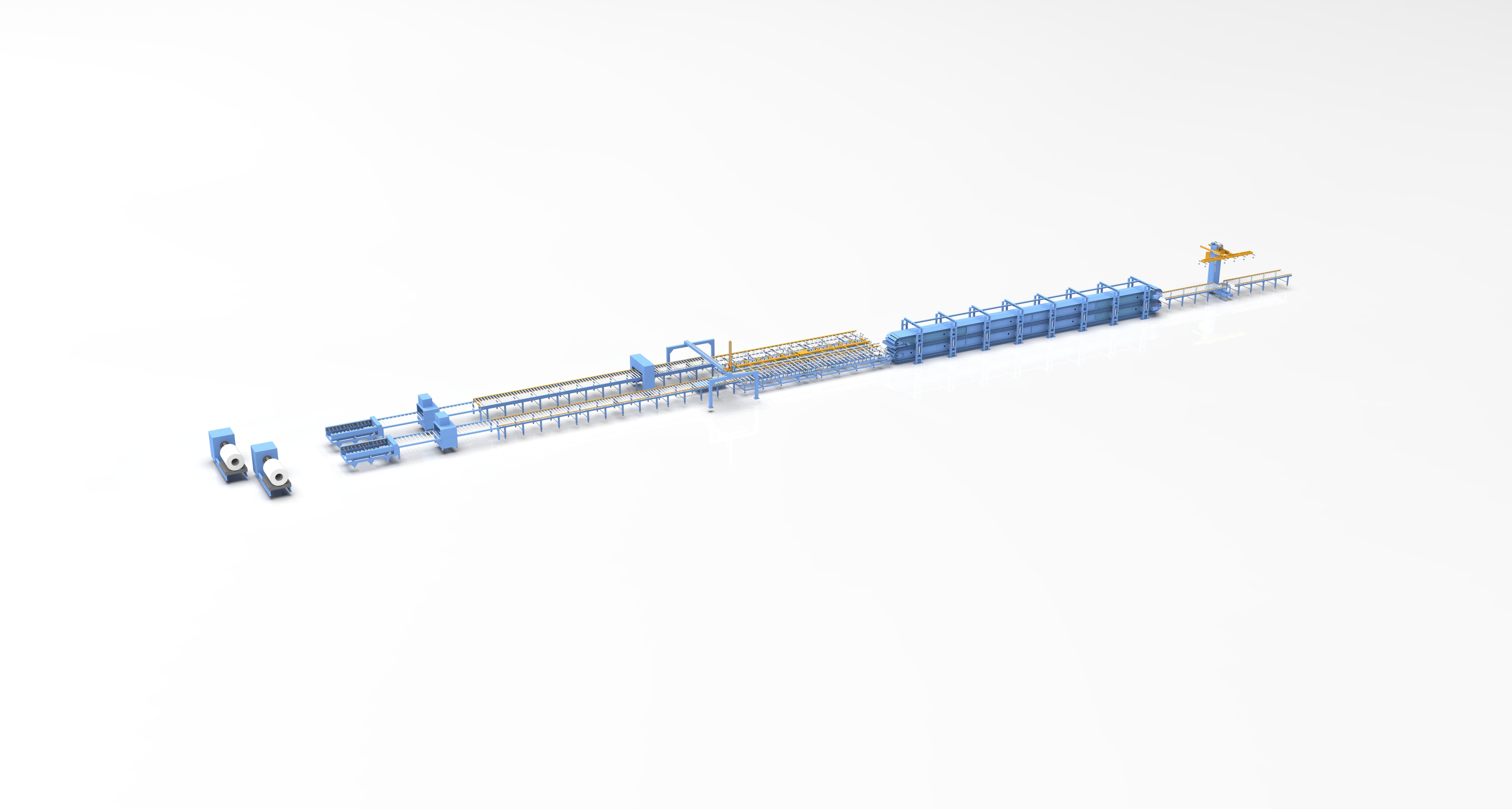
Scaling up doesn't mean surrendering control. Our production lines are built around the idea that every unit, whether it's the first or the ten-thousandth, carries the same fingerprint of accuracy. We've replaced traditional batch-checking with continuous inline measurement, so deviations are caught the moment they appear—not after a pallet has already shipped.
The real challenge in high-volume work isn't speed; it's keeping your tolerances from drifting as tooling heats up and materials shift. We counter that with adaptive fixturing and thermal compensation models that learn from each cycle. The result: outputs that stay within spec across an entire shift, not just at the morning calibration.
What this means for you is fewer rejected lots, less rework, and a supply chain that doesn't feed you surprises. Precision at scale isn't a slogan here—it's a measured, repeatable condition we prove with every delivery.
Panels Built for Strict Cleanroom Protocols
Every seam, corner, and fastener on these panels is engineered to eliminate particle traps. We use continuous welded construction with radiused internal angles, then finish the surface to a roughness average of 0.5 micrometers or better. That means there are no exposed threads, gaskets, or crevices where bacteria or dust can collect, even after repeated wipe-downs with aggressive disinfectants.
The core material is non-shedding and moisture-resistant, selected specifically for ISO 5 through ISO 8 environments. Panels arrive with a peel-away protective film, and once installed, they offer a smooth, non-porous face that withstands hydrogen peroxide vapor and IPA without hazing or delamination. We also radius all external edges to match cleanroom wall systems, so you won't need to apply caulk or sealant on site.
Dimensional tolerances are held to ±0.5 mm, which keeps the panels interchangeable and quick to replace during scheduled shutdowns. Each unit ships with full material certifications and a batch-specific test report covering outgassing, surface resistivity, and particle emission counts. That documentation helps your validation team close out protocols without chasing missing data.
Custom Sizing Without Custom Costs
Getting a perfect fit usually comes with a price tag that makes you hesitate. We ditched that trade-off. Our sizing process leans on smart pattern adjustments and streamlined production, so tailoring to your measurements never triggers a rush fee or a hidden upcharge.
You pick the style, send a few simple measurements, and the rest happens behind the scenes. No confusing size charts, no settling for “close enough” because the next size up costs more. Just clothes cut to your frame at the same price as standard sizes—every single time.
Damage-Free Export Logistics
Export shipments often fail not at customs but inside the container itself. Vibration from rough seas, sudden braking at ports, and stacking pressure can turn a well-packed pallet into a pile of broken goods long before it reaches the buyer. That’s why damage-free export logistics starts with understanding the actual journey: multimodal transfers, humidity swings, and forklift handling at multiple docks. Instead of relying on standard pallets and stretch wrap, we engineer each load with custom bracing, moisture barriers, and shock-absorbing dunnage that match the specific fragility and weight distribution of the cargo.
The difference shows up in the details. For fragile electronics or heavy machinery, we use tilt indicators and impact recorders to verify that handling stayed within safe limits. We also insist on climate-controlled containers for moisture-sensitive goods, and we stagger load heights to prevent top-heavy collapse during ocean transit. This approach doesn’t just reduce insurance claims; it keeps your delivery schedule intact and your customer’s first impression free of crates, dents, and apology emails. Over time, that reliability becomes a quiet competitive edge that no amount of marketing can fake.
Project Support Beyond Delivery
When a project is marked complete, the real work often starts. Support beyond delivery means staying involved after launch—monitoring performance, addressing edge cases, and refining details that only emerge with real use. It's the difference between a finished deliverable and a solution that actually holds up.
This approach treats handover as a milestone, not an endpoint. Teams remain reachable, documentation is kept current, and feedback loops are short. Instead of vanishing after sign-off, they help navigate upgrades, unexpected scenarios, and evolving requirements—turning a one-time engagement into a durable partnership.
The value shows up in reduced downtime and fewer surprises. Clients aren't left deciphering someone else's decisions alone; they have a direct line to people who understand the project's history and intent. That continuity builds trust and often prevents small issues from becoming costly problems.
FAQ
The line is built to produce a variety of insulated panels, including rock wool, polyurethane, and EPS core sandwich panels. Each type can be tailored to meet specific thermal, acoustic, and fire-resistance requirements, making them suitable for walls, ceilings, and partitions in cleanroom environments.
The line integrates precise lamination, temperature, and pressure control systems. Panels are manufactured with tight dimensional tolerances and smooth, non-porous surfaces that minimize particle accumulation and prevent air leakage, aligning with ISO cleanroom classifications.
Customers can choose from a range of thicknesses, widths, and lengths, as well as finishes like stainless steel, aluminum, or PVC-coated steel. The production line can be quickly adjusted to switch between different panel specifications without compromising output quality.
The team coordinates full logistics including sea or air freight, customs documentation, and on-site installation guidance. Packing is designed to protect panels from moisture and impact during transit, and technical advisors are available remotely or on-site for complex projects.
Each batch undergoes adhesion strength tests, dimensional accuracy checks, surface flatness verification, and thermal conductivity sampling. The line also records production parameters for traceability, so any panel can be traced back to the exact materials and machine settings used.
Yes, the line is engineered for continuous operation with automated feeding, cutting, and stacking systems. It can produce up to several hundred square meters per shift depending on panel thickness, and real-time monitoring keeps variability well below industry norms.
Buyers receive a comprehensive warranty on core components, access to spare parts, and scheduled maintenance programs. The exporter also provides operator training, either at the factory or via video tutorials, and a dedicated technical support line for troubleshooting.
Conclusion
A cleanroom is only as stable as the panels that enclose it. Our production lines focus on insulation from the very first layer, injecting closed-cell foam under controlled temperature and pressure to eliminate thermal bridges and microscopic air leaks. Unlike batch processes that leave density variations, our continuous lamination and automated curing deliver uniform insulation across every square meter. High-volume output does not mean cutting corners: robotic feeding, precision cutting, and inline measurement keep dimensional tolerances within a fraction of a millimeter. Panels leave the line with non-shedding surfaces, factory-sealed edges, and no exposed fibers, so they satisfy strict ISO-class protocols without additional on-site rework. The result is a cleanroom envelope that holds temperature, humidity, and pressure differentials from day one.
We adapt panel widths, lengths, and thicknesses to your cleanroom layout without adding custom line changeover costs. Modular tooling and rapid width adjustment let us offer non-standard sizes at standard pricing, which means architects and contractors do not have to compromise on layout. Before shipping, every crate is designed for ocean and road transit with corner guards, moisture-barrier films, and anti-vibration bracing that prevent edge damage and warping. Our logistics team tracks each shipment and provides export documentation in advance, so customs clearance does not stall the project. But our involvement does not end at the destination port. We offer installation supervision, operator training, and a spare parts plan tailored to your production schedule. This support continues beyond delivery, helping you commission the cleanroom faster and keep it running at peak performance.
Contact Us
Contact Person: Sophia Jiang
Email: [email protected]
Tel/WhatsApp: +86 17367381818
Website: https://yzwelding.com/