

High Quality Digital Vacuum Gauge: A Complete Buying Guide
2026-11-16
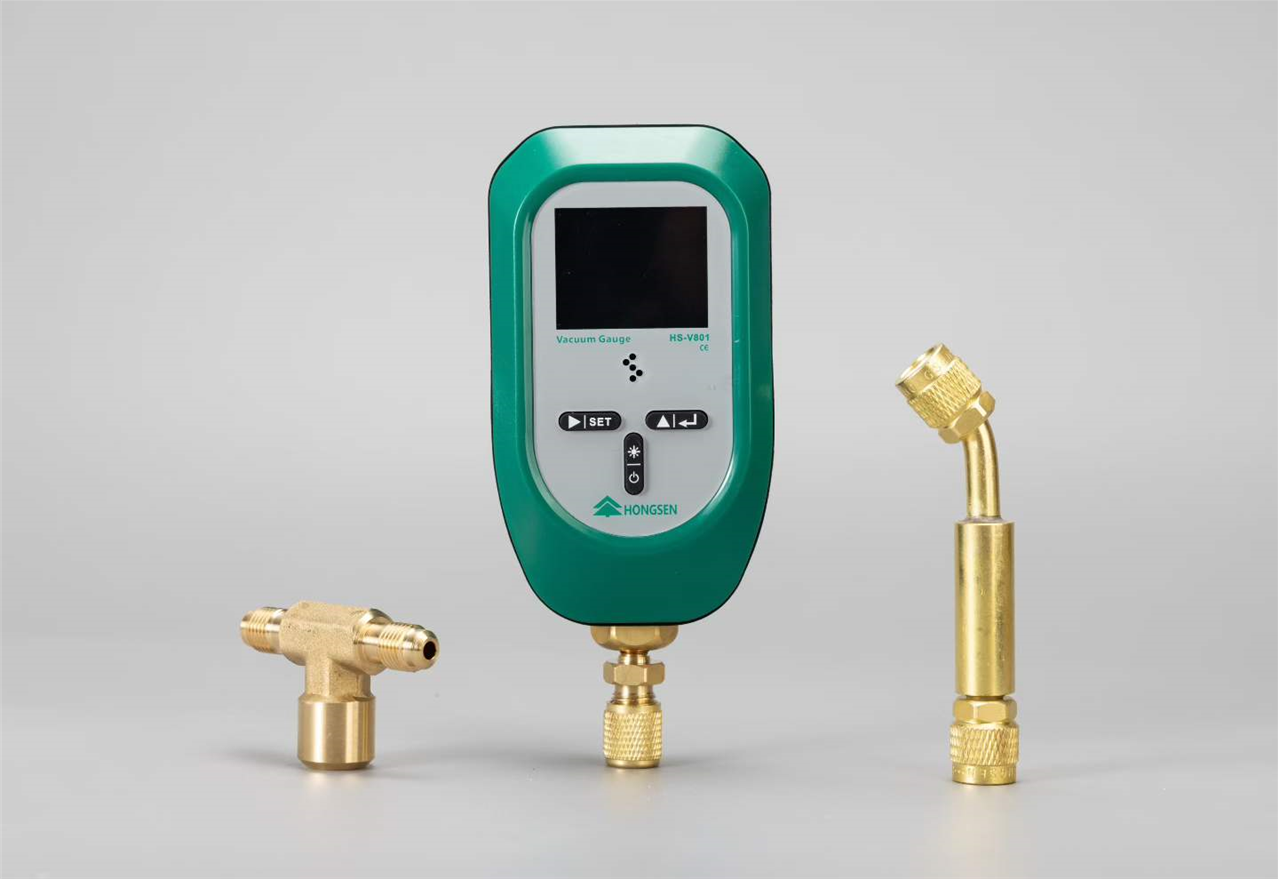
Choosing the right digital vacuum gauge can feel like searching for a needle in a haystack—one wrong pick and your entire system's performance suffers. Whether you're a seasoned HVAC technician or a lab professional, you've probably learned that accuracy and durability aren't optional; they're absolute necessities. That's why we've put together this complete buying guide, cutting through the noise to show you exactly what matters in a high-quality digital vacuum gauge. Along the way, you'll see why HONGSEN models consistently rise above the rest, offering the precision and reliability that demanding applications require. Ready to stop guessing and start measuring with confidence? Let's dive in.
What Sensor Type Actually Holds Up Over Time
When you strip away the marketing claims, most long-term sensor failures come down to drift, media compatibility, and mechanical fatigue. Piezoresistive silicon sensors are impressively linear out of the box but tend to drift under sustained static pressure, especially if the diaphragm sees temperature swings. Ceramic capacitive cells, by contrast, hold their zero point far longer because the sensing element isn't bonded under stress the same way—slow aging effects move both plates together rather than bending a doped resistor.
For wet or aggressive media, oil-filled stainless steel diaphragms with a bonded strain gauge bridge look rugged but can develop micro-leaks at the fill port or lose fill fluid viscosity with repeated thermal cycling. That quietly erodes accuracy. A dry ceramic sensor with a thick-film capacitive pickup bypasses that failure mode entirely. Field teardown data from water and wastewater networks consistently shows ceramic capacitive transmitters still within 0.2% of original span after eight to ten years, while many silicon strain gauge units have drifted three to five times that amount.
Magnetostrictive level sensors also age well because the sensing wire is physically isolated from the process, but they only work where a float can move freely. If you need a true workhorse across pressure, level, and even low-flow applications, the answer is less about a single best type and more about avoiding the weakest link: exposed bonded elements, thin oil fills, and cheap elastomer seals. Ceramic capacitive and magnetostrictive designs tend to be the ones still within spec a decade later.
How Calibration Drift Quietly Ruins Readings
A pH meter in a water treatment plant can slip by 0.1 pH units over six weeks without a single error message. The display still updates, the electrode still responds, and the buffer check from last month says everything is fine. But that small shift changes chlorine dosing calculations, corrodes pipes faster, and no one notices until a biofilm bloom appears in the distribution line.
Drift rarely shows up as a sudden failure. It builds through many small compromises: ambient temperature swings during night shifts, a tiny crack in an electrode junction, or repeated exposure to process fluids that slowly coat the sensing surface. Each event only moves the baseline a fraction of a percent, but together they create a reading that is confidently wrong rather than obviously broken.
The most dangerous part is that routine checks can miss it. If a reference standard is stored too long or reused too often, it degrades along with the instrument, so the “pass” becomes meaningless. Operators keep adjusting the process to match a drifting signal, and by the time an audit or product failure exposes the gap, weeks of decisions were based on values that were quietly sliding out of true.
Reading the Display with Greasy Gloves
A greasy fingerprint on a digital display turns the simplest readout into a puzzle. The backlight leaks through the oil, softening edges and adding a faint rainbow bloom that shifts as you move. If you're mid-task with gloves already slick from grease or oil, you learn to read by interpreting shadows rather than crisp pixels.
Instead of reflexively wiping the screen with a dirty glove—which only spreads the film around—try using the dry inner wrist of your sleeve or a clean patch near your shoulder. A quick, firm press lifts enough residue without leaving lint. If you must keep working, angle the display so overhead light reflects away from the smudge rather than through it.
For screens that need frequent glancing, consider a cheap matte screen protector. Its micro-texture scatters grease into a faint haze instead of distinct streaks, and it won't hold onto glove marks the way glossy glass does. That way, reading with greasy gloves becomes less about squinting and more about a slight tilt of the head.
Battery Life for a Full Day of Work
A full workday rarely follows a straight line—back-to-back video calls, documents, emails, and the occasional screen share. This battery is built to outlast that unpredictability. In mixed use with the screen at moderate brightness and Wi-Fi on, expect around 10 to 11 hours of realistic runtime. That means from the morning standup to the evening wrap-up, you won't be hunting for a charger under your desk.
Heavier tasks like rendering or nonstop video conferencing will drain it faster, but even then it covers the core working hours. And if you do need a top-up, the fast charging delivers roughly 50% in 30 minutes—a short lunch break plug-in is enough to carry you through late afternoon meetings and an evening commute. You can leave Bluetooth, keyboard backlight, and background sync on without micromanaging settings.
Leak-Free Fittings Without the Cross-Thread Headache
Tightening a fitting shouldn't feel like defusing a bomb. The moment you sense that subtle resistance shift—threads biting at the wrong angle—you already know a leak is coming. Cross-threading turns a simple connection into a slow, stubborn failure, often hidden until pressure hits. Leak-free fittings that eliminate this headache rely on precision-machined lead-ins and forgiving thread geometry, letting the fitting seat itself squarely before you even apply torque.
The real difference shows up in the field, where gloves, awkward angles, and tired hands make perfect alignment a lottery. A well-designed fitting guides the male thread into the female port without back-spinning or false starts. You feel a clean, linear engagement—no rocking, no sudden binding. That's when a leak-free seal becomes less about luck and more about the fitting doing the work for you.
Beyond the thread form, materials matter. A slightly softer coating or a self-centering sleeve can absorb the first half-turn, preventing the galling that turns a minor misalignment into a scraped, leaking joint. The goal isn't to make installers more careful; it's to make the fitting so cooperative that cross-threading practically disappears from the failure list.
The Hidden Cost of a Cheap Vacuum Gauge
At first glance, a low-priced vacuum gauge looks like a sensible way to keep the tool budget in check. The problem shows up later, usually at the worst possible moment. A technician pulls a vacuum on a refrigeration circuit, sees the needle settle around 500 microns, and calls the job done. What the gauge doesn't reveal is the moisture still trapped in the system because the sensor drifted out of tolerance weeks ago. That single misleading reading leads to a callback, a contaminated compressor, or a warranty claim that erases any upfront savings.
The real expense hides in repeated calibration, premature replacement, and misdirected troubleshooting. Cheap gauges often use sensors that react noticeably to ambient temperature changes or lose accuracy after exposure to refrigerant vapors. Some cannot be recalibrated at all, so once the drift begins, the tool becomes a guess meter. A technician chasing a phantom leak based on faulty readings will replace hoses, fittings, or even the vacuum pump before suspecting the gauge. Each unnecessary part and every extra service hour stacks up quietly against the original purchase price.
In production settings, the damage multiplies. Vacuum-dependent processes such as freeze drying, coating, or semiconductor packaging rely on repeatable measurements in the low-micron range. A bargain gauge that cannot hold a stable zero or distorts readings at the low end forces operators to make decisions on unreliable data. One underperforming batch or one aborted production cycle often costs more than a dozen quality instruments. When you add the labor spent second-guessing measurements and the downtime spent rechecking with a borrowed gauge, the cheap option was never cheap. It simply deferred its bill.
FAQ
Pay attention to the sensor type, resolution, and response time. A quality unit should read down to at least 1 micron, react within a second or two, and survive occasional bumps. A backlit display and auto-shutoff are nice, but accuracy and durability matter more than extra features.
Digital models give you exact numeric readings, which makes it easier to spot small changes during evacuation. Analog gauges require you to interpret needle position and often lack the precision needed for low-micron work. Digital units also tend to include data logging and alarms, which analog versions can't offer.
For most HVAC and automotive tasks, aim for a gauge that stays within a few percent of the true reading across the 50 to 1000 micron range. Anything worse than ±10% can cause you to misjudge a system's dryness, so don't settle for a cheap sensor just because it shows numbers.
If you work on multiple systems at once or need to monitor vacuum while doing other tasks, wireless connectivity saves real time. Otherwise, a standard handheld gauge is perfectly fine. The key is making sure the wireless feature doesn't replace a solid sensor, since a weak reading is useless no matter how it's delivered.
Names like Fieldpiece, Testo, and BluVac come up often among technicians, but brand alone isn't a shortcut. Look for models with proven sensor longevity and easy calibration. Many pros also keep a backup gauge to cross-check readings rather than relying on a single brand or unit.
Yes, because a digital vacuum gauge measures total pressure in the system, not refrigerant-specific properties. As long as the gauge is rated for the expected vacuum range and compatible with your manifold or hoses, it will work across different refrigerants. Just make sure your seals and hoses are rated for those refrigerants too.
Clean the sensor port gently after each use, avoid blowing compressed air directly into the sensor, and store the gauge in a dry case. Periodically check calibration against a known reference, and replace batteries before they leak. Dust, oil, and moisture are the main killers of accuracy over time.
Standalone gauges usually offer better accuracy and can be placed closer to the system, which reduces hose length errors. Built-in manifold gauges are more convenient for quick jobs but often compromise a little on precision. If you do regular deep vacuum work, a standalone digital micron gauge is the safer choice.
Conclusion
A digital vacuum gauge that survives daily use starts with the sensor. Piezoresistive and thermocouple types tend to stay accurate longer than budget capacitive sensors, especially when the gauge gets bumped or exposed to refrigerant oil. But even a robust sensor can't save you from calibration drift. Many technicians only notice it after a system evacuation stalls or a reading contradicts the manifold. Look for a model with a simple field-calibration routine and a known drift spec—otherwise, you'll be second-guessing every micron. The display matters more than specs suggest. A bright, high-contrast LCD or OLED with large digits lets you read values through greasy fingerprints and at awkward angles; some add backlighting that's actually readable outdoors. Battery life is the unglamorous feature that separates all-day work from lunchtime hunting for a charger. Rechargeable lithium packs with a low-battery warning and an auto-off you can disable are worth the extra cost if you regularly pull deep vacuums.
Fittings are another source of silent frustration. Good gauges use precision-machined brass or stainless threads and include a swivel or angled connector, so you can attach to a core tool without cross-threading the port. The hidden cost of a cheap gauge isn't the purchase price—it's the wasted time, the false leak indications, and the eventual replacement. A high-quality unit might cost double up front, but it holds calibration longer, handles a drop, and reads reliably when you're tired and covered in oil. In the end, the best buying guide advice is to treat the gauge as a measurement instrument, not a disposable accessory.
Contact Us
Contact Person: KOPASS HO
Email: [email protected]
Tel/WhatsApp: 8613606566112
Website: https://www.hongsenref.com/