

GS-441524 FIP Treatment Factory Manufacturing Process Explained
2026-11-16
Not all GS-441524 is created equal. In this post, Lucpets walks you through its factory manufacturing process — the checks, the chemistry, and the care that separate a reliable FIP treatment from the rest.
Cooking Up the Nucleoside: The First Chemical Steps
Before a nucleoside can take shape, a ribose or deoxyribose derivative must be coaxed into accepting a purine or pyrimidine base. Usually the anomeric hydroxyl is converted into a good leaving group—acetate, chloride, or a sulfonate—while the remaining hydroxyls are masked with silyl or benzoyl protecting groups. This sets the stage for the pivotal glycosylation. Without these manipulations, the sugar simply refuses to couple cleanly.
The actual coupling can be finicky. Under Lewis acid catalysis, the protected sugar and a silylated nucleobase are brought together in an anhydrous solvent like acetonitrile or dichloroethane. The stereochemical outcome at C1' depends heavily on neighboring group participation. A 2'-O-acyl group tends to deliver the β-anomer through a dioxolenium intermediate, while 2'-deoxy sugars often require other tricks, such as using a 2'-halo sugar or an α-directing anomeric leaving group.
After the key bond forms, the crude mixture still holds protecting groups and perhaps unwanted isomers. Quenching with bicarbonate, followed by deprotections—ammonia in methanol for benzoyl groups, fluoride for silyl ethers—eventually uncovers the free nucleoside. Purification by silica chromatography or crystallization gives material clean enough for phosphorylation or incorporation into oligonucleotides. These early steps, though often overlooked, determine both the yield and the ratio of anomers that carries through the entire synthesis.
The Purity Hurdle: Why 99% Isn't Good Enough
The gap between 99% and the purity levels demanded by modern technology is not a small step—it's a chasm. In semiconductor fabrication, a single stray atom of boron or phosphorus in a million silicon atoms can alter electrical properties enough to ruin an entire wafer. That's why the industry routinely works with materials refined to 99.9999999% (nine nines). The old rule of thumb that '99% pure is pure enough' falls apart when one contaminant among a billion can mean the difference between a functioning microchip and a costly failure.
Chasing those extra decimal places is where the real battle begins. Each additional nine of purity requires a fundamentally different purification strategy, whether it's zone refining for silicon, fractional crystallization for pharmaceuticals, or advanced chromatography for fine chemicals. The costs don't creep up—they skyrocket, often exponentially, because you're no longer just removing bulk impurities but isolating and eliminating trace elements that hide in crystal lattices or cling to container walls. Worse, measuring such extreme purity is itself a hurdle; conventional analytical tools hit their detection limits long before you reach the target, forcing you to develop new metrology just to know if you've succeeded.
This purity hurdle isn't a technical annoyance; it shapes entire industries and dictates what's physically possible. From optical fibers that must guide light for hundreds of kilometers without scattering losses to drug compounds where a single enantiomer impurity can cause catastrophic side effects, the demand for near-perfection drives innovation in materials science, chemistry, and engineering. The question is no longer 'how pure can we make it?' but 'how pure must it be, and what are we willing to sacrifice to get there?' The answer, more often than not, is that 99% is just the starting line.
From Slurry to Sterile Vial: The Journey Through Cleanrooms
The journey begins long before the slurry reaches the cleanroom floor. In a controlled upstream suite, the biologic slurry—a milky suspension of cells, proteins, and buffer—is gently transferred through closed, single-use tubing into a stainless-steel holding tank. Technicians in full gowning monitor pressure differentials and flow rates on touchscreen interfaces, but the real guardians are the high-efficiency particulate air filters humming overhead. Each cubic meter of air is scrubbed of particles down to 0.1 microns, creating an environment where a single sneeze would register as a catastrophic event. The slurry is then pushed through a series of sterile filters, each pore smaller than the last, until the liquid runs clear and particle counters flash green.
Inside the aseptic filling zone, the rhythm is almost surgical. Vials, pre-washed and depyrogenated, glide along a conveyor in a laminar flow of unidirectional air. Robotic arms, gloved in sterile silicone, pick and place each vial with a precision that would shame a watchmaker. The filtered slurry, now a final drug product, is metered into the vials through needles that have been tested for leaks and lubricated with medical-grade silicone. Every ten minutes, an operator in a full-body isolator suit swabs a random vial neck and a glove fingertip, sending the samples to a rapid microbial detection system. The floor beneath them is seamless vinyl, coved at the walls to eliminate corners where contamination could hide. Even the lighting is angled to prevent shadows where particles might linger unnoticed.
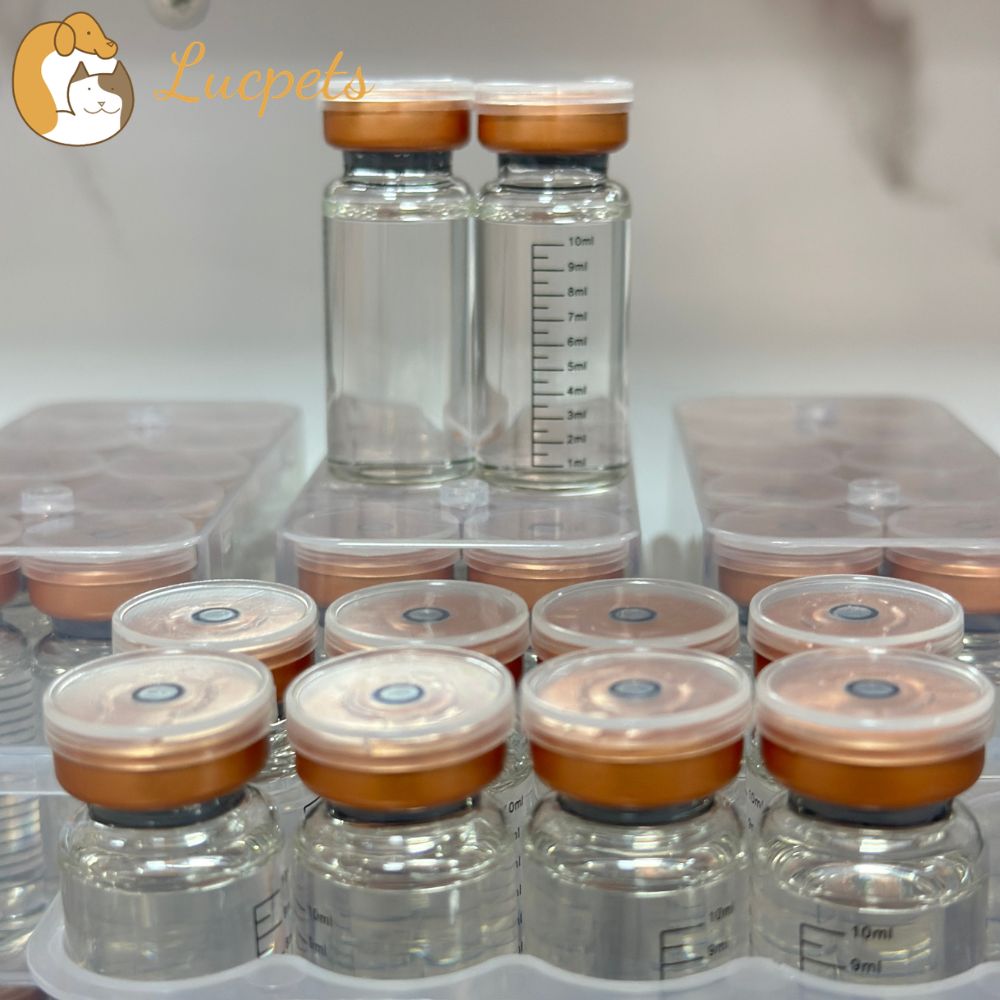
The final transition from slurry to sterile vial is sealed with a crimp of an aluminum cap, but the journey doesn’t end there. Each vial passes through a high-voltage leak detector that checks for microscopic cracks in the glass. Then, under a bright inspection light, a human operator—trained to spot even the faintest haze or fiber—conducts a 360-degree visual check. The room’s interlocking doors prevent any simultaneous opening that could disrupt the pressure cascade. When the last vial is labeled and packed, the batch record shows a line of green checkmarks, each one a small victory over the invisible enemy of contamination. It’s a process that transforms a vat of living cells into a lifesaving injection, one sterile vial at a time.
The Freeze-Drying Dance: Protecting a Fragile Molecule
Freeze-drying a fragile molecule is less a process than a carefully choreographed duet. The molecule, often a delicate protein or nucleic acid, can lose its shape—and its function—if exposed to too much heat, liquid water, or mechanical stress. So the dance begins by lowering the temperature until the water inside the vial freezes solid, but not so fast that the ice crystals become jagged spears. A slow, controlled cooling step lets the ice form tiny, uniform crystals that leave the molecule's structure unharmed.
Then comes the main movement: sublimation. Under a deep vacuum, the frozen water skips the liquid phase entirely and drifts away as vapor. This is where the freeze-dryer's sensors and valves work in tandem, adjusting pressure by fractions of a millibar to keep the product temperature just below the collapse point. Too aggressive, and the dried cake slumps into a sticky mess; too timid, and the run drags on for days. Experienced operators learn to read the subtle shifts in product temperature and chamber pressure, much like a dancer feels a partner's weight shift before a turn.
The final bow is secondary drying, where the last traces of bound water are coaxed out at a slightly warmer temperature. By the end, the molecule sits in a brittle, porous cake—stable at ambient temperatures for months or years, ready to spring back to life with a splash of water. That quiet transformation, from liquid fragility to dry resilience, is the real reward of the freeze-drying dance.
Why Particle Counts Matter More Than You'd Think
Most people assume if you can't see a particle, it can't cause trouble. That assumption fails fast in places where precision matters. A single 0.1-micron particle can short-circuit a microchip, spoil a sterile batch, or lodge deep in lung tissue. The real issue isn't just size—it's that small particles travel farther, bypass simple filters, and stay suspended longer. Counting them gives you a view into an invisible world that quietly determines product yield, equipment lifespan, and even chronic health outcomes.
What makes particle counts particularly useful is how they reveal trends before visible problems appear. A gradual rise in submicron particles often signals a degrading filter, a failing seal, or a shift in raw material quality. Without that data, you might not notice anything until a batch fails or a patient reacts. Treating particle counts as an early warning system—rather than a pass/fail checkbox—turns routine monitoring into a predictive tool that saves money and prevents failures you'd never see coming.
It's also easy to get misled by a single total count. The real story lives in the size distribution. Particles under 2.5 microns behave differently from those over 10 microns—they enter the bloodstream, settle on optical surfaces, or create abrasion in moving parts. Focusing only on the largest or most obvious particles means missing the tiny ones that cause the most expensive damage. Once you start breaking counts down by size, you stop guessing and start seeing exactly where contamination comes from.
The Final Gate: How a Batch Earns Its Release Certificate
A batch doesn’t cross the finish line simply because the last vial is capped or the final tablet is pressed. The release certificate represents a deliberate, evidence-based judgment that every step behind that batch can withstand scrutiny. Quality assurance specialists comb through the manufacturing record, comparing actual process data against approved ranges, checking that raw material traceability is intact, and confirming no unresolved deviation remains.
Laboratory results carry equal weight. Samples pulled from the batch must meet specifications for identity, potency, purity, and safety. If a microbial limit test is even marginally out of bounds, the batch pauses until an investigation determines root cause and impact. Environmental monitoring data from the production area is reviewed for the same reason, since cleanroom conditions directly influence product integrity.
Only after these threads align does an authorized person sign the certificate, converting a finished product into a releasable batch. That signature is not ceremonial; it carries personal accountability and regulatory exposure. When doubts linger, the gate stays shut.
FAQ
It starts with sourcing high-purity starting materials, usually a ribose derivative and a pyrrolotriazinamine intermediate, which are then coupled under controlled anhydrous conditions.
They run a multi-stage purification process—typically preparative HPLC followed by recrystallization—and then verify purity via LC-MS and NMR, aiming for over 99% purity with no residual solvents above ICH limits.
The phosphoramidate coupling step is exothermic and prone to side reactions; keeping the reactor between -5°C and 5°C prevents formation of unwanted diastereomers and degradation products.
A dedicated GMP-compliant plant with segregated zones for synthesis, purification, and drying is typical. Negative pressure in handling areas minimizes cross-contamination, and stainless steel or glass-lined reactors avoid metal leaching.
The pure GS-441524 powder is micronized to a consistent particle size (often below 10 microns) to improve dissolution, then blended with excipients like mannitol or lactose for oral suspensions or filled into sterile vials for injectable solutions.
They use a reference standard to calibrate HPLC assays, and each batch is tested for assay content, related substances, water content, and microbial limits. Statistical process control charts track batch-to-batch variation.
The main impurities are unreacted starting materials, the 3’-isomer of the ribose moiety, and a dimerized side product. Preparative chromatography or selective crystallization removes them, with acceptance criteria usually below 0.1% each.
Yes, the final deprotection of the phosphoramidate to the free nucleoside is tricky. At larger volumes, the acidic deprotection can cause hydrolysis of the glycosidic bond, so manufacturers often switch to a milder enzymatic or buffered acid system.
Conclusion
The process starts in the synthesis lab, where the nucleoside backbone of GS-441524 is assembled through a series of carefully controlled reactions—phosphoramidite coupling, deprotection, and purification. Even after chromatographic cleanup, impurities at the 1% level can alter the drug's behavior in feline patients, so the team pushes beyond standard thresholds. Achieving 99% purity isn't enough; they chase single-digit ppm for genotoxic residues and residual solvents. Every reagent lot is logged, every reaction parameter recorded, because the smallest deviation in temperature or pH changes the impurity profile.
Once the active pharmaceutical ingredient passes its purity panel, it moves into a slurry and then into a classified cleanroom for fill-finish. The liquid is filtered through 0.22-micron membranes to drop bioburden. Particle counts are monitored continuously—not just for sterility, but because sub-visible particles can trigger injection-site reactions or capillary blockage. The final dosage form is lyophilized; freeze-drying protects the molecule's fragile glycosidic bond from hydrolysis during shelf storage. After drying, each batch faces a release gauntlet: identity, assay, water content, endotoxin, sterility, and particle count. Only when all certificates align does the batch earn its release certificate, with every data point traceable to the vial lot.
Contact Us
Contact Person: Aaron
Email: [email protected]
Tel/WhatsApp: +86 18177165140
Website: https://www.lucpetsglobal.com