

Ethanoldiisopropanolamine: Substantial Applications and Benefits in Modern Industry
2026-08-14
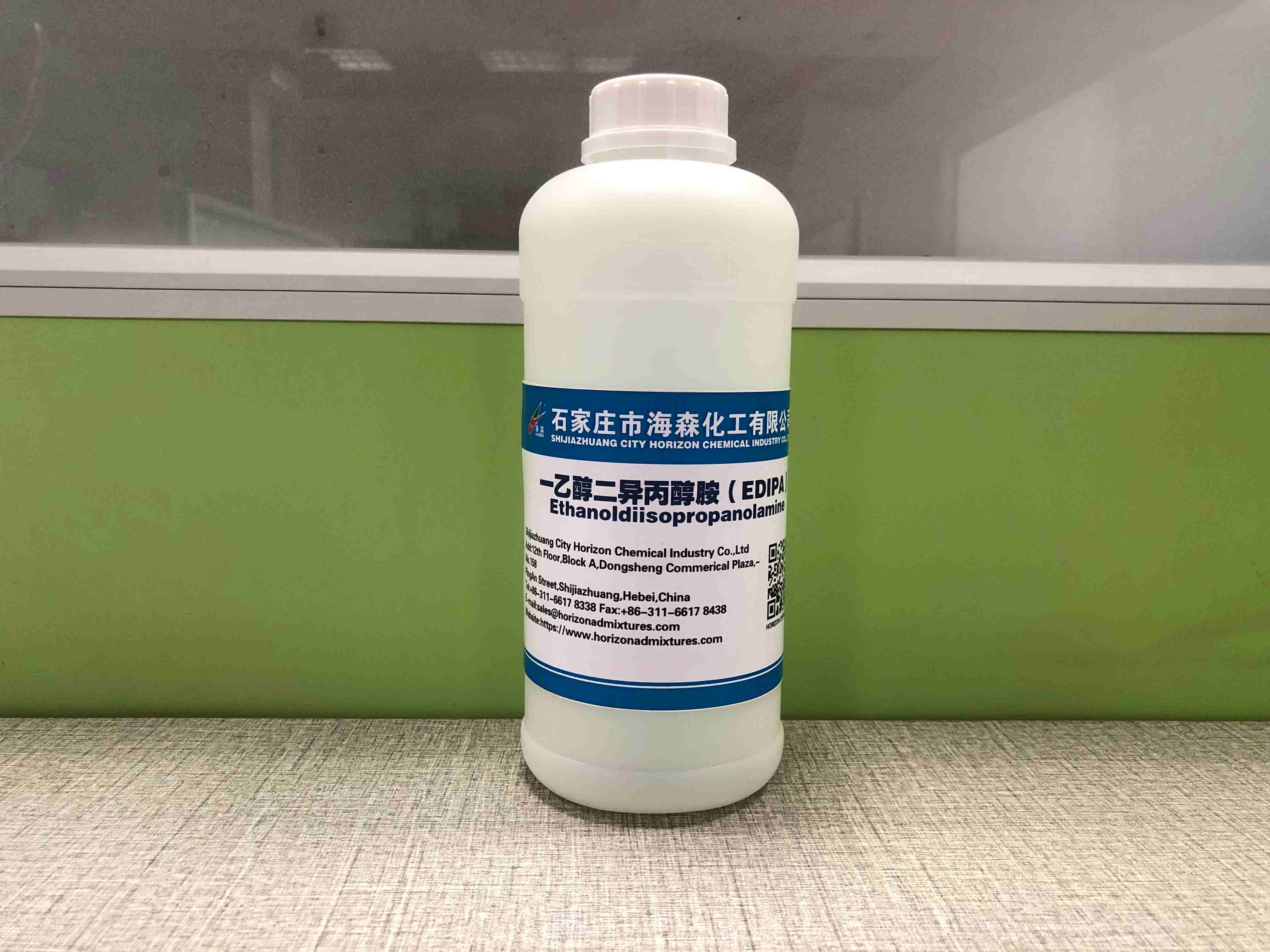
Industrial chemists and formulators constantly search for additives that deliver multifunctional performance without compromising stability or cost. Ethanoldiisopropanolamine stands out as a quiet workhorse—used in cement grinding aids, metalworking fluids, and coatings—yet its name rarely surfaces outside specialist circles. Its unique combination of amine and alcohol groups enables precise pH buffering, dispersion, and corrosion inhibition. But as regulations tighten and batch consistency becomes non-negotiable, sourcing this compound from a partner with real expertise matters. HAISEN, with its focus on high-purity specialty amines, has carved a niche by ensuring every lot meets demanding industrial specs. This article explores how ethanoldiisopropanolamine’s molecular design translates into tangible benefits across modern manufacturing—and why the right supply chain can make or break your formulation.
The Unseen Workhorse of Construction Chemistry
Walk onto any construction site and you'll see steel, timber, and concrete—but the real hero is often invisible. Construction chemistry works behind the scenes, quietly turning raw materials into durable structures. From the moment water hits cement powder to the final curing of a high-rise slab, additives and admixtures control the very reactions that make modern building possible. Without them, concrete would crack prematurely, mortar would fail to bond, and waterproofing would be a guessing game.
What makes these chemical agents so remarkable is their ability to solve problems that builders rarely think about. Plasticizers make concrete flow without adding water, preserving strength. Accelerators speed up setting in cold weather while retarders buy time on hot days. Shrinkage reducers prevent the hairline fissures that invite corrosion. Each formulation is tuned to specific site conditions—hard water, extreme temperatures, aggressive soils—turning a generic mix into a precise engineering material.
Perhaps the most underappreciated role is longevity. The unseen workhorse doesn't just help concrete pour and set; it keeps structures standing for decades. Corrosion inhibitors shield rebar from chloride attack. Air-entraining agents create microscopic bubbles that absorb freeze-thaw stress. Crystalline waterproofing grows deep inside capillaries to block water permanently. These are not glamorous innovations, but they are the difference between a bridge that lasts thirty years and one that lasts a century.
Keeping Metal Surfaces Intact in Demanding Environments
Metal surfaces rarely fail because the base alloy is weak; they fail because the boundary between the metal and its environment gets ignored. Salt spray, acidic runoff, abrasive particulates, and cyclic temperature swings all work on that boundary in different ways. A zinc-rich primer that holds up fine in a coastal HVAC unit may blister within weeks when exposed to chlorine-based disinfectants or constant condensation. The practical fix starts with mapping the specific exposure, not just applying a thicker coating. For example, stainless steel fasteners installed in a marine atmosphere often develop crevice corrosion under washers where oxygen levels drop, even though the exposed surfaces look untouched. Addressing that means changing geometry, sealing interfaces, or switching to a more resistant alloy rather than relying on surface treatment alone.
Adhesion and surface preparation usually matter more than the choice of topcoat. Mill scale, oil residue, or even a fingerprint can create a weak layer that lets moisture creep underneath and lift the coating. Blasting to a sharp angular profile, followed by a phosphate or silane conversion layer, gives the protective film something to bite into. In high-temperature or high-abrasion settings, organic paints may not be enough; thermally sprayed aluminum or ceramic-filled epoxy can bridge the gap. But no coating compensates for poor drainage or trapped moisture. Design details like avoiding horizontal ledges, adding weep holes, and specifying stainless or galvanic-compatible hardware often extend service life more than upgrading the paint chemistry.
Regular inspection still catches what lab testing misses. In many plants, the first sign of coating breakdown is not visible rust but a slight color shift, chalking, or microscopic blistering under a bolted connection. Tracking those changes with simple thickness gauges or adhesion tests helps schedule touch-ups before corrosion reaches the substrate. When repairs are made, feathering the edges and using a compatible primer prevents a hard boundary line that can become a new failure point. In demanding environments, keeping metal intact is less about finding a miracle product and more about treating the surface as a system: preparation, material selection, drainage, and monitoring all have to work together.
Stability Gains in Emulsions and Dispersions
Long-term stability in emulsions and dispersions is rarely achieved by a single additive or process adjustment. Instead, it often emerges from a careful balance between interfacial activity, continuous phase rheology, and the subtle interplay of repulsive forces that keep droplets or particles from coalescing or sedimenting. A well-chosen surfactant can lower interfacial tension dramatically, but that alone may not prevent Ostwald ripening or creaming. Formulators frequently combine low-molecular-weight emulsifiers with high-molecular-weight stabilizers like gums or modified starches, which thicken the continuous phase and create a network that slows droplet movement. Even small changes in pH, ionic strength, or temperature can shift the balance, so stability gains are often the result of iterative testing rather than a single breakthrough.
One often overlooked route to better stability is the use of finely divided solid particles, known as Pickering stabilizers. These particles adsorb irreversibly at the oil-water or air-water interface, forming a rigid barrier that resists coalescence far more effectively than typical surfactants. Because the particles are partially wetted by both phases, they anchor themselves strongly, and the resulting emulsions can remain stable for months without the need for additional thickeners. The particle size, shape, and surface chemistry all dictate the contact angle, which in turn determines whether an oil-in-water or water-in-oil emulsion forms. By tuning these parameters, producers can achieve remarkable stability gains even in challenging systems such as high-internal-phase emulsions or dispersions with high electrolyte content.
Practical stability improvements also come from processing techniques that minimize droplet size distribution and reduce the energy input required for emulsification. High-pressure homogenizers and ultrasonic processors create smaller, more uniform droplets, but they also generate heat and shear that can degrade sensitive ingredients. A counterintuitive gain is sometimes found by pre-mixing ingredients under low shear to allow surfactants to fully adsorb before applying intense shear, which leads to a more robust interfacial film. In dispersions of solid particles, the use of dispersants that provide both electrostatic and steric stabilization can prevent re-agglomeration during storage. Finally, accelerated stability testing under controlled stress conditions—such as centrifugation or freeze-thaw cycling—helps identify weak points early, allowing formulators to make targeted adjustments that translate into real-world shelf life gains.
Low Dosage, High Impact Efficiency Factors
Most people assume that meaningful results demand large inputs, but efficiency often lives in the opposite direction. Take the way certain enzymes behave inside the body: a near-microscopic concentration can switch on a cascade that produces a dramatic physiological shift. The real lever is not volume, but the precise fit between a substance and the receptor or pathway it targets. When the match is right, even a few milligrams can outperform a hundred times more of a less compatible alternative—simply because the body recognizes it immediately and uses it without waste.
Timing is another overlooked multiplier. A small dose delivered at the exact moment of greatest sensitivity can generate a response that a larger dose at a random hour never will. Think of how a brief exposure to bright light shortly after waking resets the circadian rhythm more effectively than hours of midday sun. Or how a ten-minute focused conversation with a colleague before a project starts can prevent weeks of rework later. The principle stays the same: the right window converts a trivial input into an outsized return, while a missed window turns even a generous input into background noise.
Finally, combinations matter more than isolated strength. Two low-dose factors that share a metabolic pathway often behave unlike either one alone—one may increase absorption, the other prolongs activity, so the pair produces a sustained effect without raising the total amount. This is why a pinch of black pepper extract can dramatically enhance the bioavailability of a tiny curcumin dose, or why a short walk after a light meal stabilizes blood sugar better than a longer workout on an empty stomach. Efficiency is less about pushing harder and more about arranging conditions so that a little goes unusually far.
Tackling pH and Viscosity Challenges Head-On
When a formulation starts drifting outside its ideal pH window, everything from active ingredient stability to preservative efficacy can quietly unravel. Instead of reaching for a quick fix, it pays to examine how each raw material contributes to the overall acid-base balance. Sometimes a seemingly minor swap, like replacing a neutral thickener with one that buffers at a specific range, does more than adjust the numbers on a meter—it restores the entire system's harmony.
Viscosity issues often masquerade as pH problems, and vice versa. A gel that thins out unexpectedly may not need more polymer; it might be losing its structure because the pH has shifted enough to alter charge density or hydrogen bonding. The trick is to map out how these two variables interact under real-world conditions, including temperature swings and shear stress. Build a small matrix of tests where you vary one factor while holding the other steady, and you'll spot the true culprit much faster than guessing.
Finally, don't underestimate the value of pre-neutralized or self-buffering ingredients when time is short. They can absorb minor fluctuations from hard water, carbon dioxide pickup, or batch-to-batch variation in natural extracts. By designing the formulation to be less reactive to its environment, you turn a constant battle into a background check. That shift in mindset—from correcting problems to preventing their triggers—is what separates a stable product from one that needs constant rescuing.
Why High-Performance Formulators Keep Coming Back
High-performance formulators rarely hand out loyalty easily. They run repeated stability tests, push materials to their limits, and compare results across multiple suppliers before settling into a routine. So when a group this exacting keeps returning to the same source, it usually means the product has survived the kind of scrutiny that marketing claims alone can’t pass.
What keeps them coming back is rarely one single factor. It’s the quiet reliability of a batch that behaves the same way at scale as it did in a bench sample. It’s having a technical contact who actually understands what happens when pH shifts or shear rates climb. And it’s the absence of surprises—no unlisted impurities, no last-minute spec drift, no need to rework a formula because a raw material suddenly changed character.
That level of dependability builds a different kind of relationship. Formulators stop looking for alternatives because the cost of switching—retesting, revalidating, explaining a new variable to downstream clients—starts to feel unnecessary. The real signal isn’t the first order; it’s the tenth one placed without hesitation.
FAQ
In cement mills, it adsorbs onto particle surfaces and reduces the energy needed to break clinker apart. This lowers mill temperatures and lets producers push more material through in the same time without a drop in fineness.
Its volatility is lower than many short-chain amines, so the pH stays stable longer during application and drying. That stability helps prevent surface defects like flashing or poor adhesion in waterborne systems.
Metalworking fluid formulators use it to control alkalinity and boost corrosion inhibition. It also shows up in pigment dispersions, textile auxiliaries, and some agrochemical formulations where a mild amine is needed.
The molecule carries both hydroxyl and amine groups, giving it an affinity for polar pigment surfaces while the branched alkyl portion helps keep particles separated in the liquid phase. That dual character reduces settling and improves color strength.
Gloves and eye protection are a must because the compound can irritate skin and mucous membranes. Good ventilation or local exhaust keeps vapor levels low, and spills should be contained with inert absorbents rather than flushed into drains.
Yes, it helps maintain a stable pH in the 8.5–9.5 range, which is critical for preventing bacterial growth and rust on freshly machined parts. The amine also contributes to emulsion stability, so the fluid lasts longer between change-outs.
Compared to some morpholine or monoethanolamine derivatives, this compound has a lower vapor pressure and tends to biodegrade more readily under aerobic conditions. That reduces air emissions and lowers the risk of long-term accumulation in soil or water.
Conclusion
Ethanoldiisopropanolamine rarely gets attention, yet it quietly underpins several demanding industrial operations. In construction chemistry, it acts as a grinding aid and strength enhancer, allowing cement formulations to reach performance targets without overtaxing equipment. The same molecule earns its keep in metalworking fluids, where it forms a protective film on steel and aluminum parts exposed to aggressive cooling and cutting conditions. Unlike many additives that need high loadings, this alkanolamine delivers stable pH buffering and viscosity modulation at remarkably low doses, which translates directly into lower per-unit costs.
Beyond these roles, formulators rely on it to keep emulsions and dispersions from separating during storage or transport. It neutralizes acidic components, preventing drift in pH that would otherwise destabilize a batch. The practical payoff is straightforward: fewer reformulations, fewer complaints, and more consistent finished goods. Because it works across such varied systems without introducing unwanted residues or odors, experienced chemists keep returning to ethanoldiisopropanolamine—not because it is new or exotic, but because it solves multiple formulation headaches at once with minimal side effects.
Contact Us
Contact Person: Sam Lee
Email: [email protected]
Tel/WhatsApp: 86-311-6617 8338
Website: https://www.horizonadmixtures.com/