

Concrete Formwork Factory Best Practices for Quality and Cost Control
2026-11-16
Concrete formwork factories often treat quality and cost as separate battles, but the most profitable plants know they’re two sides of the same coin. Reducing rework, standardizing assembly steps, and optimizing material flow improves both at once. In this post, we break down the best practices that make that happen—practices refined on real production floors, including those at GETO.
Choosing Materials That Lower Long-Term Repair Bills
Many homeowners fixate on the upfront price tag of building materials, but that number rarely tells the full story. A cheap asphalt shingle roof might cost half as much to install as a standing-seam metal roof, yet it often needs replacement within 15 to 20 years, while the metal version can easily last 50 or more with almost no attention. When you factor in tear-off fees, disposal, and the labor for a second or third roof, the initial savings evaporate quickly. The same logic applies to siding, decking, and even interior finishes. Choosing materials that resist rot, pests, UV damage, and extreme temperature swings is one of the most direct ways to keep repair bills off your calendar for decades.
Specific upgrades make this strategy concrete. Fiber cement siding, for instance, shrugs off moisture and insect attacks that routinely destroy wood lap siding, and it holds paint far longer, meaning you won't be scraping and repainting every five years. For decks, composite boards made from recycled plastics and wood fibers never splinter, warp, or require annual staining, unlike pressure-treated pine. In wet or coastal climates, switching from standard galvanized fasteners to stainless steel or ceramic-coated screws prevents the ugly rust streaks and structural weakening that force early board replacement. Even small choices—like using PVC trim instead of finger-jointed wood around windows and doors—can eliminate a recurring source of rot repair that plagues older homes.
Before you commit to any material, ask a simple question: what will this surface look like and cost me in ten, twenty, or thirty years? Read manufacturer warranties closely, but also talk to local contractors who see how products actually perform in your region's weather. Some materials that work beautifully in dry climates fail quickly in humid or freeze-thaw zones. Pay attention to maintenance requirements stated in the fine print; a product that needs professional cleaning every two years may quietly transfer labor costs to you. By prioritizing total cost of ownership over sticker price, you'll build or renovate with materials that quietly pay for themselves through years of low repair demands.
Tight Tolerances That Avoid Costly Site Fixes
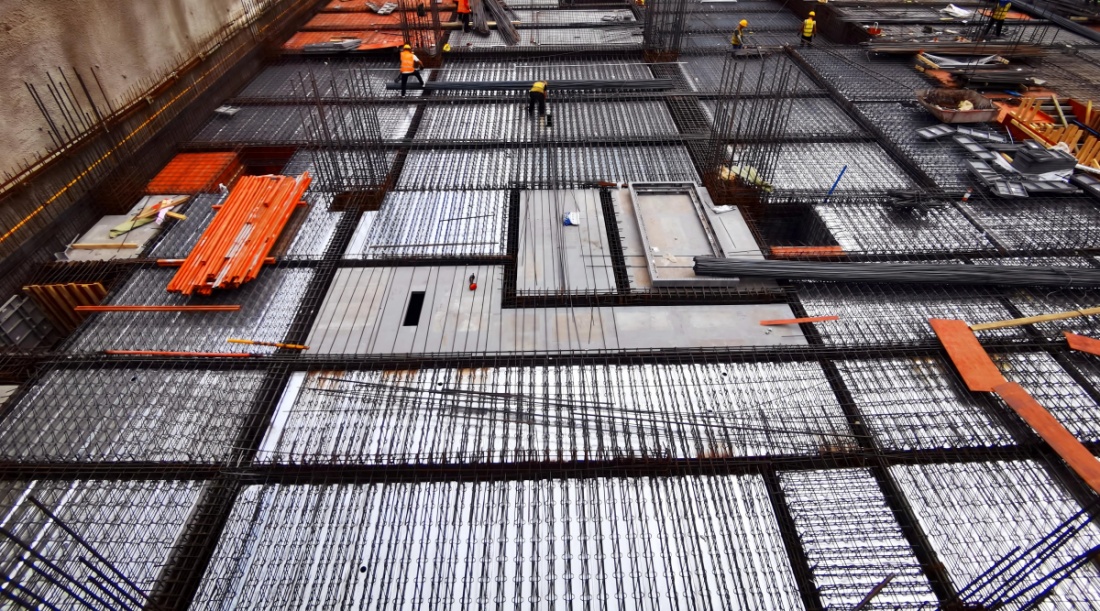
In many construction and manufacturing projects, the difference between a smooth installation and a costly on-site correction comes down to how tightly components are specified from the start. When tolerances are kept intentionally tight during fabrication, parts arrive ready to fit together as designed, without the need for grinding, shimming, or re-drilling on site. This level of precision reduces surprises that often surface only after materials have been delivered.
Site fixes can quickly erase profit margins and blow schedules apart. A bracket that is slightly off, a panel that doesn't align, or a weldment that arrives warped each trigger a chain of rework, extra labor, and material waste. By holding tolerances to a strict range in the shop, you shift the burden of accuracy away from the unpredictable job site and into a controlled production environment. That translates directly into fewer change orders and a cleaner handover.
The real value of tight tolerances is not just in the numbers on a drawing, but in the confidence they create across the whole project. Fabricators who invest in precise cutting, forming, and inspection equipment can guarantee that every piece meets the same standard, so installers don't have to improvise. When that consistency becomes the norm, site fixes become the exception rather than the rule.
Consistent Panel Quality Across High-Volume Runs
When production shifts into high gear, the quiet risk isn't a sudden failure but a slow drift. Slight changes in resin viscosity, ambient humidity, or even the interval between tool cleanings can accumulate into visible variation across thousands of panels. The only way to hold a tight tolerance is to lock down the material inputs at the source. We monitor incoming substrate thickness and surface energy on every lot, rejecting anything outside a narrow band before it ever reaches the line. That front-end discipline is what keeps panel number five thousand from looking different from panel number five.
Process stability comes from removing the operator's guesswork. Instead of manual dial adjustments, the press parameters are tied to real-time feedback from inline measurement sensors. If a thickness reading drifts by more than two percent, the system corrects the temperature or pressure automatically, not after a batch audit. This closed-loop approach means the panel produced at 2 a.m. on a Tuesday carries the same density, edge profile, and surface finish as the one produced during the initial setup run. High volume doesn't force a trade-off with repeatability; it simply demands a control system that never blinks.
Verification at scale is where many suppliers quietly fall short. Pulling one sample per shift isn't enough when a line runs twenty-four hours. Our approach uses statistical sampling across every pallet, with automated optical inspection flagging any cosmetic deviation against a golden reference. That data feeds back into the process log, so if a subtle color shift appears in the afternoon batch, it's traced to a specific lot of pigment or a change in cooling rate, not dismissed as 'normal variation.' Consistency isn't a promise made at the quote stage; it's a measurable outcome, confirmed panel after panel, run after run.
Inspection Points That Catch Defects Before Shipping
A lot of shipping defects come down to a handful of repeat offenders: loose fasteners, uneven coatings, scratched surfaces, and bad welds. Instead of checking every dimension against the drawing, our inspectors start with the areas that have caused returns before. On metal enclosures, that means running a gloved hand along the edges and inside corners while checking the gauge of the powder coat. On cable assemblies, it is tugging each crimp and checking the bend radius at the connector. These are the points that rarely show up in a generic QC checklist but catch nearly all the problems that would otherwise reach a customer.
Functional checks are not saved for final audit; they happen right before the unit goes into its box. For anything with a power supply or a moving part, we run a short cycle test: plug it in, let it boot, trigger the main output, and watch for stable current draw. Mechanical items get loaded to about 80 percent of rated capacity for a few seconds, just long enough to reveal a bad bearing or a warped bracket. Packaging is the last inspection point. The box is opened once after being sealed to confirm the foam is seated, the accessory kit matches the packing slip, and nothing rattles when the carton is shaken. That final check has stopped more damage claims than any other step.
Simple Maintenance Habits That Extend Formwork Reuse
A quick scrape while the concrete is still green saves far more time than chipping away at hardened buildup later. Use a plastic or wooden scraper, never steel, to knock off splatter from edges and panel faces before it locks on. After that, a stiff-bristle brush and plain water remove most residue, leaving the surface ready for the next pour without the need for aggressive chemicals or sanding. Keeping the form face smooth this way directly reduces how often you have to replace plywood skins.
Release agent is often treated as "more is better," but a heavy coat actually attracts dust and creates a gummy layer that transfers to the concrete. Wipe or spray a thin, even film right before setup, and wipe off any drips on the edges. When you strip the forms, don't drop them from height — set panels on level blocking and stack them in a dry, covered spot. A few minutes spent stacking flat with spacers between panels prevents warping and edge damage that quietly shorten reuse life.
Cost per Pour Tracking to Uncover Hidden Waste
A bartender’s free pour is rarely identical from one shift to the next. One may hit a precise 1.5 ounces; another, working from muscle memory, lands closer to 2 ounces. Multiply that half-ounce drift across a Friday night’s eighty cocktails and the missing liquid no longer looks like sloppy technique—it looks like cases of spirit evaporating without a single ticket to account for them. Cost per pour tracking turns that vague, month-end “shrinkage” into a specific, addressable moment: this drink, this bartender, this pour.
You don’t need a full IoT retrofit to start. A simple spout meter or a strictly enforced jigger policy, combined with a POS that records every pour as it happens, gives you a daily view of where theoretical cost meets actual usage. The hidden waste hides in the gap between those two numbers—overpours, comped drinks that never got rung in, batch cocktails built off-recipe, or a manager pouring for friends. Once staff know each pour is counted, the most casual overpouring tends to disappear within a week. That alone often recovers two to four points of pour cost.
Waiting for the monthly inventory report is like checking your fuel gauge only after the road trip ends. By then, the waste is already spent and the trail has gone cold. Daily per pour tracking keeps the feedback loop short: you spot a spike on Wednesday, watch the camera for that hour, and retrain one person instead of lecturing the whole bar. It also reveals which drinks are actually profitable per ounce, giving you the data to reprice a cocktail that costs more to pour than the menu suggests.
FAQ
Start by adopting digital cutting plans that optimize sheet layout for plywood and steel. Many factories see a 10-15% drop in waste simply by nesting components more tightly. Reuse offcuts for smaller brackets, stiffeners, or spacer blocks instead of discarding them. Also, standardize panel sizes across projects so leftover inventory can be carried into the next job rather than scrapped. Tracking waste by production batch helps pinpoint which stations generate the most scrap, allowing targeted corrections.
The key is to move inspections upstream rather than waiting for final checks. Have welders and carpenters verify critical dimensions immediately after each operation, using simple go/no-go jigs. This catches errors before they compound, so rework time drops significantly. Pair that with a first-piece approval system: the first unit from each new setup gets a full dimensional and weld check before the batch runs. That way, you maintain pace without letting defects slip through.
Clean panels right after each use—hardened concrete residue is the main cause of surface degradation. Apply a release agent specifically matched to the panel material, and avoid metal scrapers that gouge the face. For steel frames, inspect welds and corner brackets monthly for hairline cracks, and reapply protective coating before rust gains a foothold. Storing panels flat with spacers between them prevents warping from moisture and uneven weight.
Well-trained workers make fewer dimensional errors, which directly lowers material waste and rework hours. Cross-training lets you rotate staff between cutting, welding, and assembly so bottlenecks don't stall production when someone is absent. A short weekly session on common defect patterns—such as weld porosity or misaligned holes—keeps quality awareness high without needing a separate QC department. Encourage workers to flag design flaws early; they often spot cost-saving changes that engineers miss.
Don't just repair the item and move on. Log the defect type, location, and root cause in a simple spreadsheet or app. If the same issue appears more than twice in a month, investigate the process step where it originated—often it's a worn jig, dull cutting tool, or unclear work instruction. For the defective unit, decide whether it can be reworked safely or must be scrapped. Rework should be done by the same team that produced the error, so the lesson sticks.
Simplify connections by reducing the number of different bolt sizes and bracket types. Use standard channel sections and plate thicknesses that are readily available from suppliers, instead of custom extrusions. Design panels with a slight modular increment—like 300 mm spacing—so they can be combined for various pour heights without extra engineering. Also, review weld lengths: often a continuous weld is specified where a staggered or intermittent weld provides the same strength with less labor and distortion.
Look at your repeat order volume first. If you produce more than roughly 500 identical panels per month, a CNC beam saw or robotic welding cell typically pays for itself within two to three years through labor savings and reduced scrap. Automation also makes sense where accuracy demand is high—laser cutting for hole patterns eliminates manual layout errors. But avoid automating a process you haven't standardized; putting a robot on a chaotic workflow just speeds up the chaos. Start with semi-automatic jigs and fixtures, then move to full automation once the process is stable.
Conclusion
In a concrete formwork factory, the smartest cost controls often start long before a single panel reaches the jobsite. Choosing materials that shrug off moisture, abrasion, and repeated vibration may look more expensive on the purchase order, but they quietly erase the repair invoices that cheap plywood or thin steel generate season after season. Alongside that, holding tight tolerances on every frame and joint prevents the kind of on-site shimming, grinding, and re-pouring that turns a promised profit into a paperwork headache. It is less about chasing a perfect number and more about knowing that a millimeter saved in the factory can avoid a day lost in the field. When high-volume runs enter the picture, consistency becomes the real test. A factory that can produce five hundred panels with the same flatness, edge squareness, and tie-hole alignment as the first ten is doing something right. That repeatability does not come from luck; it comes from jigs, calibration schedules, and operators who know exactly what “good” looks like before the line starts moving.
None of that matters much, though, if defects reach the customer. Inspection points placed after welding, after facing, and again before packing catch the warped corners, missed welds, and surface gouges that otherwise become someone else’s emergency. These checks are not about filling out forms; they are about making rejection cheaper than return freight. On the maintenance side, simple habits—greasing hinges, replacing worn seals, checking clamp pressure—extend formwork reuse far beyond the manufacturer’s guess. A panel that lasts eighty pours instead of forty is not just durable; it halves the cost per pour without a single design change. Finally, tracking cost per pour on real projects reveals where money leaks: maybe it is the cheap release agent causing buildup, or the extra handling from a poorly stacked pallet. The factories that survive downturns are not the ones with the flashiest equipment, but the ones that know exactly what each reuse costs and act on that number every single week.
Contact Us
Contact Person: Quanhui Nian
Email: [email protected]
Tel/WhatsApp: 8618070545691
Website: https://www.getoglobal.com/