
China Lithium-ion Forklifts: Transforming Modern Warehouse Operations
2026-09-21
Walk through any busy Chinese distribution center today and you'll notice something missing: the acid smell, the battery-swap room, the forklift sitting idle for eight hours while it charges. Lithium-ion forklifts are erasing those old constraints, and not in some distant future—right now. For operators choosing HANGCHA, that shift is becoming a full operational advantage: shorter charging times, longer shifts, and warehouses designed around people and flow, not battery logistics. This is what modern warehouse operations look like when China’s lithium-ion forklifts lead the way.
What Actually Changes When a Warehouse Switches to Lithium-Ion Forklifts
The daily ritual of swapping out lead-acid batteries disappears almost overnight. No more dedicated battery rooms with overhead hoists, no more eye-wash stations or acid-neutralizing spill kits taking up floor space. Instead, lithium-ion packs stay in the truck and get topped up during short breaks, lunch, or between shifts. Because the chemistry tolerates partial charges without damage, operators can plug in for 15 minutes here and there and still get consistent performance right up until the battery is nearly empty.
That shift also rewrites the physical layout of the warehouse. The old battery room often becomes valuable square footage for staging, packing, or extra racking. Charging stations move closer to where trucks actually work, which cuts down on travel time to a centralized charging area. Facility managers have to think about electrical capacity at multiple points rather than one big feed, and they may find they no longer need acid-resistant floor coatings or ventilation systems designed for hydrogen off-gassing.
For operators and the maintenance team, the change is more than just a new plug. Training gets simpler because there are no water levels to check, no equalization charges to schedule, and no battery rotation logs to keep. Forklift weight and balance can shift slightly because lithium packs are lighter than lead-acid equivalents, so some trucks need ballast adjustments to keep their rated lift capacity. The real financial picture also changes: upfront costs are higher, but the reduction in battery handling labor, longer cycle life, and freedom from watering and acid cleanup often shift the total cost of ownership in lithium’s favor over a few years.
Why Lead-Acid Batteries Are Losing Ground in High-Throughput Distribution Centers
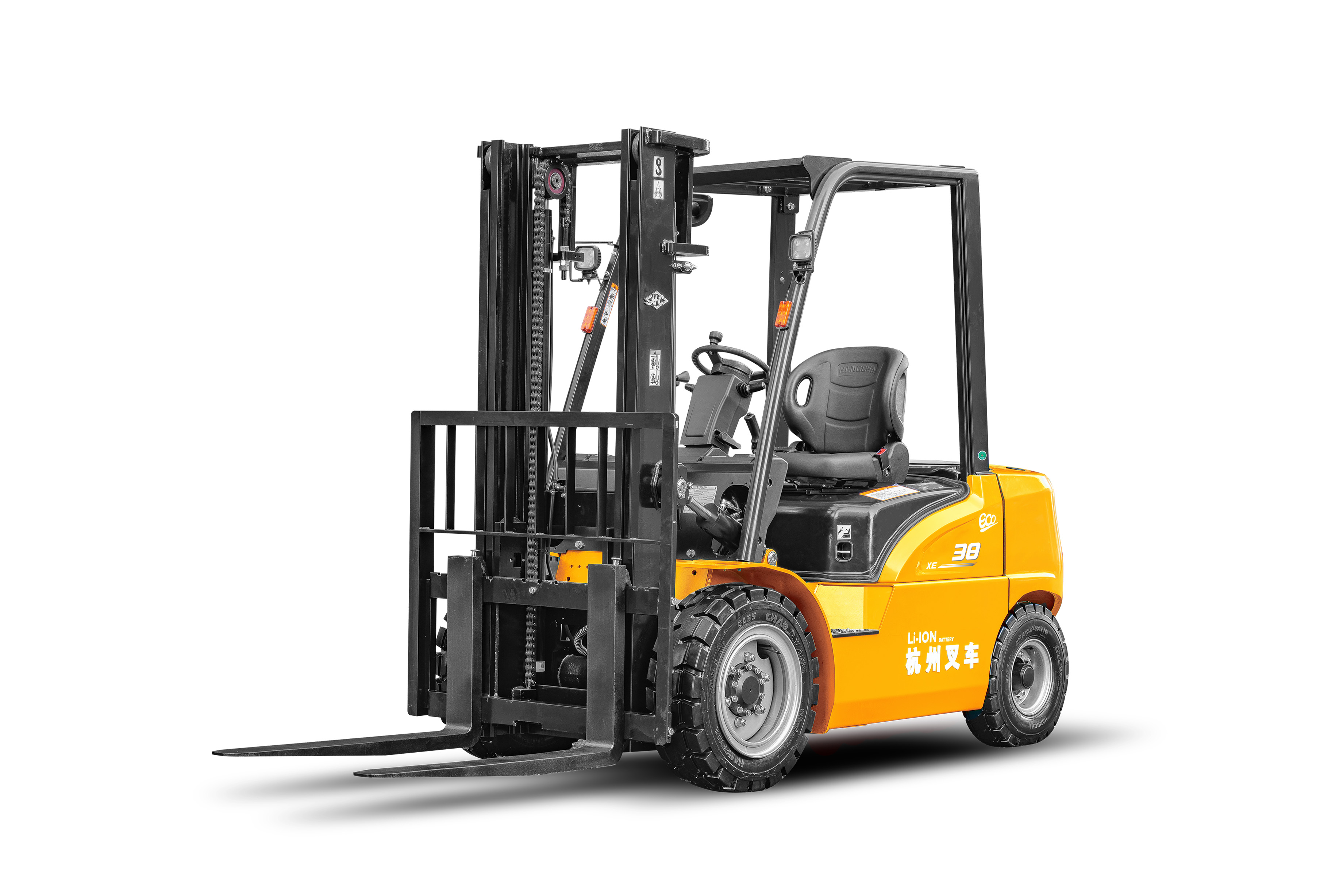
High-throughput distribution centers tend to run lift truck fleets across multiple shifts with little downtime between them. Lead-acid batteries typically require an eight-hour charge followed by a cool-down period, plus regular watering and equalization. For operations that measure downtime in minutes per order, scheduling battery swaps and maintaining a battery room eats into labor and floor space that could be used for picking or staging. The push toward opportunity charging during breaks and shift changes simply does not fit lead-acid chemistry well.
Frequent partial charging creates a separate problem. Lead-acid cells suffer from sulfation when they are not brought back to a full state of charge on a regular basis, which shortens useful life and reduces capacity. Add in acid spills, corrosion on terminals and trays, and the need for ventilation in charging areas, and the maintenance burden becomes hard to justify. Lithium-ion packs, by contrast, can handle irregular top-up charging without the same degradation and need no watering or acid cleanup.
There is also the issue of voltage sag. A lead-acid battery near the end of its discharge delivers less consistent power, which can slow lift and travel speeds exactly when a facility is pushing for higher picks per hour. Charging efficiency tends to be lower as well, with more energy lost as heat during recharge, raising cooling loads in already busy buildings. For distribution centers that rely on steady throughput and predictable uptime, the performance curve of lead-acid often works against the numbers on the board.
How Opportunity Charging Rewrites Multi-Shift Forklift Routines
Multi-shift warehouses used to run on a rigid rhythm: drain a battery for eight hours, swap it for a fresh one, and send the depleted unit to a charging room. That whole choreography disappears when trucks top up during lunch breaks, shift handovers, or any ten-minute pause. Operators simply plug in where they park, and the truck is ready before the next wave of orders hits.
Opportunity charging also flattens the spikes in battery inventory and handling. Instead of keeping two or three batteries per truck and a dedicated crew to shuttle them around, a facility can run leaner with a single battery per vehicle. The routine becomes less about managing power logistics and more about keeping aisles moving.
The shift is especially visible in cold storage and high-throughput distribution centers, where downtime multiplies fast. A few strategic chargers near staging areas let drivers grab a boost while checking paperwork or waiting for a dock door. Over a full day, those small windows add up to full-shift availability without the old swap-and-pray cycle.
The Rise of Chinese Forklift Brands in Cold Storage and 3PL Facilities
For years, cold storage operators and third-party logistics providers leaned heavily on established European and Japanese forklift brands, convinced that durability in sub-zero environments demanded a premium badge. That assumption is now being challenged by a wave of Chinese manufacturers who have quietly re-engineered their machines for the unique demands of freezer warehouses and high-throughput distribution centers. Instead of simply copying legacy designs, these brands have focused on practical innovations: sealed electrical systems that resist condensation, cold-rated hydraulic oils, and battery chemistries that hold their charge longer at -25°C. The result is a growing presence in facilities where downtime from a frozen mast or sluggish hydraulics used to be accepted as a cost of doing business.
The shift is not just about price—though aggressive per-unit costs certainly open doors. What keeps Chinese forklifts in operation is a more responsive approach to customization. A 3PL running narrow aisles and tall racking can now get a reach truck with heated operator compartments, lithium-iron-phosphate batteries, and telematics tailored to freezer cycles, often delivered in weeks rather than months. Maintenance teams appreciate that parts are increasingly stocked in regional hubs, reducing the wait that once made non-domestic brands risky. In cold storage, where every hour of lost productivity means spoiled goods or missed dispatch windows, this kind of support matters more than a familiar nameplate.
That said, adoption is not uniform. Facilities with extreme temperature swings or 24/7 operations often start with a pilot fleet, testing how seals, controllers, and mast bearings hold up over a full season. Many are surprised to find that the Chinese units now include corrosion-resistant coatings and heated displays as standard, features that were optional extras on traditional brands. As more warehouse managers swap anecdotes about lower total cost of ownership and fewer cold-related failures, the old bias is fading. The rise of these brands in cold storage and 3PL settings reflects a broader truth: in logistics, performance data beats brand heritage, and Chinese forklift makers are finally giving operators a reason to look twice.
What Happens to Indoor Air Quality Once Propane Trucks Are Phased Out
When propane-powered forklifts and trucks stop running inside warehouses, the most immediate change is the disappearance of combustion byproducts. Carbon monoxide and nitrogen dioxide levels, which tended to spike near loading docks and narrow aisles, drop to near zero. For workers who spent years breathing that mix, the air feels noticeably lighter and less acrid. However, the shift also removes a source of heat and moisture that propane engines contributed, meaning existing HVAC systems have to recalibrate to avoid stale, overly humid corners.
Electric replacements don't emit exhaust, but they aren't entirely inert from an air quality perspective. Battery charging stations can release small amounts of hydrogen, and if the chargers are clustered in poorly ventilated rooms, that can become a concern. More often, the bigger issue is that facilities over-correct by sealing off outside air to save energy, which lets carbon dioxide from human respiration and off-gassing from packaging materials accumulate. So while the indoor air is cleaner in terms of combustion pollutants, it still needs active monitoring to prevent a different set of problems.
Total Cost of Ownership for Chinese Lithium-Ion Forklifts Without the Sales Pitch
Strip away the glossy spec sheets and the actual TCO of a Chinese lithium-ion forklift hinges on three things: how hard you run it, how well the battery management system holds up, and whether you can get parts when something fails. The sticker price is usually 15–30% lower than a comparable Japanese or European model, and the battery itself may be cheaper because Chinese cell makers have scaled LFP production faster than anyone else. But that advantage disappears quickly if the pack's cycle life falls short of the datasheet. Some cheaper units use lower-grade cells or minimal thermal management, which translates into capacity fade after two or three years instead of five. In a single-shift operation, that might not matter; in a two-shift warehouse, it's the difference between replacing a battery at 4,000 hours or 8,000.
Energy and maintenance are where lithium-ion should win on paper. No watering, no equalizing, no acid spills, and opportunity charging means you can plug in during lunch without building a dedicated battery room. Chinese trucks typically use standard 80V or 48V systems, so the charger and connector costs are predictable. But the hidden line item is infrastructure. If your building has old electrical panels or limited amperage, adding fast-charge stations for even a small fleet can run five figures. Also, not every Chinese manufacturer uses a truly interchangeable battery pack; some are welded or potted into the chassis, so a cell failure means an expensive module swap, not a simple battery replacement. Read the warranty language closely — many cover the cells but not the BMS, and the labor to diagnose a battery fault is often excluded.
Downtime is the TCO component nobody puts in the brochure. A forklift that sits dead for three weeks waiting on a controller board or a BMS from overseas wipes out months of energy savings. Chinese brands with established local distribution handle this reasonably well, but the smaller importers often have no spare parts bin and no trained techs. Resale value also takes a hit: a five-year-old Chinese lithium truck won't fetch the same percentage of original cost as a Toyota or Linde, partly because fleet buyers distrust the remaining battery life. If you run the numbers over six years and assume steady utilization, a well-built Chinese lithium unit can undercut a lead-acid truck by 20–30% in total cost. But if your operation is low-hours or your maintenance team is stretched thin, that savings can evaporate in one bad quarter.
FAQ
Their compact battery design frees up space that would otherwise go to bulky lead-acid units, while opportunity charging lets operators top up during breaks without swapping batteries or waiting for a full cycle.
Lithium-ion packs charge to full in under two hours, hold voltage steady as they drain, and last roughly three to four times longer, so trucks keep a consistent pace through every shift without the mid-day performance dip common with lead-acid.
Yes, they perform well in temperatures down to -20°C because lithium-iron-phosphate chemistry tolerates cold far better than lead-acid, which loses capacity rapidly, and there's no risk of electrolyte freezing.
Managers typically see lower energy bills because charging is more efficient, no labor hours spent on battery watering and swapping, and longer battery life spans that eliminate frequent replacement purchases.
Built-in battery management systems monitor each cell for temperature, voltage, and current, shutting down automatically if anomalies appear, while sealed housings remove acid spills and hydrogen outgassing risks found with lead-acid.
Fast charging lets operators plug in during scheduled 15-minute breaks or between loading tasks, which keeps forklifts in service across multiple shifts instead of forcing a dedicated charging room and spare battery inventory.
Many models come with onboard telematics that feed state of charge, usage hours, and fault codes into warehouse management platforms, allowing fleet managers to route trucks, schedule charging, and run diagnostics remotely.
They produce zero tailpipe emissions, consume far less electricity per operating hour, and the cells are largely recyclable at end of life, reducing both air pollution inside the facility and hazardous waste streams.
Conclusion
The quiet migration away from lead-acid and propane lifts is less about swapping one battery for another and more about resetting how a facility breathes, schedules, and budgets. Chinese lithium-ion forklifts remove the battery room ritual—no watering, no equalizing, no acid spills—so shifts no longer start with a maintenance detour. Opportunity charging fits naturally into lunch breaks and dock pauses, which matters in multi-shift distribution centers where a dead battery used to freeze an entire order wave. Cold storage operators, in particular, have taken notice: lithium packs hold usable capacity better in sub-zero aisles, and the same brands that once competed on price now ship sealed, low-maintenance power units that handle freezer cycles without the voltage sag that plagued older designs.
The financial case has also shifted from a slide deck to a spreadsheet anyone can audit. Upfront cost is higher, but when you stop paying for spare lead-acid packs, battery room labor, ventilation upgrades, and propane delivery, the total cost of ownership tilts in favor of lithium within a few years—often less in high-throughput 3PL sites running three shifts. Indoor air quality improves as propane trucks leave the floor, which reduces fatigue complaints and lets warehouses reclaim space once reserved for exhaust management. None of this is magic; it is simply the result of Chinese manufacturers iterating quickly on fleet data from thousands of distribution centers and cold storage facilities, then feeding those lessons back into battery management systems that make daily charging decisions boringly predictable. For operations managers, that predictability is the real transformation.
Contact Us
Contact Person: Liuxue
Email: [email protected]
Tel/WhatsApp: +86-19084200370
Website: https://www.hf-ec.com/