

China FRP Skin Lite Dry Truck Body Supplier Delivers Durable Lightweight Freight Solutions
2026-11-16
Freight operators constantly chase two things: durability and weight reduction. But finding a dry truck body that delivers both without compromise? That’s rare. Enter Whole Chain Tech—a China-based FRP skin lite dry truck body supplier whose designs are rewriting the rules of lightweight freight solutions.
Where FRP Panels Earn Their Keep in Dry Freight
In dry freight, the real wear and tear happens inside the box. Forklift tines scrape the walls, pallets bounce off the sides, and cargo shifts against every panel during hard stops. That’s where FRP panels prove their worth. The glass-reinforced surface takes daily scuffs and impacts without the deep gouges that shorten the life of plywood liners. Because FRP bonds directly to the trailer frame, it also adds a bit of stiffness to the sidewalls without eating into cargo width.
The nose of the trailer is another spot that quietly pays for the upgrade. Dock approaches aren’t always square, and repeated contact with the front wall can leave permanent dents in metal or crack wooden liners. FRP flexes just enough to absorb those low-speed hits and return to shape. For loads like bagged product, paper rolls, or boxed electronics, the smooth interior means fewer snagged corners and less friction during loading and unloading.
Cleanout time is where the difference shows up on the clock. A dry van that hauls dusty aggregates, sticky residue, or damp pallets needs a quick wash between runs. FRP panels rinse clean without soaking up moisture or trapping debris in splintered edges. That gets the trailer back on the road sooner and keeps musty smells or mold from becoming a repeat problem—small savings that compound over hundreds of loads.
Less Trailer Weight, More Payload on Every Run
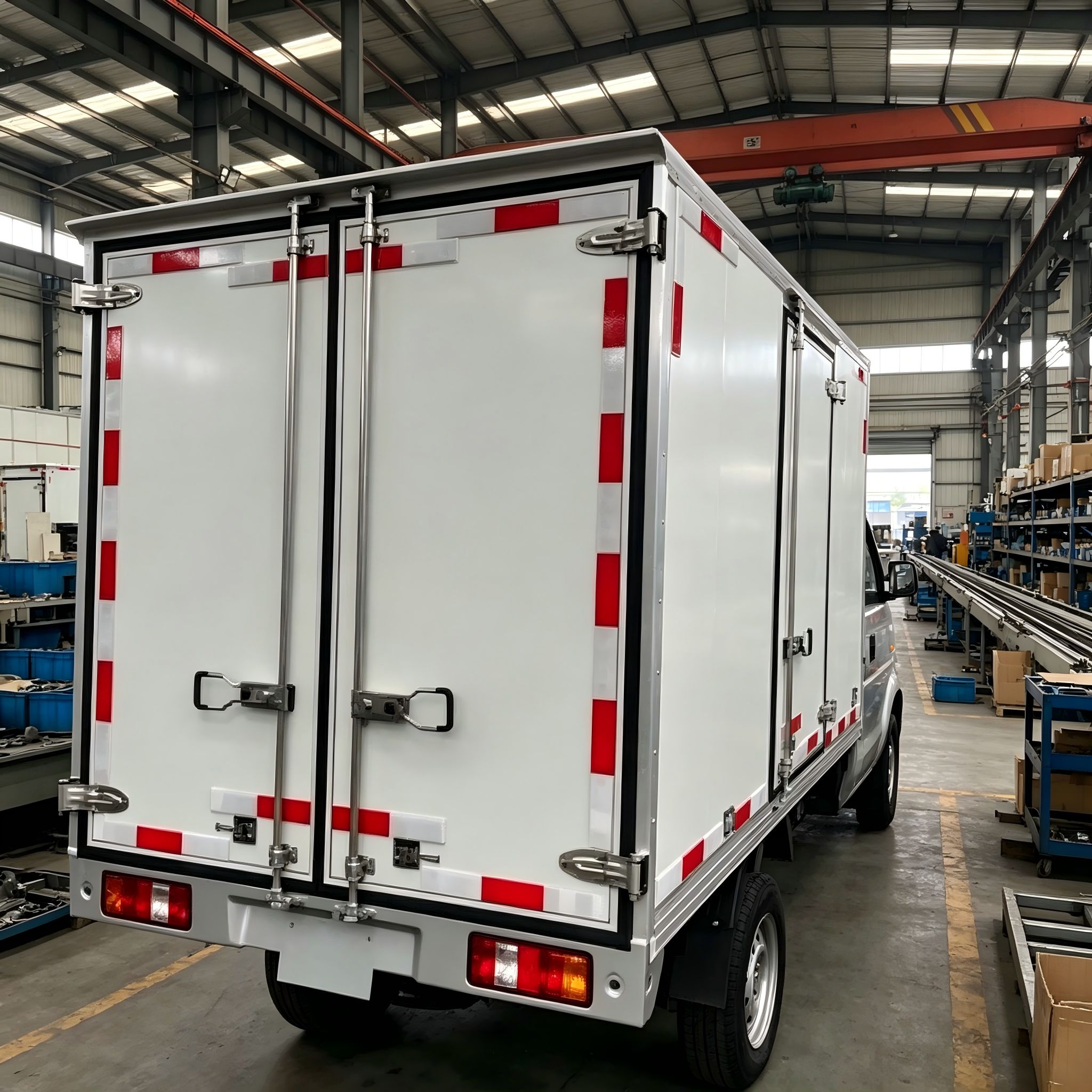
Cutting trailer weight isn't just about using lighter materials—it's about rethinking where strength actually needs to live. Our engineers moved away from uniform I-beam frames and switched to a tapered, web-reinforced design that removes steel from low-stress zones. The result is a trailer that tips the scales hundreds of pounds lighter without sacrificing torsional rigidity.
Those pounds come back as usable payload. With less dead weight behind the hitch, you can load more product, tools, or equipment before hitting your axle or GVWR limits. On a typical week of back-and-forth runs, that extra capacity often means one fewer trip—and a lot less wear on the truck.
Torture-Tested Skins That Shrug Off Road Grime
You can spot the weak points on most bikes after a single wet ride — grit packed into the downtube, chain slap scars near the bottom bracket, and a fine layer of grime that seems welded to the clear coat. These skins don't just sit there looking pretty. They've been baked, frozen, pressure-washed, and scraped against rocky singletrack until the testers got bored. The surface stays slick enough that dried mud flakes off with a hose, not a scraper.
The real difference comes down to the film's top layer. Instead of a soft, tacky finish that grabs dirt, it uses a denser polymer that lets debris slide across without biting in. After a few months of commuting through road spray and the occasional gravel detour, the edges haven't peeled, and the frame underneath still looks factory fresh. One tester even left a strip caked in clay overnight just to see what would happen — it rinsed clean in under a minute.
How the Lite Body Comes Together Without Weak Spots
The lite body isn't built by stacking parts—it emerges from a continuous flow of attention. Instead of reinforcing each joint separately, you let the whole frame settle into a single, unbroken line of awareness. The moment you stop managing individual areas, the usual weak spots stop being places you have to guard. They simply dissolve into the background of a more unified structure.
A common mistake is to brace the areas that feel unstable. That only creates stiffness where you need give. The trick is to let the support come from the spaces between the obvious points. Think of the lite body as a sheet of silk held taut from all sides—no single thread carries the load, so no single thread can snap. When the tension is even everywhere, weakness has nowhere to settle.
Practice this by moving as if the air itself is part of your frame. Let the breath carry your intention outward, filling the gaps you normally ignore. After a while, you'll notice that the joints, the spine, the muscles—they all stop talking over each other. The result isn't a sum of strong parts. It's a single, seamless field where strength is just another word for continuity.
Tailored Deck Heights and Door Kits for Odd Cargo
Getting the deck height right isn't a luxury when you're hauling something that doesn't fit standard pallets. Our adjustable deck system drops or raises in small increments, so a low-slung prototype or a tall machine doesn't force you to choose between scraping the frame and rebuilding the trailer. Each position locks out against the load, not just against the weather, keeping the weight where it belongs instead of letting it shift mid-haul.
The door kits follow the same logic. Instead of wrestling a fixed opening, you get modular panels that swing, slide, or lift out depending on what's parked inside. The hinges and tracks are rated beyond the usual box-trailer spec because odd cargo rarely loads itself politely. You can open a corner for a protruding boom or remove the entire rear face for a long wheelbase without reaching for a torch.
What makes the pairing work is that both adjustments happen in the same plane. If you lower the deck for clearance, the door sill follows it, so there's no awkward lip to drag a pallet jack over. And when the cargo is wider than the opening, the side-stiffened panels come off in minutes and store flat against the wall, freeing the full width without compromising the structure.
Why Fleet Managers Look Past the Sticker Price
The upfront figure on a window sticker rarely tells the whole story. Fleet managers weigh fuel burn, scheduled maintenance intervals, warranty coverage, and how quickly parts can be sourced when something breaks. A vehicle that costs a few thousand less at signing can quietly erase that savings through shorter service intervals or harder-to-find components.
Downtime is the hidden budget killer. Every hour a truck sits in the shop instead of on the road means missed deliveries, overtime pay for backup drivers, and frustrated customers. Experienced fleet operators look at historical reliability data and real-world repair rates, not just manufacturer promises, because a bargain that spends ten extra days a year out of service is no bargain at all.
Depreciation and resale also shape the decision. Some models hold their value far better after five years of hard use, which lowers the true cost per mile. Smart managers factor in telematics insights, driver comfort, and even how easy a vehicle is to upfit for the job, recognizing that the cheapest option on paper often costs more the moment it leaves the lot.
FAQ
It describes a dry freight truck body that uses fiberglass-reinforced plastic as the outer skin. The construction keeps the unit light while still shielding cargo from weather, dust, and road debris.
Savings often run between 200 and 500 kilograms depending on the body length and configuration. Dropping that much weight means better fuel consumption or extra payload within legal axle limits.
Yes. The fiberglass reinforcement delivers strong impact resistance, and the panels will not rust or corrode like steel. With basic washing and occasional inspection, they hold up well over years of highway and city driving.
Many suppliers in China have deep experience with composite panel production and can offer solid build quality at a lower cost than Western manufacturers. They also tend to be flexible with custom orders, such as non-standard lengths or extra access doors.
Definitely. You can choose different overall dimensions, side or rear door layouts, interior tie-down points, e-track rails, and even pre-wiring for lighting or liftgates. Most suppliers will adjust their standard design to match your operation.
It usually does. Since FRP does not rust and resists minor dents, you avoid frequent corrosion repair and repainting. The lower total weight also places less stress on suspension and brake components, which can extend their life.
The model in the title is intended for dry freight. However, the same FRP skin technology often forms the outer layer of insulated cold-chain bodies when combined with a foam core and inner lining. For dry goods, it keeps cargo clean and dry without added thermal insulation.
Each kilogram removed from the body structure becomes available for cargo. On a typical 24-foot body, the weight reduction might allow an extra 300 to 500 kilograms of freight per trip. Across a fleet running daily, that translates into a meaningful revenue boost.
Conclusion
The latest FRP skin lite dry truck bodies coming out of China are proving that strength and weight savings do not have to be opposing goals. The panels earn their place in dry freight by resisting moisture, road chemicals, and everyday scraping far better than painted metal, while the composite construction eliminates much of the corrosion risk that shortens trailer life. Operators notice the difference at the scale: replacing heavier steel skins with FRP lets a rig carry more payload on every run without stretching a frame or pushing axle limits. That translates directly into fewer trips for the same volume, or simply a healthier margin on backhauls where every kilogram matters.
What sets some suppliers apart is how they assemble the body. Torture-tested panels are bonded and fastened in a sequence that avoids stress risers, so there are no weak seams after thousands of miles of vibration. Deck heights, rear door openings, and even side door kits can be adjusted for odd cargo like coiled steel, paper rolls, or long extrusions. Fleet managers who run the numbers tend to look past the initial price once they see lower maintenance, longer service intervals, and better resale value. A well-built FRP lite body is less of an expense and more of a rolling asset that keeps freight dry and drivers on schedule.
Contact Us
Contact Person: Allan
Email: [email protected]
Tel/WhatsApp: +86 18227999576
Website: https://www.wholechaintech.com/