

China Daily Chemical Label Supplier: Expert Guide to Quality and Compliance
2026-06-08
When sourcing daily chemical labels in China, quality and compliance aren’t just buzzwords—they’re the fine line between product success and costly recalls. Enter Xinsen, a trusted supplier that’s rewriting the rules of label excellence. In this guide, we strip away the noise and reveal exactly what to look for in a partner, from material durability to regulatory know-how. Whether you're battling adhesion issues or navigating complex chemical regulations, the insights ahead could save you time, money, and your brand's reputation.
Navigating China’s Regulatory Maze for Chemical Labels
Trying to get a chemical label right for the Chinese market often feels like piecing together a puzzle where the picture keeps changing. It's not simply a matter of translating hazard statements into Mandarin. You're stepping into a web of overlapping state mandates, from the overarching State Council Decree 591 to the more granular GB standards that chop and change without much fanfare. One month a classification falls under a certain hazard category, the next it's been redefined in a way that alters pictogram placement, signal word text, or even the order of precautionary phrases. What worked last year might now get a shipment held at customs simply because a new supplementary notice has shifted the goalposts for officially registered hazardous chemicals.
Then there's the layer of China's evolving inventory systems and the requirements under China REACH. A substance might not yet be fully listed, triggering extra notification obligations that compound label responsibilities. You're not just dealing with the label content but with the timing of enforcement; some provinces interpret rules differently, which can lead to a scenario where an accepted label in Shanghai raises eyebrows in Guangzhou. For many companies, juggling the static GHS-based format with China's unique GB 15258 structural rules feels like navigating a document that's both rigid and fluid. Missing that a minor formatting nuance—like font size for certain hazard codes—has been updated can knock back an entire batch.
Practical navigation often means building in redundancy. Experienced compliance managers double-check everything against the most recent Safety Data Sheet checklist while keeping an eye on regional commodity inspection bureau quirks. Some go as far as printing labels with extra space to physically paste updated statements if a last-minute bulletin drops. It’s a world where relationships with local consultants aren’t optional—they’re a hedge against the pitfalls of a system where official translations of mandatory phrases can vary slightly by interpreter. The trick isn't just to comply once, but to create a rhythm of review that survives the next unannounced policy shuffle.
Material Matters: Choosing Long-Lasting Label Stock
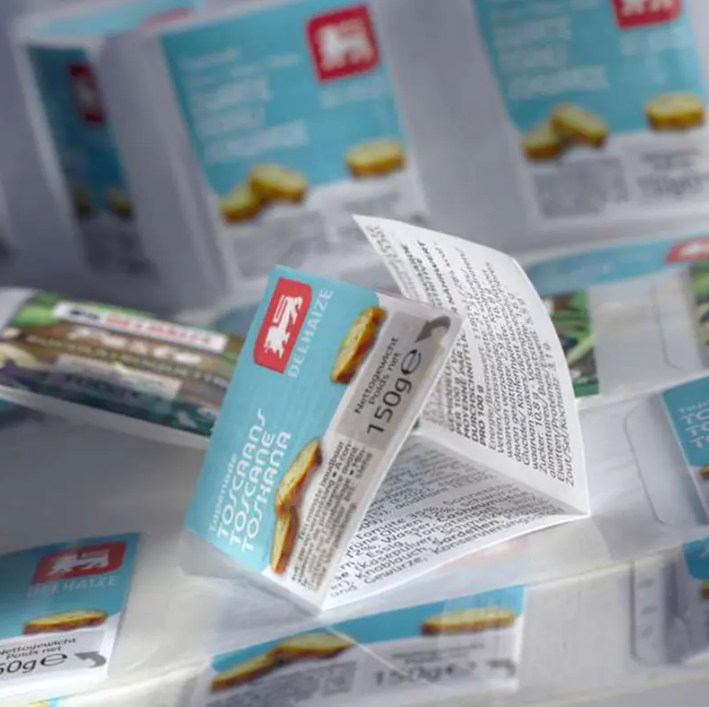
When a label peels, fades, or smudges prematurely, it's often because the material wasn't matched to the job. A warehouse barcode that curls in humidity or a product tag that bleeds in the cooler doesn't just look bad—it fails at the one thing it was meant to do. The real work of choosing stock starts with a clear-eyed look at the whole journey that label will take, from application to end use. Only then do substrates, adhesives, and topcoats stop being abstract specs and become the tools that keep your information intact.
Smart selection goes beyond picking “waterproof” or “tear-proof” off a list. You have to map out the specifics: Will the label face abrasive contact, chemical splash, or prolonged UV exposure? A polypropylene that laughs off moisture might still degrade under direct sun if it lacks UV stabilizers. A polyester with aggressive adhesive grips rough surfaces but could destroy a delicate package. The trick is to balance durability with removability, flexibility with strength, and to test samples ruthlessly in the actual environment—not just the lab. Run a few through the dish cycle, leave others on a dashboard in August, and see what lifts first.
Finally, remember that “long-lasting” means different things in different worlds. A label for a reusable transport container might need to survive a decade of scanning and washing, while a seasonal hang tag only has to look great for a few months on a rack. It’s about defining what failure looks like for your specific use case: is it illegible text, a curled edge, or a complete loss of adhesion? Once you’re honest about that threshold, you stop over-engineering or under-protecting the label. You land on a material that holds up exactly as long as it needs to, without spending on features it’ll never use.
Custom Solutions Beyond Standard Templates
Cookie-cutter approaches rarely address the nuanced challenges businesses face day-to-day. We build from the ground up, listening first to understand the unique workflows, pain points, and goals that make your operation distinct. No two implementations look alike because no two organizations are identical.
Our process involves deep collaboration with your team, teasing out the details that off-the-shelf products overlook. Instead of bending your processes to fit a rigid framework, we shape the technology around how you actually work—anticipating bottlenecks, scaling gracefully, and leaving room for the unexpected shifts every business encounters.
The result is a fit so natural it feels effortless: systems that support your team without constant tweaking, reporting that surfaces what matters without noise, and the flexibility to evolve without starting over. When the path forward isn't on the shelf, that's where we thrive.
Quality Assurance in Every Batch
We don't just check a sample here and there—we track every batch from raw ingredients to the sealed bottle. Our production line uses a tightly woven net of in-process checks: pH monitors, spectrophotometers, and texture analyzers run continuously, flagging even a whisper of variation before it becomes a problem. It's not flashy, but it's how we make sure the cream you buy this month feels exactly like the one you loved last year.
Behind the scenes, a small team of formulation chemists keeps a living library of production records. They cross-reference temperature logs, humidity readings, and equipment calibration notes, often catching tiny drifts before automated systems do. If something doesn't match our benchmark—whether it's the glide, the scent bloom, or the drying time—the batch is held back, dissected, and only released when we understand why.
Every jar comes with a quiet promise: we've already thought about the edge cases. From stress-testing under exaggerated shipping conditions to stability chambers that mimic months on a bathroom shelf, we push each batch so you'll never have to wonder if your product held up. Quality isn't a step at the end—it's stitched into every pour, press, and cap.
Reliable Logistics for Time-Sensitive Supplies
In high-stakes industries like healthcare and emergency response, every minute counts. Time-sensitive supplies—whether it’s life-saving medications, diagnostic samples, or urgent repair components—demand logistics that operate with absolute precision. Without a dependable supply chain mechanism, the cost isn’t just financial; it can directly impact outcomes where delays are simply not an option.
Our approach goes beyond standard tracking and delivery windows. We integrate real-time environmental monitoring, dynamic route optimization, and on-the-ground contingency protocols to protect the integrity of your shipments. From temperature-controlled packaging to 24/7 oversight, every step is engineered to anticipate and neutralize potential disruptions before they become problems.
We know that peace of mind comes from more than just speed—it’s about knowing your critical inventory will be where it needs to be, in the right condition, without fail. That’s why our logistics model is built on transparent communication and adaptive execution, ensuring that even when circumstances shift, your supply line never misses a beat.
Partnering for Compliance Success
True compliance success isn't achieved in isolation—it's built through strategic partnerships that bridge gaps between legal expertise, operational reality, and evolving regulations. When organizations collaborate with trusted advisors who understand their unique industry pressures, they transform compliance from a checkbox exercise into a competitive advantage. These partnerships bring not just templates and checklists, but nuanced insights gained from navigating real-world audits, enforcement actions, and cross-border complexities.
Effective partnering means moving beyond vendor-client dynamics. It requires shared accountability, transparent communication, and a willingness to challenge assumptions. The best compliance allies don't simply echo your team's ideas; they push you to see blind spots, anticipate regulatory shifts, and design pragmatic safeguards that protect without stifling growth.
Ultimately, compliance is a journey of continuous adaptation. By choosing partners who invest in understanding your business context—rather than applying generic frameworks—you build resilience that endures. Whether you're expanding into new markets, launching innovative products, or responding to enforcement trends, the right partnership ensures you stay ahead of requirements while preserving the agility your business demands.
FAQ
Prioritize suppliers that demonstrate robust quality control systems and adherence to international standards. Verify their experience with chemical-resistant materials and their ability to handle variable data like batch codes. Assess their communication responsiveness and willingness to provide samples for testing under your specific conditions.
Request material specifications and testing reports for chemical resistance. Common options include polyester or polypropylene films with aggressive adhesives. Ask the supplier to conduct real-world simulations using your products to confirm durability against spills, abrasion, and temperature fluctuations.
Look for ISO 9001 for quality management, ISO 14001 for environmental practices, and REACH or RoHS compliance if your products go to Europe. For specific industries, suppliers should also understand Globally Harmonized System (GHS) labeling requirements for hazardous chemicals.
Request accelerated aging tests and chemical rub-resistance tests. You can also ask for a pre-production sample and perform your own adhesion and solvent rub tests. Consistent color and sharp barcode legibility across batches are strong indicators of reliable print quality.
Many suppliers offer competitive pricing without compromising on advanced print capabilities, like multi-layer labels or booklet-style designs. Access to a wide range of raw materials and fast scalability for large orders are other benefits, along with growing expertise in automated quality inspection.
Misunderstandings about material suitability for specific chemical formulations can lead to label failure. Long lead times and communication delays may affect project timelines. Inconsistent finishing, such as poor die-cutting or lamination, can also occur if the supplier lacks thorough final inspection processes.
Inquire about their waste management systems and use of sustainable materials like recycled content or bio-based films. Certifications like FSC for paper-based labels or participation in carbon footprint reduction programs indicate genuine commitment to environmental stewardship.
Start with a detailed specification sheet including material, adhesive, and intended application conditions. Request a pre-production sample for evaluation. If possible, arrange a third-party audit of the manufacturing facility to check equipment, cleanliness, and worker proficiency. Confirm the supplier's after-sales support for any post-delivery issues.
Conclusion
Selling chemicals in China means stepping into a regulatory landscape that shifts often—GB standards are updated without fanfare, classification thresholds change, and label content must reflect the latest hazard communication rules. A supplier with deep local knowledge doesn't just print labels; it interprets these updates, flags potential non-compliance before it happens, and adapts artwork accordingly. Beyond the rules, physical durability is non-negotiable. A label that peels off a drum after weeks of humidity or fades under UV exposure turns into a liability. That's why material selection matters as much as regulatory know-how. Seasoned providers guide buyers through adhesive and face stock choices that withstand aggressive solvents, outdoor storage, or freezing temperatures, ensuring that critical safety information stays legible from warehouse to end-user.
Off-the-shelf formats rarely fit the sheer variety of chemical packaging, from small reagent bottles to IBC totes. Customization becomes essential—not just in size and shape, but in variable data serialization, multi-layer peel-and-reveal constructions, or brand-oriented layouts that maintain clarity without sacrificing compliance. Consistency is then secured through batch-level quality checks, where adhesion tests, print contrast verification, and color-fastness trials catch deviations early. When timelines tighten, a logistics network accustomed to just-in-time chemical supply chains prevents production halts. Ultimately, the real edge comes from treating the label supplier as a compliance partner rather than a vendor. This shifts the relationship from transactional to strategic, with ongoing support for audits, reformulations, and regulatory horizon-scanning—keeping your products moving where others get stuck.
Contact Us
Contact Person: Yara
Email: [email protected]
Tel/WhatsApp: +86 13505426090
Website: https://www.qdxspack.com/