

China CNC Lathe Manufacturer: Driving Innovation in Modern Machining
2026-05-13
In modern machining, the right CNC lathe can make or break your production line. Yet finding a partner who truly pushes the boundaries of precision and speed isn't easy. That's where China's leading manufacturers step in—and WINNRUI CNC is turning heads with bold, tailored solutions that challenge industry norms.
Redefining Precision: The Core of Modern CNC Lathes
Precision in modern CNC lathes isn't just about tighter numbers—it's a fundamental rethinking of how machines interact with materials, tools, and their environment. Thermal growth, vibration, and tool wear used to be persistent obstacles, but today’s designs counter them directly. For instance, many high-end lathes now integrate temperature sensors within the spindle and bed, allowing the control system to make live microscopic adjustments. The result is a machine that doesn’t just cut accurately on day one but holds that accuracy across hours of continuous production, even as shop floor temperatures fluctuate.
Beyond hardware, the software driving these lathes has become equally pivotal. Adaptive algorithms constantly process feedback from motor loads and positioning encoders, tweaking feed rates and cutting paths without operator intervention. This turns the lathe into an active participant in quality control, not just a passive executor of pre-programmed commands. Instead of reacting to defects after they occur, the machine actively prevents them, slicing through metal with a consistency that once demanded constant human oversight.
This shift reshapes what manufacturers can practically achieve. Delicate medical implants, aerospace components with sub-micron surface finishes, and intricate molds no longer require separate grinding or polishing steps. The lathe itself delivers finished parts from raw stock, collapsing processes and eliminating stacks of cumulative error. It’s a quiet revolution—precision is no longer a static spec but a living capability woven into every movement of the machine.
Smart Manufacturing Integration: Beyond Basic Automation
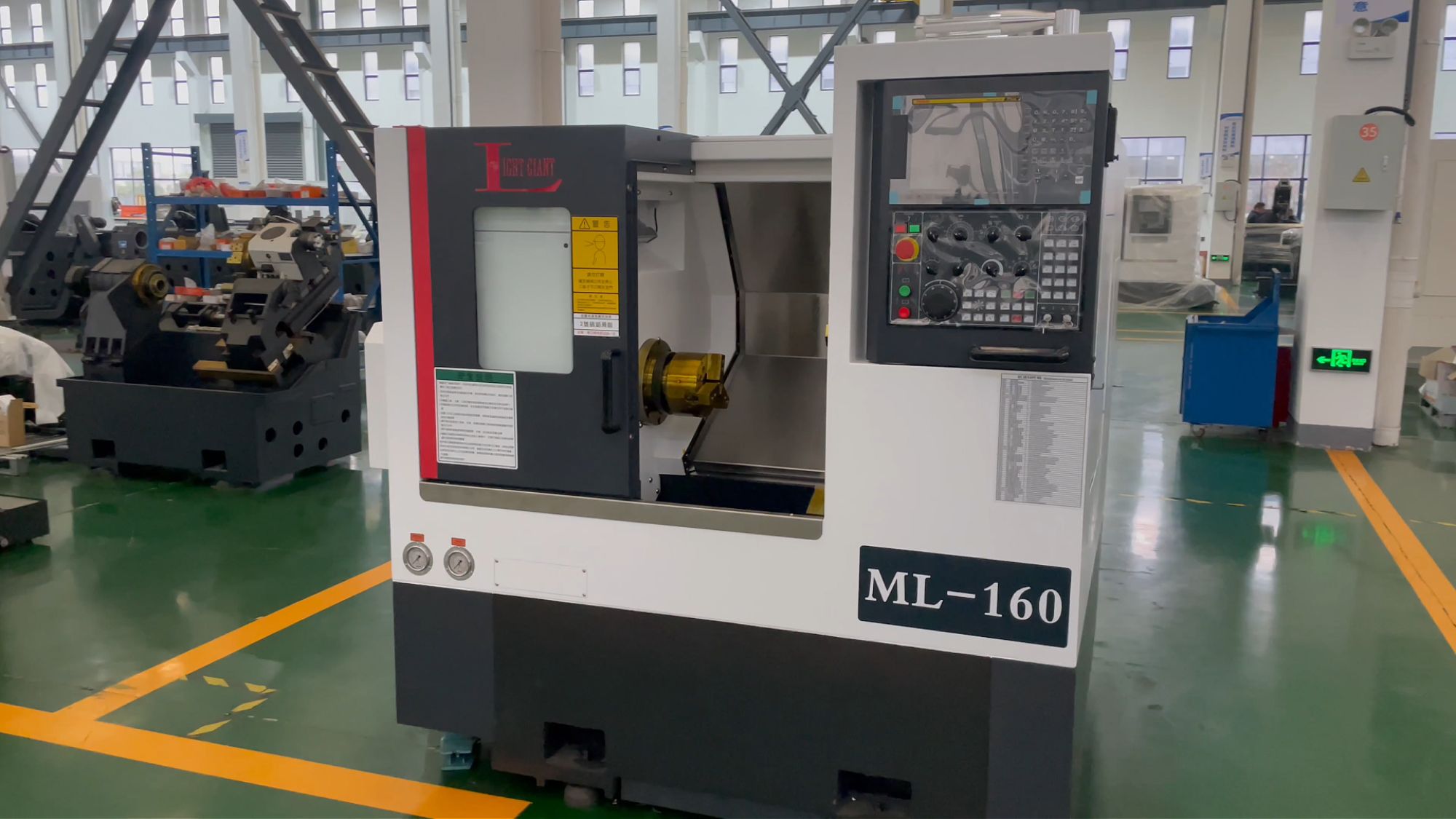
Stepping beyond the confines of standalone machinery and isolated tasks, true smart manufacturing integration weaves production floors into a cohesive digital fabric. It’s not merely about having robots weld faster or conveyors move quicker—it’s about creating a symphony where every sensor, controller, and business system communicates in real time. This interconnectedness dissolves the traditional barriers between operational technology and information technology, turning raw data streams into a shared language that drives decisions at every level.
This deeper integration unlocks capabilities that basic automation can’t touch. Instead of scheduled maintenance based on guesswork, embedded analytics predict wear and tear before a breakdown halts production. Quality control shifts from periodic sampling to continuous, in-line adjustments powered by vision systems and machine learning, catching deviations the moment they arise. The result is a self-regulating environment that learns and improves without constant human reprogramming.
Crucially, this shift demands a rethinking of roles on the factory floor. Workers become orchestrators rather than button-pushers, using augmented reality interfaces and contextual alerts to guide split-second decisions. The technology doesn’t replace human insight—it amplifies it, removing the drudgery so people can focus on innovation and exception handling. Ultimately, integration beyond basic automation isn’t just a technological upgrade; it’s a fundamental change in how value is created, measured, and sustained.
Material Versatility: Machining Everything from Titanium to Plastics
The ability to machine an incredibly diverse range of materials sets modern workshops apart. From the formidable strength of titanium alloys used in aerospace to the delicate flexibility of engineering plastics, each material demands a tailored approach. Titanium, notorious for its poor thermal conductivity, requires sharp tooling and slow speeds to prevent work hardening, while plastics like PEEK or nylon need careful heat management to avoid melting or dimensional distortion. Understanding these nuances isn't just about avoiding scrap—it's about unlocking designs that leverage the unique properties of each material.
Shops that truly excel don’t treat all metals or polymers as interchangeable. They dial in parameters for aluminum’s gummy tendency to stick to cutters just as meticulously as they adjust for stainless steel’s abrasiveness. Even within plastics, the approach for acrylic—prone to cracking—differs drastically from that for UHMW, which machines almost like a soft metal. This kind of versatility often comes from experience rather than data sheets, relying on a machinist’s feel for chip formation and coolant application that varies not just by material family, but by specific grade and even batch.
Ultimately, material versatility is what allows a single shop to serve clients from medical device prototyping to automotive one-off parts. It’s not about having a broader machine park, but about applying decades of cumulative knowledge to each new challenge. Whether it’s turning a hardened tool steel shaft or milling a complex polycarbonate manifold, the common thread is a respect for how materials behave when cutting edges meet their structure. That’s where craftsmanship meets science, and where truly versatile machining comes to life.
Custom Solutions: Tailoring Lathes to Unique Industrial Needs
Off-the-shelf lathes cover a lot of ground, but they stumble when a production line demands something off the beaten path. A shop machining oversized aerospace forgings, for instance, might need a bed extension far beyond standard catalog lengths, or a headstock bored to swallow atypically large bar stock. These aren't whims—they're practical necessities that dictate whether a job runs smoothly or becomes a daily headache. Custom solutions step into that gap, reshaping the machine around the work rather than forcing the work to fit the machine.
Tailoring a lathe often goes deeper than bolting on a larger chuck or swapping a tailstock. It can mean integrating a specialized tool turret that holds both live milling heads and a probe for in-process measurement, all choreographed by a control system tuned to a proprietary threading cycle. One application might require a coolant-through spindle capable of 1,000 psi for deep-hole drilling in Inconel, while another needs a fully enclosed, mist-collection canopy because the plant operates under strict air-quality rules. These modifications aren't catalog checkboxes; they emerge from conversations about part geometry, material quirks, and production targets.
The real value isn't just the hardware—it's the engineering dialogue that refines a vague requirement into a concrete, turnkey package. Instead of settling for a compromise that drags down cycle times or scrap rates, manufacturers end up with a lathe that acts like it was born on their shop floor. That kind of fit shortens setup, reduces operator intervention, and often unlocks new capacity that a generic machine couldn't touch. When the only standard is that no two jobs are quite the same, a custom lathe stops being a luxury and starts being the obvious answer.
Sustainability in Machining: Energy-Efficient Operations
Reducing energy consumption in machining starts with a smarter approach to toolpaths and cutting parameters. Rather than pushing speeds and feeds to the limit, many shops now optimize for specific energy consumption per unit of material removed. This means selecting depths of cut and stepovers that minimize spindle load while maintaining acceptable cycle times, often resulting in a net energy gain despite slightly longer runs.
Machine tool selection also plays a silent but massive role in energy efficiency. Modern CNC machines with regenerative drives can recapture braking energy, while lightweight components in linear axes reduce the power needed for rapid traverses. Equally important is challenging the default assumption that every job needs flood coolant—high-pressure air or minimal quantity lubrication often deliver sufficient cooling with a fraction of the energy overhead associated with pumping and chilling large volumes of fluid.
Beyond individual cuts, the larger system matters just as much. Idle time is the enemy of efficiency: automated power-down sequences for conveyors, chip augers, and lights during non-productive periods can trim baseline loads significantly. And when shops integrate energy monitoring directly into their production dashboards, they begin to see how scheduling decisions—like grouping similar materials or running energy-intensive jobs during off-peak hours—add a new dimension to sustainable manufacturing that goes well beyond the old paradigm of simply making chips faster.
The Human Touch: Skilled Workforce Behind the Machines
While automation and robotics have transformed production floors, the true heartbeat of any advanced manufacturing facility remains its people. From interpreting real-time data to making split-second adjustments, skilled operators bring a level of judgment and intuition that no algorithm can replicate. Their hands-on expertise ensures that even the most sophisticated machinery operates at peak efficiency, turning precision engineering into tangible results.
Beyond mere oversight, these professionals carry forward decades of accumulated knowledge—troubleshooting anomalies, refining processes, and training the next generation. It’s a blend of grit and finesse: a technician who can diagnose a subtle vibration change in a spindle, or a quality specialist whose experienced eye catches a microscopic flaw. In an era obsessed with digital transformation, this human element is what ultimately separates consistent excellence from mere productivity.
FAQ
We don’t just assemble parts from catalogs. Our engineering team works closely with clients to refine designs iteratively, often improving rigidity or chip flow in ways that off-the-shelf models miss. This hands-on, problem-solving approach has earned us repeat business from sectors like hydraulics and precision tooling.
Thermal compensation is integrated into every lathe, not as an add-on. We also use in-house-ground ball screws and double-check geometric alignment before shipping. For large orders, we can pre-stage tooling and run a pilot batch at our facility to validate consistency before delivery.
Absolutely. We’ve recently delivered a slant-bed lathe with a custom dust extraction hood and sealed linear guides specifically for carbon-fiber composite turning. It required a few extra design rounds, but the outcome handled the abrasive dust without premature wear.
We provide remote diagnostics via a secure gateway, and we keep critical spares in regional hubs in Germany and Michigan. For complex issues, our engineers fly out within a week. Honestly, most problems are resolved through a video call because we document every machine’s configuration meticulously.
We use a touchscreen controller that visualizes tool wear prediction and energy consumption, but it’s not buried in menus. A shop floor manager can glance at the dashboard, and if they prefer, they can ignore the data and just run parts. The machine collects OEE data passively, no extra steps.
We have a box-way model with a beefy spindle housing that handles interrupted cuts in Inconel quite well. The turret is also engineered to reduce overhang, so vibrations don’t transfer into the cutting edge. It’s not a light-duty machine by any stretch.
About 12 to 14 weeks from final design approval. That includes procurement of specific chucks or live tooling units. We’ve occasionally rushed a build in 9 weeks when a client’s old line went down, but that demands overtime and some creative scheduling.
We can arrange a week-long session at your site or ours, covering basic G-code through our simplified conversational interface. We also leave behind a set of video tutorials that mirror your actual part setups, so it’s not generic training.
Conclusion
China's CNC lathe manufacturers have redefined the meaning of precision in modern machining. By integrating advanced multi-axis control and real-time monitoring, these machines achieve sub-micron tolerances that were once unthinkable, ensuring every component meets exacting standards. The shift toward smart manufacturing goes far beyond basic automation; it involves adaptive systems that use machine learning to optimize cutting parameters, anticipate tool wear, and reduce human intervention. This intelligent ecosystem not only boosts productivity but also enables seamless material versatility—from incredibly tough titanium alloys to delicate plastics—all processed with consistent accuracy and surface finish.
Customization is another hallmark of this innovative drive, as manufacturers work closely with aerospace, automotive, and medical sectors to engineer lathes that fit unique production workflows. At the same time, sustainability has become a priority: energy-efficient motors, regenerative drives, and optimized cooling systems cut power consumption without sacrificing performance. Yet behind all the digital sophistication lies the irreplaceable human touch. Skilled engineers and operators continually refine processes, troubleshoot complex challenges, and inject craftsmanship into the automated world, proving that the synergy between human expertise and cutting-edge technology is what truly propels China's CNC lathe industry forward.
Contact Us
Contact Person: Tim
Email: [email protected]
Tel/WhatsApp: +86 15522553731
Website: https://www.winnrui-cnc.com/