

China Chemical Industry Air Compressor: What Plant Managers Need to Know
2026-08-23
Every plant manager in China’s chemical sector knows the sinking feeling of an air compressor that can’t keep up—pressure drops, batch times stretch, and energy costs creep higher without explanation. What many don’t realize is that the right machine isn’t just about CFM or horsepower; it’s about matching corrosion-resistant design, duty cycle, and local operating conditions to a process that never forgives downtime. In this guide, we cut through supplier jargon and focus on what actually matters for chemical plants, from maintenance schedules that prevent unplanned stops to efficiency tweaks that show up on your monthly power bill. Along the way, you’ll see how Seize Air addresses these pain points with systems built for harsh environments and fluctuating demand.
Why Standard Compressors Fall Short in Chemical Plants
Standard compressors are engineered for air or benign gases, but chemical plants routinely move streams loaded with hydrogen sulfide, chlorine, or vinyl chloride. In those environments, the carbon steel and standard elastomers in off-the-shelf machines start pitting and swelling within weeks. Seals that would last a decade in a clean-air application can fail in under six months, releasing toxic vapors around the packing and forcing emergency shutdowns.
Lubrication turns into another liability. A conventional oil-flooded compressor introduces hydrocarbon mist into the gas stream, which can poison downstream catalysts or form sticky polymerization deposits in the piping. Replacing that oil with a process-compatible fluid is rarely supported by standard designs, and running the unit oil-free often exposes internals to accelerated wear. Plants end up rebuilding cylinders far more often than the vendor manual suggests.
The demands on reliability and safety also diverge sharply. Chemical sites expect compressors to run three to five years between major overhauls, often with feedstock swings that push suction pressures and temperatures beyond the original design envelope. Standard frames lack the bracing, gas-tight venting, and instrumentation hookups needed for toxic or flammable service, so a minor seal weep can escalate into a reportable release rather than a routine maintenance item.
Decoding Explosion-Proof Ratings Without the Jargon
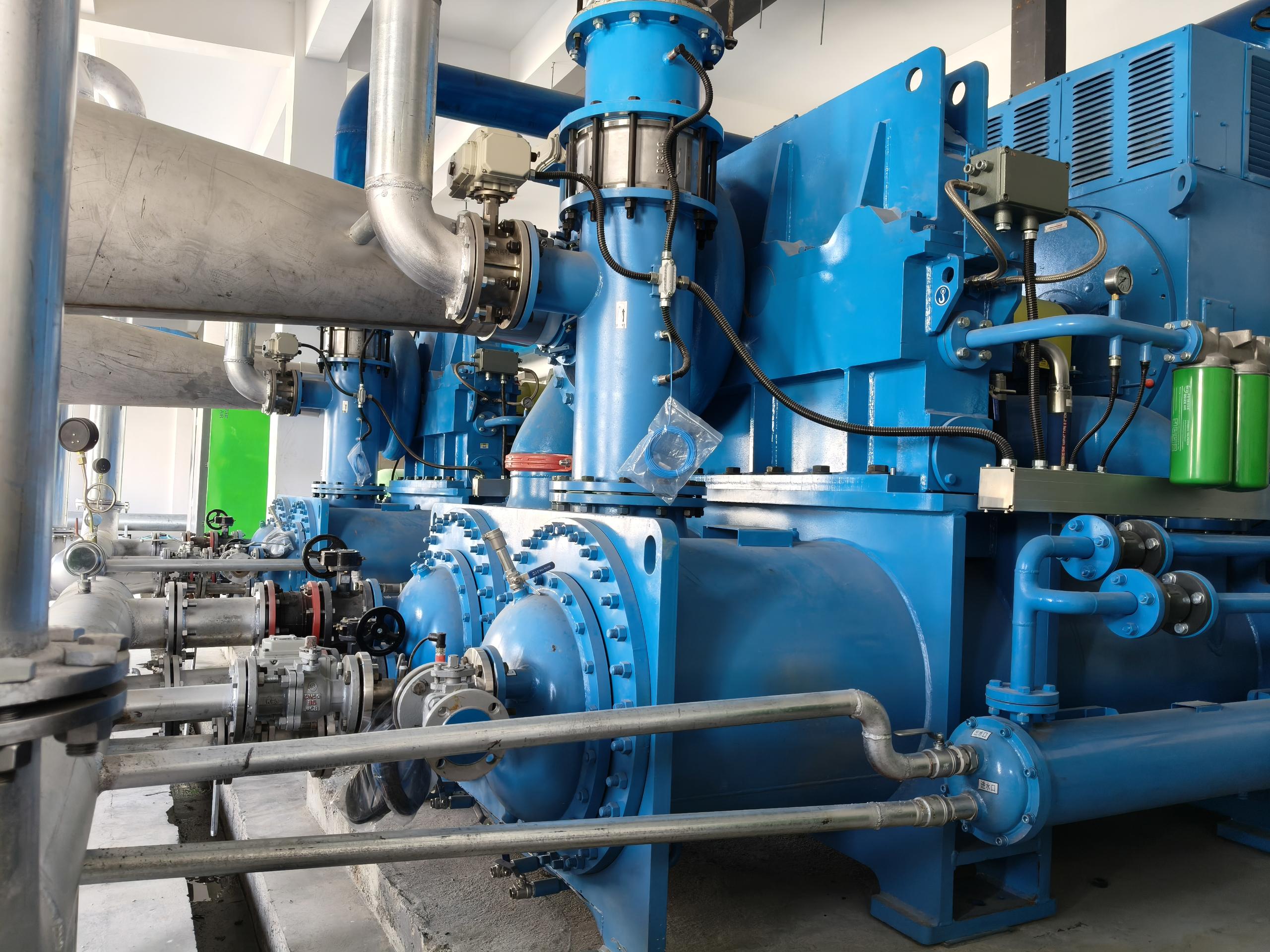
Explosion-proof ratings often look like a jumble of Roman numerals, letters, and digits. The trick is to ignore the official-sounding labels for a minute and think about what the equipment actually has to do: avoid sparks, contain any internal explosion, and stay cool enough not to ignite the surrounding air. Once you frame it that way, the code becomes far less intimidating.
A typical rating like Class I, Division 1, Group C, T4 answers three practical questions. Where will the gear live? Class I and Division 1 tell you it's meant for places where flammable gases or vapors are present under normal conditions. What kind of hazard is in the air? Group C points to gases like ethylene. How hot can the enclosure get? T4 means the surface temperature stays at or below 135°C, which is below the ignition temperature of those gases.
So when you see a string of characters stamped on a motor or light fixture, don't read it as bureaucratic noise. It's actually a compact safety briefing: the environment, the specific chemical risk, and the maximum surface temperature. Strip away the abbreviations and you're left with straightforward guidance that anyone on a job site can understand.
The Hidden Cost of Ignoring Air Purity in Reactor Feed Lines
When a reactor feed line carries anything less than the specified gas purity, the consequences rarely show up as a sudden failure. Instead, they accumulate in ways that are easy to misattribute. Oxygen ingress at just a few parts per million can slowly degrade moisture-sensitive catalysts, trimming conversion rates by a fraction each week. Moisture does not always cause an immediate upset; it can promote hydrolysis side reactions that leave trace impurities in the final product, forcing rework or disposal of an entire batch. These small losses are often written off as normal process variability, but their root cause sits quietly in the feed line.
The cost picture becomes clearer when you look at maintenance and unplanned downtime. Particulates entrained in a feed stream are not benign—they can erode valve seats, clog distributor plates, or accumulate on heat exchanger surfaces, reducing heat transfer efficiency. Over time, operators compensate by raising temperatures or pressures, which stresses the system further and shortens equipment life. A line that runs for months without a purity check may hide a growing layer of corrosion products, especially if trace oxygen and moisture react with process fluids. The resulting leaks or fouling often demand a shutdown at the worst possible moment, and the repair bill is only part of the loss.
Treating air purity as a process parameter rather than an afterthought changes how a facility operates. Continuous oxygen and moisture analyzers placed upstream of the reactor give operators early warning before contaminants reach sensitive chemistry. High-purity nitrogen or argon purges, properly sized dryers, and filters with verified removal ratings keep feed lines clean without over-engineering. The savings come not from a single dramatic fix but from fewer rejected batches, longer catalyst life, and maintenance that can be planned instead of forced.
What Smart Monitoring Reveals Before a Failure Shuts You Down
Instead of waiting for a breakdown, smart monitoring picks up on subtle changes that often go unnoticed—like a slight increase in vibration frequency or a gradual rise in bearing temperature. These aren't random glitches; they're early warnings that a component is starting to degrade.
For example, an unexpected shift in current draw or a developing harmonic distortion in the power signature can indicate insulation breakdown or rotor bar problems long before a motor trips. Likewise, pressure fluctuations in hydraulic lines might point to a failing seal or a worn pump, giving teams time to swap parts during a planned pause rather than dealing with a full stop.
The real value comes from context—combining these small signals with historical baselines to spot patterns that single-threshold alerts miss. That means fewer surprises, shorter repair windows, and equipment that keeps running until you're ready to fix it, not when it forces your hand.
Vetting Suppliers for Chemical-Grade Air Systems Beyond the Spec Sheet
Spec sheets give you flow rates, pressure dew points, and filtration ratings, but they don't tell you how a supplier reacts when a batch of desiccant tests out of spec. Ask for deviation reports and root cause analyses from the last two years. A manufacturer that openly shares those documents, even redacted, is more trustworthy than one that claims zero failures. In chemical plants, air quality problems often trace back to subtle material incompatibilities or overlooked condensate management, so dig into real incident records.
Material traceability matters as much as the final performance numbers. Request copies of mill certificates for pressure vessels, weld procedure qualifications, and elastomer compatibility test results. Chemical-grade air rarely stays clean if the compressor's internal coatings or seal materials degrade in the presence of trace acid gases. Verify that the supplier tests complete packaged systems under realistic load conditions, not just individual components on a bench. Check sensor calibration intervals and how the supplier handles out-of-tolerance readings during factory acceptance testing.
After the sale is where the spec sheet stops. Ask a field service technician, not the sales manager, about common failure points and typical spare parts turnaround. A supplier with a regional rebuild shop and a clear retrofit path for older compressors can prevent weeks of downtime. Insist on a documented quality plan that links raw material lot numbers to final serial numbers, so any future contamination issue can be traced back to its source without guesswork.
FAQ
In hazardous areas, compressors and motors often need Ex-proof certification aligned with GB standards, and instrument air must be oil-free and dried to avoid valve failures. Local chemical parks may also impose additional fire zoning and leak detection requirements, so managers should confirm with the local emergency management bureau before purchase.
For most processes, ISO 8573-1 Class 2.2.2 is a starting point, but instrument air typically needs Class 1.2.1 or better and a pressure dew point below -40°C to prevent freezing in northern winters. Oil-free screw or centrifugal machines with adsorption dryers are common, and particle filtration should be placed after buffer tanks to handle pipe scale.
China's mandatory GB 19153 energy efficiency grades push plants toward variable-speed drives and two-stage compression. Electricity can be 70-80% of lifecycle cost, so managers should compare specific power at actual operating pressure rather than nameplate, and consider heat recovery for boiler feedwater or space heating to meet provincial energy intensity targets.
Salt-laden air and trace acid gases accelerate cooler fouling and corrosion. Managers should specify epoxy-coated coolers, stainless steel piping for aftercoolers, and schedule quarterly cleaning of intake filters. Remote monitoring of vibration and dew point helps catch corrosion-related leaks before they contaminate process air.
If air contacts catalysts, solvents, or final product, oil-free is safer and avoids activated carbon filters downstream. For non-contact uses like pneumatic conveying of inert powders, oil-lubricated with coalescing filters can be cost-effective. Many plants run a hybrid: oil-free for instrumentation and oil-lubricated for utility air, reducing total capital cost.
Domestic brands and foreign JV plants often offer faster parts delivery and Chinese-language service; however, critical seals, bearings, and control boards may still be imported, with lead times of 4-8 weeks. Managers should keep a consignment stock for high-wear items and verify whether the supplier has engineers certified for chemical park safety induction.
In areas with high PM2.5, chemical vapors, or coal dust, standard panel filters clog quickly and can starve the compressor. Use two-stage filtration: a coarse pre-filter plus a high-efficiency final filter, and monitor differential pressure. Some plants add activated carbon stages if acidic gases are present.
Compressors should be located upwind of flare stacks and cooling towers to avoid flammable gas or biological fouling. Foundation must isolate vibration from nearby analyzer buildings. In northern provinces, air intake should draw from a heated enclosure to prevent ice blockage, and discharge pipes need heat tracing if condensate can freeze.
Conclusion
Plant managers across China’s chemical sector quickly learn that a generic industrial compressor rarely survives contact with reality. Corrosive fumes, fluctuating ambient temperatures, and the constant threat of flammable gas leaks mean standard units—built for clean, predictable factory floors—tend to develop seal failures, overheating, and control board corrosion within months. Worse, the explosion-proof label alone tells you almost nothing useful. You have to dig into the actual classification: which gas groups are covered, what temperature class the motor winding can withstand, and whether the certification matches the specific solvents or feedstocks moving through your site. Skipping that homework turns a compressor into an ignition source waiting for the wrong shift. Then there’s the air itself. Reactor feed lines don’t tolerate oil carryover or moisture spikes; even trace contamination can poison a catalyst or alter a batch’s moisture-sensitive chemistry, and the repair bill lands long before anyone traces the problem back to the air supply.
Modern monitoring changes that equation. Vibration sensors on the airend, continuous dew-point tracking, and discharge temperature trends reveal bearing wear, clogged aftercoolers, or failing inlet valves weeks before a shutdown—if anyone actually reads the data. Smart systems flag abnormal pressure differentials across filters, not just when a sensor trips but when the pattern drifts from baseline. On the supplier side, plant managers need more than a glossy spec sheet. Ask how the vendor handles parts availability for older models in second- and third-tier chemical parks, whether their service engineers have worked inside hazardous-area permits, and what they do when a compressor underperforms after installation. A supplier that only quotes ISO flow and power numbers hasn’t been tested by your process conditions. The real question is whether they understand the interplay between air purity, hazardous area compliance, and long-term reliability in a Chinese chemical plant—not whether they can ship a machine quickly.
Contact Us
Contact Person: Mia
Email: [email protected]
Tel/WhatsApp: +86 19821985894
Website: https://www.seize-air.com