

China Bath Bench Buying Guide for Safe and Comfortable Shower Seating
2026-10-28
For anyone setting up a safe bathroom in China, a simple bench can change everything. But not all shower seating is created equal — especially when it comes to comfort and grip on wet tiles. That's where Suncare steps in, with designs that actually understand real bathrooms. In this guide, we'll walk through what to look for before you buy, so you don't end up with a wobbly seat when it matters most.
What Makes a Shower Seat Feel Stable on Wet Tile?
The first clue is in the feet. On glossy porcelain or ceramic tile, water creates a nearly frictionless film. A shower seat that stays put usually has wide, slightly soft rubber or TPE pads with drainage channels. These channels break the surface tension and let the pad grip the tile instead of hydroplaning. If the feet are hard plastic or too small, even a heavy person sitting down can push the seat a few millimeters.
Wall-mounted folding seats rely on a different mechanism: the mounting bracket and anchors. But for freestanding benches, stability often comes from a low center of gravity and splayed legs. The wider the stance relative to the seat height, the less likely a lateral shift when you lean to reach soap. Some designs add a slight inward tilt on the legs so body weight presses the feet outward into the tile, increasing friction.
Another overlooked factor is the tile surface itself. Textured or matte tiles offer much more grip than polished ones, and grout lines can interrupt suction or create uneven contact. If the seat has micro-suction rings, they may work on smooth tile but fail over grout. The real test is to put your full weight on the front edge and rock side to side. If a leg lifts even a hair, the seat is not stable for that tile.
Teak, Bamboo, or Aluminum: Which Build Handles Humidity Best?
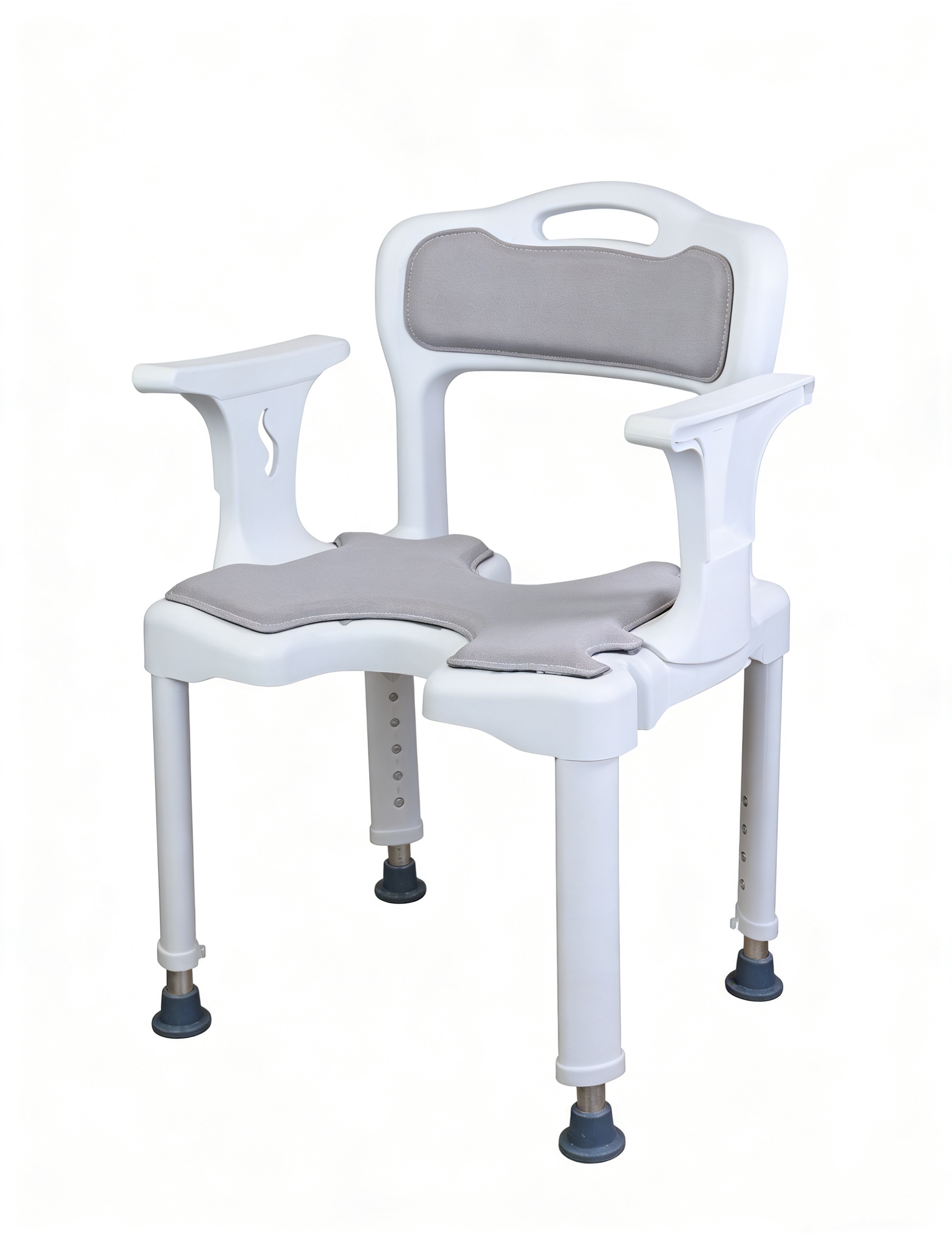
When you live near the coast or in a region with heavy seasonal rain, material choice stops being about looks and starts being about survival. Teak has a natural oil content that makes it surprisingly stable, though it will develop a silvery patina and may need occasional cleaning to avoid surface mildew. Bamboo, on the other hand, is a grass that soaks up moisture quickly unless it has been thermally modified or sealed with a marine-grade finish, and even then it can warp at the joints. Aluminum is the only one of the three that does not absorb water at all, but it can form condensation on cool mornings, which may lead to drips or pooling if the design does not allow for drainage.
If you are choosing furniture for a screened porch or a bathroom shelf, think about how often the piece will stay damp. Teak performs well in humid air because its oils repel water, but constant wetness can still cause black spots if leaves and dirt are not wiped away. Bamboo can work in moderate humidity if you buy from a maker who uses low-moisture lamination, yet it is rarely the best choice for a steam-filled bathroom. Aluminum wins for outright resistance to rust and swelling, but it transfers heat and cold quickly, so it may feel clammy to the touch in a humid room.
A practical approach is to match the material to the microclimate. For a covered outdoor kitchen near the ocean, teak or powder-coated aluminum are both solid; aluminum will need less upkeep, while teak will look warmer. For an indoor space with occasional humidity spikes, a well-sealed bamboo piece can survive, but you should check the joinery for any exposed end grain. If the humidity is high year-round and the piece will see daily moisture, aluminum with a textured finish is usually the most forgiving.
Weight Limits and Leg Adjustability: The Two Specs You Can’t Skip
A standing desk that wobbles at full height or refuses to budge past a certain weight isn't just annoying—it defeats the entire purpose of investing in one. Most manufacturers bury the real load capacity in fine print, and once you add a dual monitor arm, a hefty desktop, and the random stack of papers you swear you'll file, you could be flirting with the ceiling. Here's a better rule: look for a desk rated at least 20% above your heaviest realistic setup. If your gear weighs 160 pounds, don't buy a desk rated for 175. That margin isn't paranoia; it's the difference between a decade of smooth lifts and a burned-out motor in year two.
Leg adjustability matters just as much, but people fixate on the wrong number. They chase a max height of 50 inches when their elbows only need 43. Instead, check the leg's adjustment range against your own seated and standing ergonomics. A desk that only goes down to 30 inches might force taller users to hunch while seated, and one that tops out at 45 could leave shorter folks reaching. Also look for memory presets that actually stick—cheap controllers lose their calibration after a few weeks, turning every adjustment into a slow, buzzy guessing game.
The real test is stability at both extremes. A desk can be rock-solid at 30 inches and sway like a sailboat mast at 47. That's less about motor power and more about leg design: telescoping segments with tight clearances, reinforced crossbars, and wide foot glides. If you can't try a floor model, hunt for reviews that mention side-to-side shake at standing height with a fully loaded top. Weight limits and leg adjustability aren't glamorous specs, but skip them and you'll end up with a desk that's great for sitting and useless for standing—or vice versa.
Backrests, Armrests, and Cushions: Comfort Features Worth Paying For
A good backrest does more than let you lean back. Look for a unit with adjustable lumbar support that moves vertically and depth-wise, because the curve of your lower spine doesn't sit at the same height for everyone. Cheaper chairs often use a fixed plastic bar that feels like a brick after an hour. If the backrest has a synchronized tilt mechanism that keeps your back supported while you recline, that's a feature you'll notice by the end of a long day—not in a showroom.
Armrests tend to be treated as an afterthought, but they carry a lot of the load from your neck and shoulders. Height, width, and pivot adjustments let you keep your elbows close to your body and your forearms parallel to the desk, which prevents that hunching that leads to tension headaches. Models with a soft but firm top layer—rather than hard plastic or overly squishy foam—make a bigger difference than most people expect.
Cushion quality separates chairs that feel great for a week from ones that stay comfortable for years. High-density molded foam or a well-tensioned mesh seat distributes pressure evenly instead of letting your sit bones dig into the base. Pay attention to the front edge, too: a waterfall design reduces pressure behind the knees. If the cushion compresses more than a few millimeters under your hand, it will likely flatten out within months and leave you sitting on the frame.
Wall-Mounted vs. Freestanding: Matching the Seat to Your Shower Layout
Choosing between a wall-mounted and freestanding shower seat often comes down to how your shower is arranged. Wall-mounted options fold up against the wall when not in use, which works well in narrow stalls or enclosures where every inch matters. They require solid blocking behind the tile or a structurally sound wall, so retrofitting an older shower can involve opening up the wall. Freestanding benches, on the other hand, sit directly on the floor and can be moved or adjusted, but they take up floor space and may feel bulky in a compact layout.
Think about where the water actually falls. In a walk-in shower with a fixed showerhead at one end, a corner wall-mounted seat can stay out of the spray while still being close enough to reach. Freestanding teak or bamboo stools look beautiful, but if your shower floor has a significant slope toward the drain, the legs may wobble unless you add leveling feet. Also consider who will use the seat: someone with limited mobility may prefer the stability of a fixed wall-mounted bench over a lightweight freestanding stool that could slide on wet tile.
Finally, match the seat to the overall feel of the bathroom. A floating wall-mounted slab in a large-format porcelain tile can make a modern shower feel seamless and architectural. A freestanding wooden bench brings warmth and a spa-like touch, especially in a curbless shower with a linear drain. If you have a shower-bath combo, a wall-mounted fold-down seat above the tub edge is often the only practical choice, while a freestanding seat rarely fits without blocking the tub controls.
Keeping Mold and Mildew Off Your Bath Bench Without Harsh Chemicals
Most of the time, mildew on a bath bench starts with trapped moisture. After each shower or bath, take ten seconds to wipe the bench down with a dry microfiber cloth, especially along the slats and any grooves. If the bench is portable, lean it against the shower wall or hang it over the tub edge so air can move underneath. Leave the bathroom fan running for twenty to thirty minutes, or crack a window if you have one, to lower the humidity around the bench.
For a weekly wipe-down, mix one part white vinegar with three parts water in a spray bottle. Spray the bench lightly, let it sit for five to ten minutes, then scrub any visible spots with a soft-bristle brush or an old toothbrush. Rinse with warm water and dry it completely. If you want a little extra mold resistance, add ten to fifteen drops of tea tree oil to the vinegar spray—it has natural antifungal properties and leaves a faint, clean scent that fades quickly.
When you notice stubborn staining or a musty smell, sprinkle baking soda over the damp bench and use a damp cloth to work it into the surface. For textured wooden benches, a paste of baking soda and a few drops of water can be rubbed in with the grain, then rinsed off after fifteen minutes. Check the underside and any joints where water tends to collect, and if possible, move the bench into direct sunlight for an hour every couple of weeks—UV light discourages mold spores without any harsh additives.
FAQ
Check the feet first. Look for wide rubber or TPE pads with a slight suction effect, not hard plastic caps. If your floor has textured tile, a bench with four independently adjustable legs will sit more steadily than a fixed-frame model. You can also wipe the tile and the feet dry before each use, and avoid wax-based cleaners that leave a slippery film.
Aim for a seat height between 16 and 19 inches, which is close to the height of a standard toilet. The real test is whether the person can sit with feet flat on the floor and knees bent at about 90 degrees. If you are buying for someone taller or shorter, measure from the back of the knee to the sole of the foot and choose a bench that matches that distance rather than guessing by product photos.
Bamboo can work if it is heat-treated or coated with a water-resistant sealant, but raw bamboo will swell and split over time. In a steamy bathroom, a bamboo bench needs to be wiped down after each use and kept away from direct water spray when possible. If you want a warmer look than plastic but less upkeep than solid wood, look for bamboo boards that are joined with waterproof adhesive, not nailed or stapled.
The main difference is support. A bath bench is usually a simple slatted seat with no backrest, designed for sitting and leaning forward to wash your legs. A shower chair typically has a backrest and sometimes armrests, which matters if the user needs help lowering down or standing up. Many sellers use the words interchangeably, so check the product photo for a back panel and side rails before ordering.
Teak handles water better than most woods, but permanent standing water will still darken it and encourage mildew in the grain. If you want to leave it in place, look for a model with slats that drain quickly and feet that lift the wood slightly off the floor. Wipe the seat dry after the last shower of the day and treat it with teak oil every few months to keep the surface from becoming rough.
Use a soft brush and a mix of warm water and mild dish soap for weekly cleaning. For mildew in the slots, spray distilled white vinegar and let it sit for ten minutes, then scrub gently and rinse. Do not use abrasive powders or steel wool, because tiny scratches will trap soap scum and make mildew worse. After cleaning, stand the bench upright or pat it dry so water does not pool in the slots.
Yes, you can find triangular or quarter-round corner models, and some wall-mounted folding benches are narrow enough for compact spaces. Measure the two wall lengths and the diagonal before ordering, because corner benches are not all the same angle. If your shower floor slopes toward a drain, choose a model with individually adjustable legs so the seat stays level instead of tilting.
Padding helps if the person is very thin or has pressure sores, but it also traps moisture against the skin. Choose a pad made from quick-drying foam with a removable, machine-washable cover, and check that the bench itself still has drainage holes under the pad. If the pad cannot be removed and dried daily, a well-sanded wood or textured plastic seat is often safer than a permanently damp cushion.
Conclusion
A good bath bench earns its place not through extra padding but through how it behaves on slick tile. Rubberized feet with deep siping grip far better than smooth plastic caps, and a slightly wider stance at the base prevents that sideways wobble when you shift your weight. Teak holds up beautifully in humid bathrooms because its natural oils resist rot, but it demands occasional oiling to keep its color; bamboo is lighter and cheaper yet needs a sealed finish to avoid swelling. Aluminum with a powder-coated frame is the low-maintenance workhorse, as long as the welds feel solid and the seat slats drain water quickly. Before anything else, match the stated weight capacity to the heaviest person who will use it—leave a margin for wet towels or a caregiver leaning in. Legs that adjust in small, locking increments matter more than extra height range, since uneven shower floors often need one side shorter by a quarter inch to sit perfectly level.
Comfort features stop being optional if showers run longer than ten minutes. A gently curved backrest supports without pushing you forward, and armrests double as push-off points when standing up on wet tile. Skip thick foam cushions unless they are quick-drying and removable; most retain water and become a mildew trap. For tight stalls or a cleaner look, wall-mounted seats fold away but require blocking behind the wall for real support. Freestanding benches give you the freedom to adjust placement and usually feel more stable on uneven floors. After installation, wipe the bench dry after each use and leave the bathroom fan running for twenty minutes. A monthly rinse with warm water and mild dish soap followed by a dry towel keeps mold and mildew at bay without resorting to bleach sprays that eat away at wood fibers and rubber tips.
Contact Us
Contact Person: Frank Chan
Email: [email protected]
Tel/WhatsApp: 0086-13924529088
Website: https://www.suncare-medical.com