

Aluminum Intake Manifold Supplier: Crafting Precision Parts for Peak Engine Performance
2026-07-02
When every component under the hood matters, the intake manifold quietly governs how air feeds your engine—shape it wrong, and you leave horsepower on the table. That’s where an experienced aluminum intake manifold supplier changes the game. From street builds to full-race setups, DDR has become a trusted name for enthusiasts and workshops chasing reliable, high-flow designs that don’t just look the part but deliver consistent, repeatable gains. If you’re tired of generic castings and ready to see how custom-engineered aluminum manifolds can sharpen throttle response and top-end pull, this deep dive into materials, design drivers, and what separates a true specialist from a parts pusher will fuel your next upgrade.
Forged in Precision: The Art of Aluminum Manifold Engineering
Every curve, every channel carved into the aluminum begins as a negotiation between strength and flow. It’s not just about bolting pipes together—it’s about mapping the exact path that air or fluid will take, and then removing every bit of material that stands in the way. A manifold’s job sounds simple: distribute. But in practice, it’s a relentless discipline of tolerances measured in microns, where a fraction of a degree in port angle can choke performance or liberate it. Mastery here means understanding how aluminum behaves under tool and temperature, and using that knowledge to chase a shape that looks inevitable.
The process starts long before any chip is cut. You read the engine’s architecture like a topographic map, identifying the high-pressure zones, the thermal gradients, the harmonic vibrations that will punish a lesser design. Then you sketch—often by hand—until the form starts to breathe. Modern CNC machines can execute with terrifying accuracy, but they have no instinct for the way fluid clings to a wall or the subtle taper that quiets turbulence. That’s why the most admired manifolds still bear the fingerprints of intuition, the kind that comes from years of listening to dyno runs and tracing soot patterns on old prototypes.
Then comes the physical dance: fixturing raw stock so it won’t sing under the cutter, selecting tools not just for speed but for the skin finish they leave behind, and constantly adjusting feeds to keep the metal’s temper from betraying you. Each port gets probed, measured, sometimes polished by hand under magnification, because a surface roughness invisible to the eye can shear energy from the flow. The result sits at this strange intersection of brute mechanics and sculpture—something you could drop onto a coffee table as art, yet designed to hold 40 psi without flinching. That’s the quiet thrill of aluminum manifold engineering: it turns a commodity metal into a bespoke vessel for power.
Lightweight Power: Unlocking Performance with Advanced Alloy Design
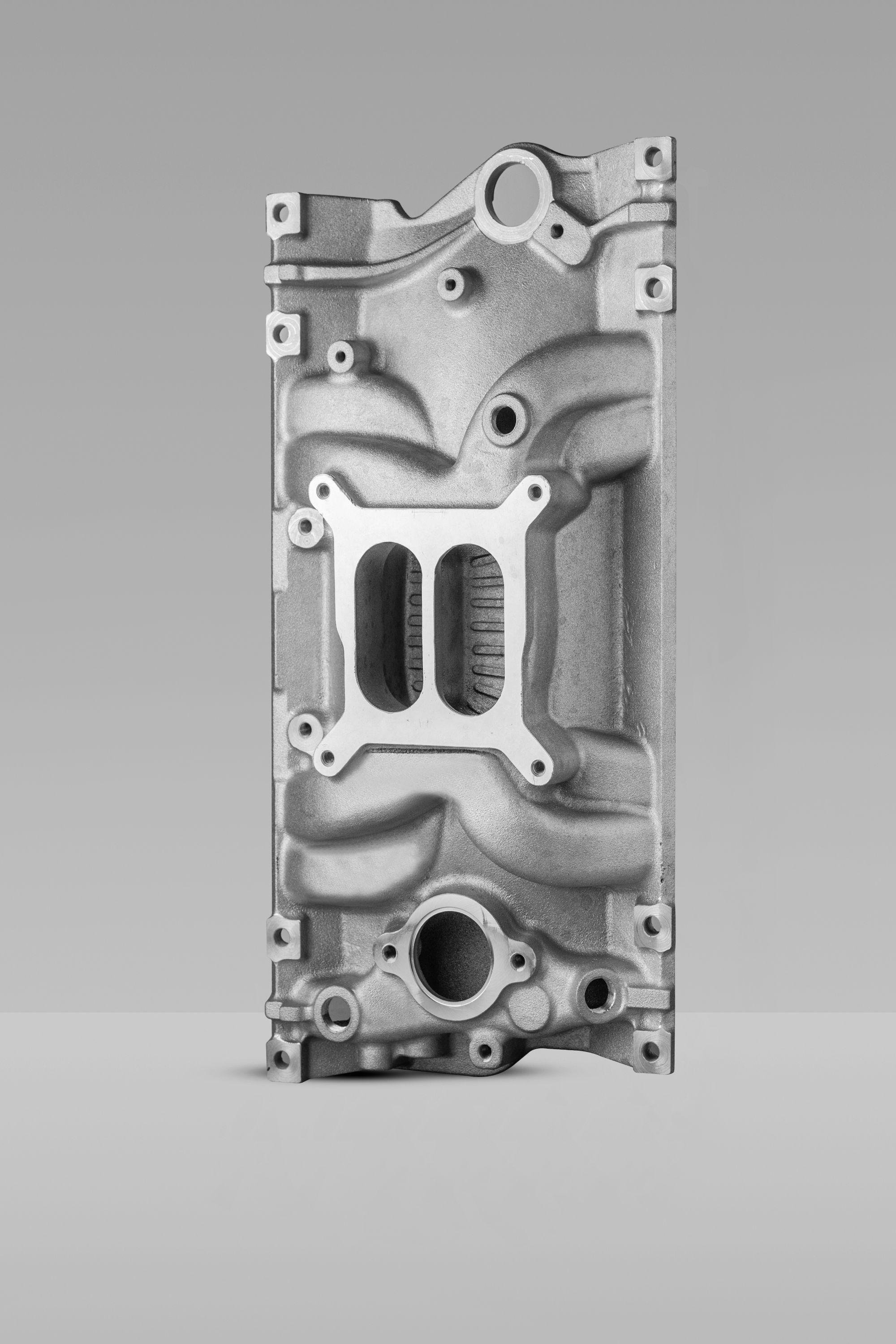
The relentless pursuit of lighter, stronger materials is reshaping everything from aerospace to consumer electronics. At the heart of this shift lies a quiet revolution in metallurgy, where custom alloy formulations are pushing the boundaries of what’s possible. By moving beyond conventional off-the-shelf metals and meticulously engineering compositions at the atomic level, engineers are creating materials that deliver exceptional strength-to-weight ratios without compromising durability or thermal stability.
Advanced alloy design is not just about subtracting mass—it’s a strategic balancing act between elements like aluminum, lithium, magnesium, and titanium, often reinforced with nanoscale precipitates or ceramic particles. These microstructural tweaks yield dramatic gains: a newly developed aluminum-magnesium-scandium alloy, for instance, can be 20% lighter than standard aerospace aluminum while matching its tensile strength. The result is components that slash energy consumption in vehicles, extend battery range in devices, and enable sleeker, more robust structural frameworks.
What truly sets modern alloys apart is the precision of their design cycle. Computational modeling and high-throughput experimentation allow researchers to simulate how atoms interact under stress long before any physical prototype is forged. This accelerates the discovery of optimized mixtures that resist fatigue, corrosion, and heat—properties once thought mutually exclusive. As industries demand more with less, these tailored metals are proving that lightweight performance is not a compromise, but a gateway to entirely new engineering possibilities.
Beyond the Cast: How Our Manifolds Redefine Airflow Dynamics
Traditional cast manifolds, born from molten metal poured into sand molds, carry inherent flaws that compromise performance. Their internal walls often end up grainy and uneven, while unavoidable design constraints force sharp bends and inconsistent diameters. These imperfections create chaotic turbulence, robbing the engine of the smooth, dense air charge it desperately needs for optimal combustion.
We stepped away from the casting process entirely. By employing advanced fluid dynamics modeling and precision fabrication, every runner in our manifold is shaped with a singular purpose: to guide air with minimal resistance. Gentle radius curves replace abrupt angles, cross-sectional areas taper seamlessly, and surface finishes are refined to a near-mirror quality. The airflow remains calm and attached, density stays high, and the engine finally breathes the way engineers intended.
The real-world payoff goes beyond dyno charts. Throttle response sharpens, mid-range torque fills in, and even fuel consumption sees subtle gains under light-load conditions. There’s a directness to the power delivery that makes the engine feel more alive—a character shift that no cast component, with all its compromises, could ever deliver.
Tailored to Thrill: Custom Manifolds for Unrivaled Engine Response
Stock intake manifolds are built for compromise—quiet operation, easy packaging, and low cost. They rarely prioritize what enthusiasts crave: instant, gut-punching throttle response. A custom manifold changes that equation completely. By tuning runner length and plenum volume to your engine’s specific cam profile and rpm range, you can shift the powerband exactly where you want it. Shorter runners with a larger plenum might sing at high rpm, while longer, narrower runners fatten torque curves down low—right where street driving lives. It’s not just about peak numbers; it’s about how the car feels under your right foot when you crack the throttle mid-corner or pull out to pass.
Materials play a bigger role than most realize. Cast aluminum is stout but soaks up heat, stealing horsepower with every degree of intake air temperature rise. Sheet-metal and composite designs aren’t just lighter—they dissipate heat faster and offer more flexibility for port matching and velocity stack integration. A precisely fabricated manifold mates perfectly with an oversized throttle body and ported heads, reducing turbulence and maximizing volumetric efficiency. The result isn’t simply an engine that makes more power, but one that reacts like an extension of your nervous system—snarling at the lightest brush of the pedal and pulling cleanly to redline without flat spots or hesitation. That kind of immediate, linear response is what makes a car feel truly alive.
From CAD to Dyno: The Rigorous Path to Proven Performance
Every component begins its life as a digital blueprint, shaped by countless iterations in CAD software. These models aren't just rough sketches; they're burdened with exacting tolerances and material specifications that will later face brutal real-world conditions. The virtual environment allows engineers to test fitment, simulate stress points, and optimize airflow, leaving little to chance before metal is ever cut.
Once prototypes emerge from machining, the real scrutiny starts on the dynamometer. This isn't a gentle stroll—engines are pushed to their absolute limits, logging horsepower, torque, and thermal behavior under controlled torture. Any weakness in the design, however subtle in simulations, becomes glaringly obvious when the dyno delivers its unforgiving numbers.
Between CAD and the dyno lies a cycle of refinement. Data from each pull feeds back into the digital model, tightening the loop until the hardware delivers what the software promised. It's a methodical, sometimes frustrating process, but it separates bold claims from track-ready truth.
The Heat is On: Thermal Efficiency and Durability in Every Part
When parts run hot, performance shouldn’t take a back seat. Every component in a high-stakes environment needs to handle extreme temperatures without breaking a sweat. Whether it’s engine components in a vehicle, electronics in a data center, or industrial machinery running nonstop, the ability to manage heat directly decides how long things last and how reliably they work.
Thermal efficiency isn’t just about picking the right material—it’s about smart design and thoughtful integration. Clever layouts that channel heat away from sensitive areas, advanced coatings that reflect or dissipate energy, and fine-tuned geometries all play a role. Small tweaks can slash operating temperatures by double digits, delaying wear and cutting energy loss. The result? Parts that hold up shift after shift, quietly defying the punishment of prolonged exposure.
Durability, then, is the natural partner to thermal smarts. When heat is managed correctly, materials stay stable, seals stay tight, and the risk of sudden failure plummets. By baking in both properties from the start—through rigorous testing under real-world loads and continuous refinement—manufacturers create hardware that outlasts expectations. In the end, it’s not magic; it’s simply giving every part the resilience to take the heat and keep going.
FAQ
We focus on meticulous engineering rather than mass production. Our manifolds feature optimized runner lengths and smooth internal surfaces that drastically reduce air resistance. Each unit is CNC-machined from high-grade aluminum billet, ensuring a perfect seal and consistent airflow cylinder to cylinder. This isn't just a replacement part; it's a performance upgrade designed to extract every bit of potential from your engine.
Aluminum dissipates heat efficiently, keeping the intake charge cooler and denser. Cooler air packs more oxygen, which means a more powerful combustion. We also design the plenum volume and runner taper to match specific engine harmonics, boosting volumetric efficiency at the RPM range where you need it most.
It starts with a detailed CAD model tailored to your engine's specs. We then use multi-axis CNC machines to carve the manifold from a solid block of aircraft-grade aluminum. After machining, each piece undergoes hand-finishing to remove any imperfections, followed by pressure testing and a final quality inspection to guarantee flawless fit and function.
Absolutely. Custom work is where we shine. Send us your engine parameters—bore, stroke, cam profile, intended use—and we'll simulate the airflow dynamics to create a manifold that complements your entire setup. From vintage restorations to modern turbocharged monsters, we've built one-off manifolds for all kinds of projects.
Our manifolds are popular in motorsports—drag racing, circuit racing, and rally—but we also serve marine, off-road, and even some industrial applications. Any engine that demands responsive throttle control and top-end power can gain an edge with our precision manifolds.
We combine technology and experience. After CNC machining, we use coordinate measuring machines to verify tolerances down to the micron. Each manifold is then test-fitted on a reference engine and leak-tested. Only when it passes every check does it get our stamp of approval and a serial number for traceability.
It varies by complexity, but most custom manifolds are ready within 3 to 5 weeks. Rush orders can sometimes be accommodated depending on our workload. We'll give you a firm timeline once we review your specifications.
Conclusion
In the realm of high-performance engines, the intake manifold plays a pivotal role that goes far beyond simply channeling air. Our approach to aluminum manifold engineering is rooted in a philosophy of precision forging—every contour and internal surface is meticulously designed to optimize airflow velocity and distribution. By leveraging advanced alloy formulations, we achieve a rare balance of featherweight construction and exceptional structural integrity, shedding unnecessary pounds without compromising strength. This lightweight design directly translates into sharper throttle response and exhilarating acceleration, unlocking horsepower gains that enthusiasts can feel from the driver's seat. The journey from concept to reality involves exhaustive computational fluid dynamics simulations, iterative prototype testing, and dyno validation, ensuring that each manifold isn’t just a part but a performance solution refined under real-world stresses.
Beyond the raw numbers, our manifolds redefine airflow dynamics by moving away from conventional casting limitations, allowing for complex internal geometries that maintain laminar flow at high speeds. We specialize in tailored solutions that match unique engine characteristics, creating a symbiotic relationship between the manifold and the powerplant for unrivaled response. Thermal management is another cornerstone—our designs integrate advanced cooling strategies and material treatments to withstand extreme heat cycles, preserving efficiency and durability lap after lap. The result is a component that not only elevates peak output but also sustains it reliably, embodying a blend of artistry and engineering rigor that makes every drive an event. From the drawing board to the dyno, we remain committed to delivering aluminum intake manifolds that set the stage for peak engine performance.
Contact Us
Contact Person: Shelly
Email: [email protected]
Tel/WhatsApp: 8613967667688
Website: https://www.yongyu.com/